'A vaccine against murder'? Israel split over return of death penalty
BBC | 31.01.2026 13:09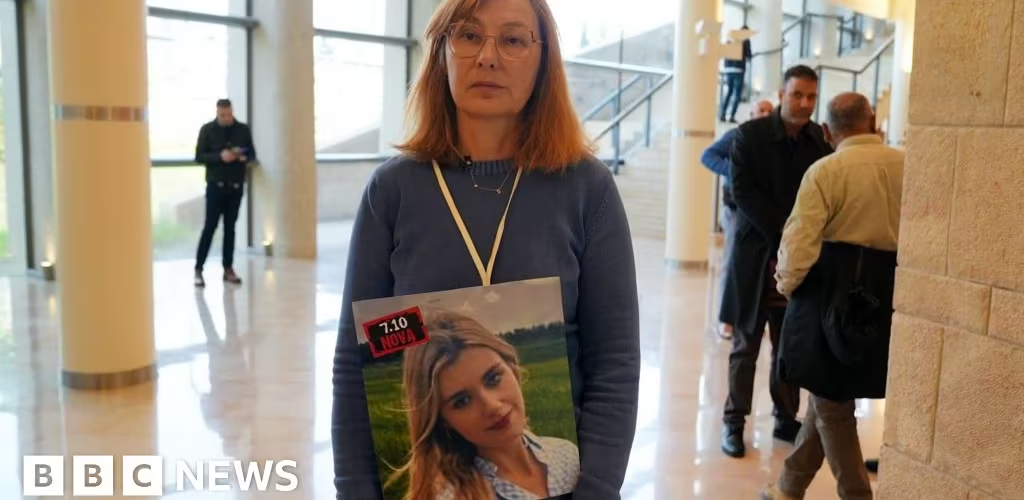
Israel has only twice used the death penalty against a convicted prisoner. The last time was more than sixty years ago, to hang the notorious Nazi war criminal, Adolf Eichmann.
But in the wake of the Hamas-led attacks on 7 October 2023, Israel's deadliest ever day, there is a political push to pass a highly controversial new capital punishment law, targeting Palestinians convicted by Israeli courts of fatal terrorist attacks.
"It's another brick in the wall of our defence," the far-right chair of the parliamentary national security committee, Zvika Fogel tells me. "To bring in the death penalty is the most moral, the most Jewish and the most decent thing."
But human rights groups see the bill as "one of the most extreme legislative proposals" in the history of Israel. They argue it is unethical, and because it is designed to apply only to Palestinians, they say it will bring about "racialized capital punishment."
There have been heated hearings in Israel's parliament involving rabbis, doctors, lawyers and security officials. Families whose loved ones were killed in the brutal assault on southern Israel more than two years ago, and in the fighting in the devastating war in Gaza that followed, have turned out to speak against and in favour of the legislation.
"In my view, only 10 or 20 per cent of the law is intended for justice, and the remaining percentage is deterrence and prevention," says bereaved mother, Dr Valentina Gusak, who backs the bill.
Addressing the national security committee, she displayed a photo of her 21-year-old daughter, Margarita who hoped to study medicine like both of her parents. She was killed with her boyfriend, Simon Vigdergaus as they fled the Nova music festival in 2023.
"It's preventive treatment – that's what it's called in medicine," says Dr Gusak about reintroducing capital punishment who believes it could have saved her daughter's life. "It's a vaccine against the next murder, and we must ensure the future of our children."
The death penalty does exist for certain crimes in Israel, but on the rare occasions when military courts previously handed down death sentences to convicted terrorists or enemy fighters, all were mitigated to life sentences following appeals.
The Eichmann case was exceptional. The SS Lieutenant Colonel was an architect of the Holocaust. In 1960, he was snatched from Argentina by Israeli secret service agents before being put on a lengthy public trial before a special court in Jerusalem.
Prior to that, a military captain, Meir Tobianski, was executed for treason following a makeshift court martial in June 1948, shortly after the Israeli state was established. He was posthumously exonerated.
Opponents of capital punishment have rejected it on religious, ethical and legal grounds arguing it goes against Jewish law, violates the right to life and brings a risk of executing innocent people. But Israeli human rights groups also argue that the proposed new law will deepen discrimination by targeting only Palestinians convicted of terrorism and not Jewish Israelis.
"The fact that we're even re-discussing bringing this back into the legal system in Israel is itself a low point," says Tal Steiner, executive director of the Israeli NGO, HaMoked.
"Beyond that our objection is that the law is racially designed, meant to apply only to Palestinians, never to Jews, only to people who kill Israeli citizens, never for example to Israeli citizens who kill Palestinians. The motivation is clear."
The stated purpose of the draft legislation is to protect Israel, "its citizens and its residents", while "increasing deterrence against the enemy" and reducing the incentive "to carry out kidnappings or take hostages in order to negotiate the release of terrorists" as well as "providing retribution" for criminal acts.
Mandatory death sentences would apply in Israeli military courts which exclusively try Palestinians from the occupied West Bank. After a compulsory appeal against the verdict, those convicted of deadly terrorist attacks would be hanged within 90 days.
The bill would also allow the death penalty to be used within the same swift time frame in regular Israeli courts, but it would not be mandatory.
There have been past proposals to introduce capital punishment for what are seen as terrorist actions, but the security establishment was previously among the main opponents of such a move, asserting that it increased tensions and was not an effective deterrent.
Already, a high number of Palestinians who carry out deadly attacks on Israelis are shot dead in the process by the security forces or armed civilians.
When I meet Zvika Fogel from the far-right Jewish Power party which has put forward the new death penalty bill, he insists that the current heads of Israel's security services are behind its efforts. He dismisses the idea that the law is unfair.
"Let's be accurate, my bill talks about terrorists and about an act of terrorism, there's no discrimination here. The definition is very clear," he says. "It's true that I don't think there's such a thing as a Jewish terrorist or a Jewish act of terrorism. It's a legal definition. I didn't go any other way."
Jewish Power put forward the new death penalty bill early in 2023. Following the 7 October attacks, the legislation was put on hold because security officials advised it could jeopardise efforts to bring back the 251 hostages – living and dead – who had been seized and were being held in Gaza by Palestinian armed groups.
Last year, the head of Jewish Power, the national security minister, Itamar Ben Gvir was one of the few ministers to vote against the US-brokered Gaza ceasefire deal which saw the last remaining hostages returned in exchange for nearly 2,000 Palestinian prisoners and detainees – about 250 of whom were serving life or lengthy sentences, many for killing Israelis. He said he was opposed to all hostage agreements.
Jewish Power then threatened to leave the government if the death penalty legislation was not put to a vote. Last November, when it passed the first of three readings needed to become law by 39-16, in the 120-seat parliament or Knesset, Ben Gvir gave out sweets.
His party insists capital punishment will reduce the incentive for future hostage taking and prevent contentious prisoner swaps. Its members of parliament have taken to wearing a golden noose-shaped lapel pin.
"There won't be any [more] prisoners released," says Zvika Fogel. "For a prisoner who committed murder, there'll be a death penalty so there won't be a prisoner to make a deal on. It will prevent hostages being taken to be used as bargaining chips."
In parliament, Limor Son Har-Melech, another member of Jewish Power who sponsors the bill has related her personal story. In 2003, she and her husband - who lived in a West Bank settlement - were attacked by Palestinian gunmen while in their car. Her husband was killed and she was injured, leading her to give birth by an emergency caesarean section.
Son Har-Melech explains that one of her husband's killers went on to be released in a previous exchange deal to bring home an Israeli soldier held captive in Gaza. She says he went on to command a deadly attack on another Israeli and take part in the 7 October attacks, before he was killed during the Gaza war.
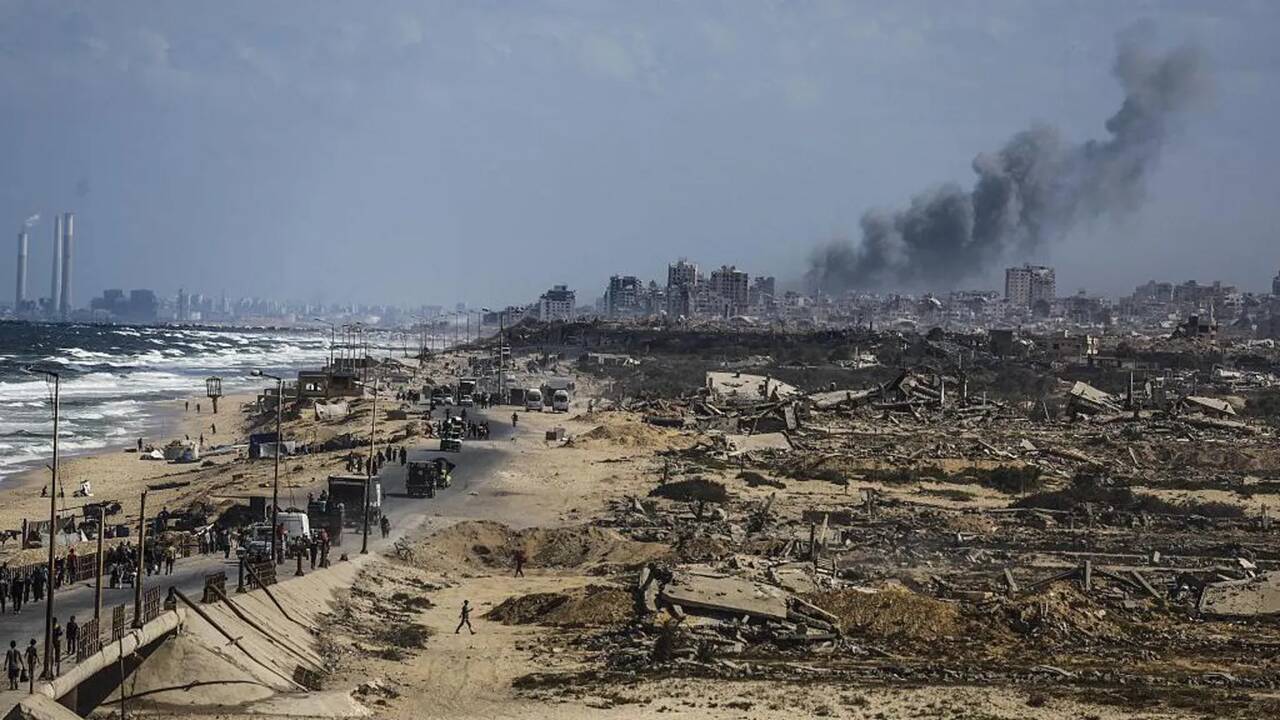
Some 1,200 people were killed in the shocking assault on southern Israel just over two years ago. It triggered the deadliest ever war in Gaza, where more than 71,600 Palestinians have been killed according to the Hamas-run Health Ministry.

Many see that the public mood in Israel has shifted in favour of more draconian punishments. But Arab-Israeli parliamentarian, Aida Touma-Suleiman, who represents the opposition Hadash party, says legislators should be careful how they respond.
"He is feeding into the revenge and the anger that is existing among society," she says of Ben Gvir. "But you cannot run legislation and courts by instincts of revenge."
Touma-Suleiman opposes the death penalty on principle and argues the bill also goes against international law and past treaties signed by Israel. If the legislation passes two more parliamentary votes and becomes law, she believes Supreme Court judges will strike it down.
However, she points out that this will prove a political point for Jewish Power in an election year. As part of the government, it has been taking steps to try to reduce the power of the courts.
"It's a win-win situation for Ben Gvir and his party to promote such a law. Because if this law actually passes, it's for their constituency," Touma-Suleiman tells me. "If he managed to pass it then I'm sure the Supreme Court will ask the Knesset to cancel the law, and he can start to say with the rest of the right-wing: 'You see they want to run the country when we are the ones who are elected!'"
In social media videos shot in Israeli jails, Ben Gvir has posed with bound and blindfolded prisoners who are said to be members of the Hamas Nukhba force which carried out the 7 October attacks. He boasts that they receive the "minimum of minimum conditions."
According to a recent article by the Israeli news site, Walla, a record high number of 110 Palestinian security detainees have died under the minister's policies in the past two and a half years.
The UN Committee against Torture said late last year that it was deeply concerned about reports indicating "a de facto state policy of organised and widespread torture and ill treatment" of Palestinians held in Israeli prisons. It said such allegations had "gravely intensified" after the 2023 attacks. Israel has denied the claims.
While the final text of the death penalty law is being drawn up, another parliamentary committee is working on a separate bill to set up a dedicated military tribunal for the Nukhba prisoners.
They are expected to face charges of war crimes and crimes against humanity much as Eichmann did six decades ago. Those convicted could also face the death penalty.
After many countries around the world abolished capital punishment, Israel is taking steps in the opposite direction.







![[Watch] Enhle Mbali CONFIRMS customary marriage in old clip](https://cdn.thefuse.co.za/images2/e/d/8/9/f/ed89f592-7fb8-30db-9ea1-dbb627f743fd-1200x675.jpg)