'It's like a vacation for the soul': The Italian hotel where guests live like monks
BBC | 29.11.2026 16:00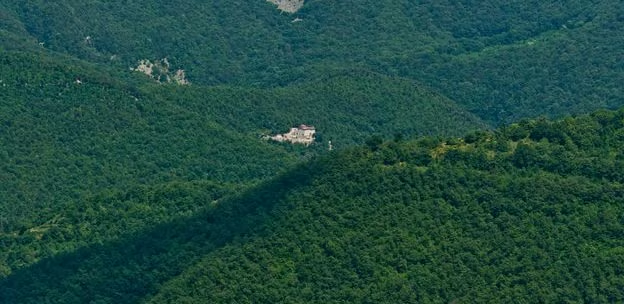
Set deep in a protected forest and built atop a 14th-Century hermitage, this mountain retreat doesn't offer wi-fi, TV or mobile reception – which is exactly the point.
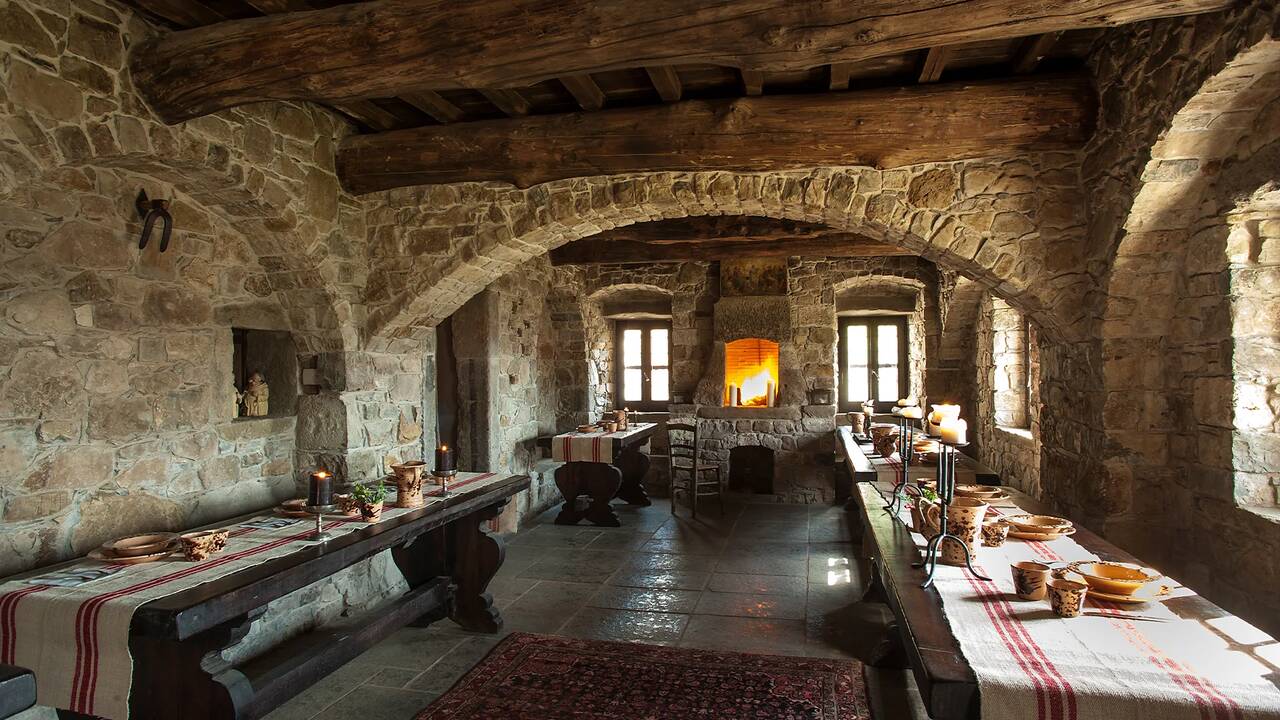
"After you hear the gong, you can no longer talk," says yoga instructor Benedetta Martino softly, cloaked in shadows as she leads the other guests and I past a thick curtain into the vault-like stone dining room. "You can break the silence only after the end of the meal."
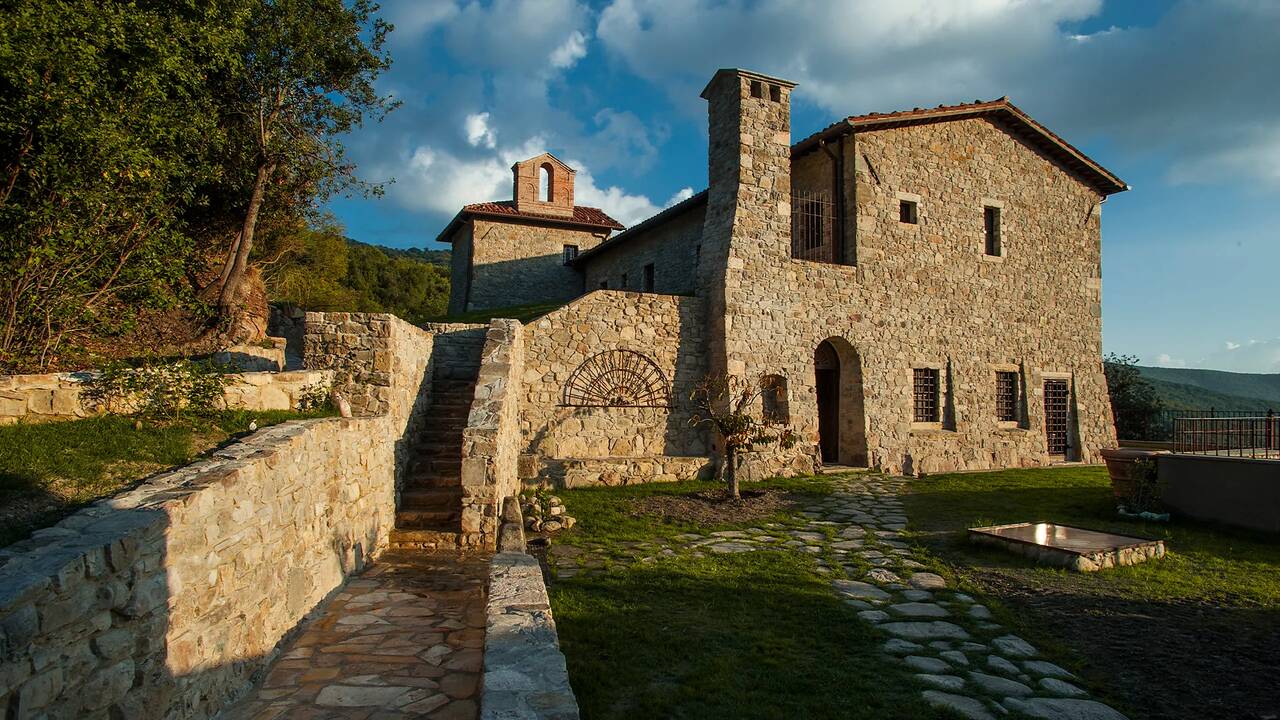
It's a chilly evening in November, and I am about to experience one of the nightly rituals of Eremito, a remote hotel in Umbria, Italy that's built atop the foundations of a 14th-Century hermitage and set within a 3,000-hectare (7,415-acre) protected forest. Every evening, guests are served a four-course meal in a candle-lit refectory. Like the monks who once lived here, diners are asked to eat in complete silence.
Thanks to its dense woods, rolling hills and crashing waterfalls, Umbria is known as "the green heart of Italy". The region is often described as a wilder, quieter version of its more-touristed neighbour, Tuscany, and it's also home to one of Italy's most spiritually significant sites: Assisi.
It was here that Saint Francis established his namesake religious order based on prayer and charity in 1209. Between the 11th and the 13th Centuries, more than 300 monasteries were established in the region. These religious communities left a deep mark on Umbria's landscape and its identity, and today, several of these former monasteries have been transformed into hotels.
But Eremito isn't just a hermitage-turned-hotel. It's one of the only hotels in Umbria that invites guests to disconnect from the outside world and embrace a way of life inspired by the region's monastic traditions.
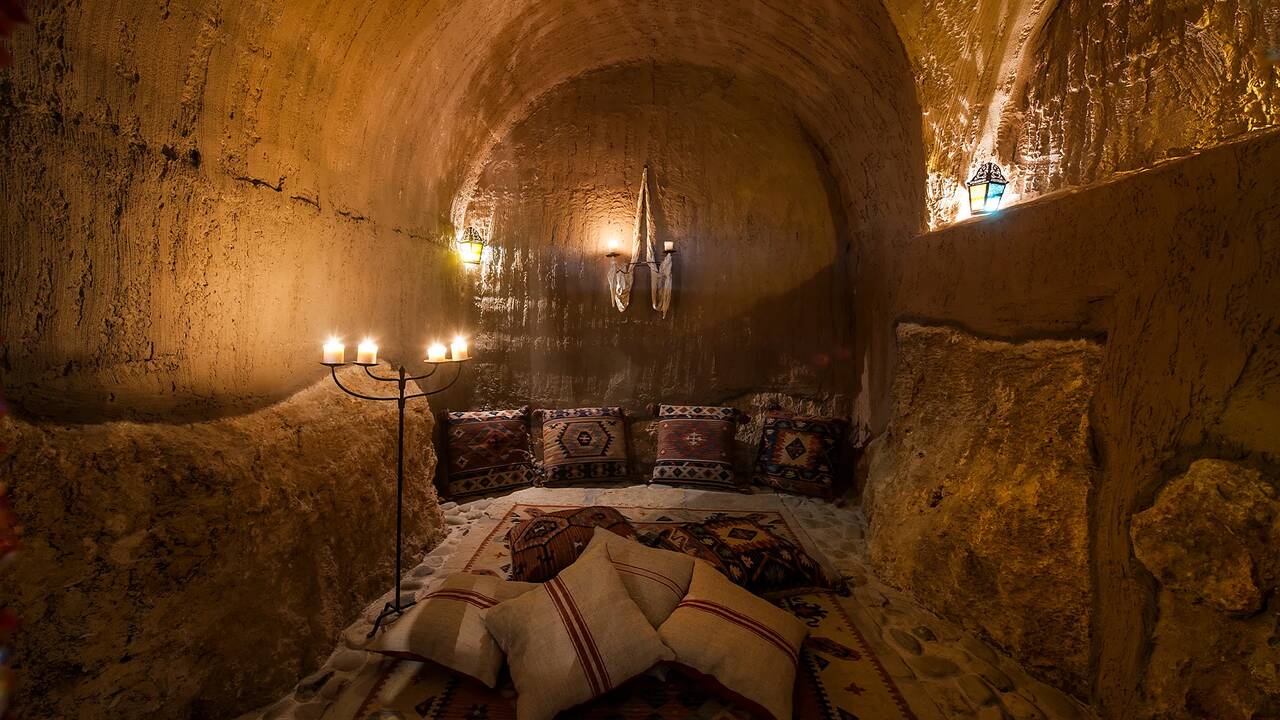
Guests stay in minimalist stone-built celluzze (cells) equipped with just a single bed, a small desk, a notebook and a pen. There is no wi-fi, TV or mobile reception and visitors are encouraged to switch off their digital devices for the duration of their stay. Meals are communal, including the silent dinner, but guests spend much of the day alone, reading, journaling, speaking quietly to one another or exploring the forested hills of the surrounding Mount Peglia, a Unesco Biosphere Reserve located around an extinct volcano.
Embracing the monastic life
On my first night, I make my way from my 9-sq-m (100-sq-ft) cell along a dimly lit corridor lined with rugs and dried flower petals to the communal dining hall. As in monasteries, tables are arranged with diners sitting on one side of a thick wooden table facing a row of candles. I sit at the end of a table, somewhat relieved to have only one person next to me.
 Eremito
I soon find that eating in silence next to a stranger can be a rather awkward experience. The sounds of chewing, biting and sipping feel amplified. The starter, a salad of local endive, walnuts and grated pecorino, proves especially crunchy, while the first course, a squash and chestnut soup garnished with thyme, makes me self-conscious about my slurping. But as the dinner unfolds, I find myself less preoccupied with the culinary soundtrack and more tuned into the experience.
Without the distraction of talking, I fully absorb the flavour and texture of each dish. I marvel at the soup's velvety consistency and the aromatic notes of thyme. Silence also seems to stretch time.
"That's why I created this place," says Marcello Murzilli, who founded Eremito in 2009. "After spending time [abroad], I came back to Rome and found that people were living at an increasingly faster pace," he explains. "Living so fast can make you take everything for granted and forget what's essential."
After spending time in monasteries elsewhere in Italy, Murzilli made his way to the slopes of Mount Peglia and discovered the ruins of this 14th-Century hermitage near the hilltop town of Parrano, some 80km (50 miles) south-west of Assisi.
"The view from here was just incredible," he says. "I knew right away I had found my spot."
 Eremito
The rebirth of an ancient tradition
Umbria is known for its stunning hilltop towns perched atop rolling hills, and much of this is because of its monastic past. According to Stefano Bertocci, a professor of architecture at the University of Florence, many of Umbria's monasteries and convents are located in eremi (remote hilltop locations that were considered sacred places). In these secluded corners, friars and monks lived communally and followed a specific set of precepts – including good stewardship of the land.
"[Monks] were at [the] heart of what we would now call a sustainable economy based on local resources," Bertocci says. Laypeople soon started to settle near monasteries to take part in monastic-led agricultural activities, such as olive milling, winemaking and chestnut harvesting, he adds, leading to the establishment of many of the region's hilltop settlements.
Eremito is an adults-only hotel that mostly caters to solo travellers but can occasionally accommodate couples. It's open year-round and run by locally based English-speaking staff. There is a two-night minimum stay and the all-inclusive rate (€220/£185 per night) covers all activities and meals and drinks (though guests can only drink water and wine). The hotels is 135km (85 miles) from Rome and the nearest train station is Fabro Ficulle.
Like the monasteries that inspired it, Eremito is also designed to make the most of local resources. It generates power through geothermal energy and solar panels. Food and herbs are grown in a local organic garden, while water is sourced from a nearby spring – all of which adds to the overall simplicity and stillness of the place. Without the humming of generators or buzzing of electrical wires, you can really "hear" the landscape. In fact, the first thing that struck me upon arriving was the deep sense of peace and quiet. All I could hear were some owls hooting and the wind blowing in the trees.
Outside my cell, I notice most visitors are absorbed in books, journaling or simply soaking in the pale November sun. I soon venture into the hotel's garden and walk through the herb garden, noticing how the lack of noise or digital distraction allows me to fully take in the scent of rosemary, sage and thyme.
 Eremito
Murzilli explains that life in a typical medieval monastery was marked by moments of silent prayer and work alongside moments of intentional communion with fellow friars. "Since the beginning, I thought of recreating this kind of rhythm here," he says.
As a result, days at Eremito start at 07:30 with optional morning meditation in a rooftop chapel. Yoga is at 08:00, followed by a breakfast of local bread, fruit and eggs. Guests are free to spend time as they please until lunch. Many decide to explore the slopes of Mount Peglia along well-marked hiking trails that connect Eremito with nearby hamlets. Others stay in their rooms or spend time in the hotel's library.
Laura Neri, Eremito's manager, tells me that some visitors ask if they can help in the garden or in the kitchen to feel like they are actively contributing to communal life, just as monks once did. She also notes that interest in the hotel spiked after Covid. "I think that time of forced reflection led many people to realise that taking time to be completely offline [is] a psychological need," she says.
Murzulli adds: "When we first opened, people thought it was crazy to offer an offline stay. Now they specifically ask for it. I think they are starting to see it as a kind of luxury."
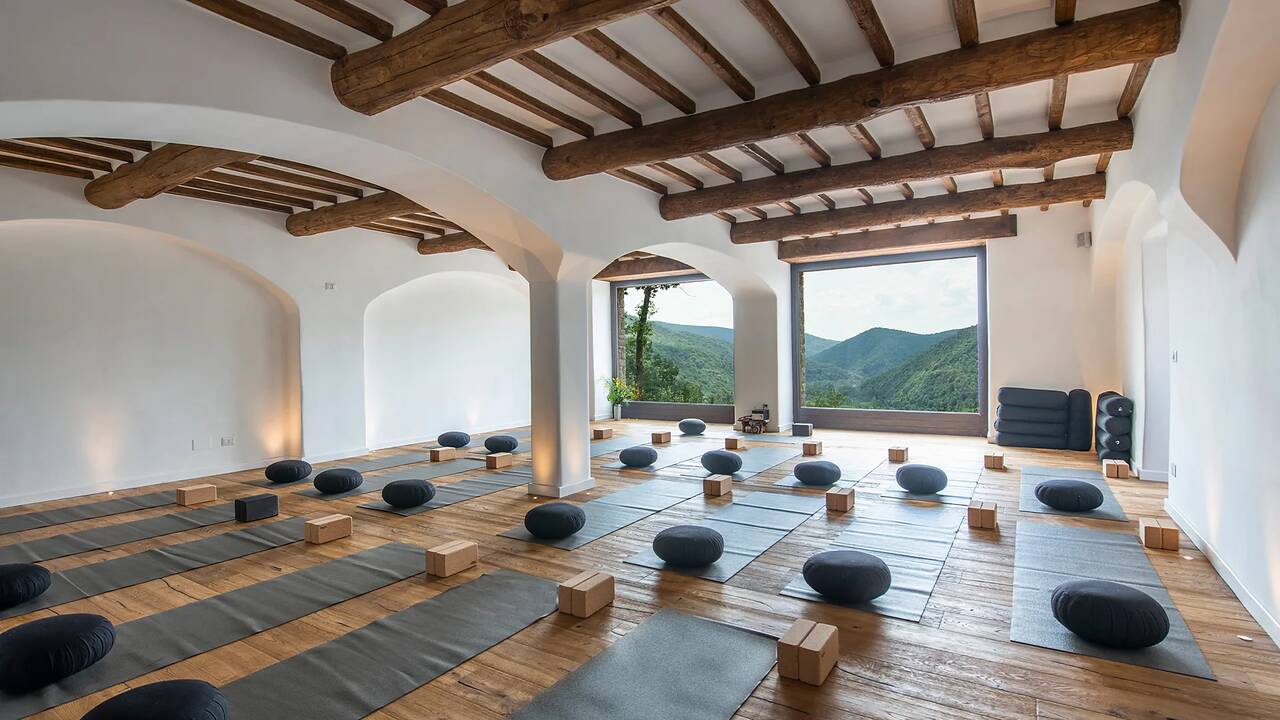 Eremito
While some guests remain silent for their entire stays, others find that the conversations with fellow travellers are a highlight of their visit.
Following the silent dinner on my first evening, I sit with five other guests around the fireplace in Eremito's living room, where red woven carpets and low-lying ottomans create a warm, intimate atmosphere. Some guests share experiences of burnout that led them to intentionally look for a refuge where they could disconnect from the world for a while.
Martino explains that some guests return regularly. "I think that for a lot of people, slowing down and having moments of silence can help focus on life's deeper questions," she says. "It's like a vacation for the soul."
Kornelia Schwitzer is one such repeat guest. "One can almost feel a shared energy here. It's like once you step into Eremito, you stop performing and you can just be," she says. "This, in today's world, feels like a real luxury."
--
If you liked this story, sign up for The Essential List newsletter – a handpicked selection of features, videos and can't-miss news, delivered to your inbox twice a week.