How to Build a More Participatory Democracy With Psychology
Psychology Today | 25.04.2026 23:55
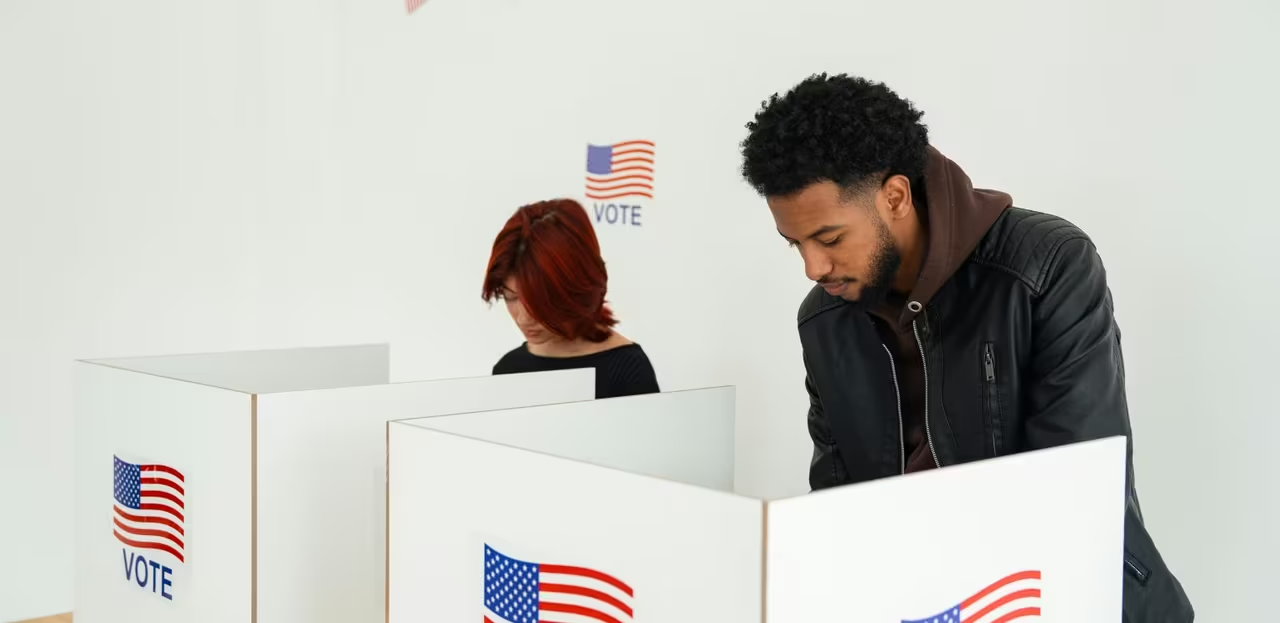
In presidential election years in the United States, only about 60 percent of eligible voters cast a ballot, and turnout drops sharply in midterm and local elections. That means tens of millions of people who have the legal right to vote do not exercise it. The reasons are rarely as simple as indifference. Decades of research in political and social psychology show that turnout is the joint product of motivation, ability, and the practical difficulty of casting a ballot (Harder and Krosnick, 2008). When laws or systems make voting harder, when citizens doubt that their vote counts, or when misinformation undermines trust in elections, participation falls, and it falls unequally.