God as unity, not division
Medium | 28.12.2025 20:09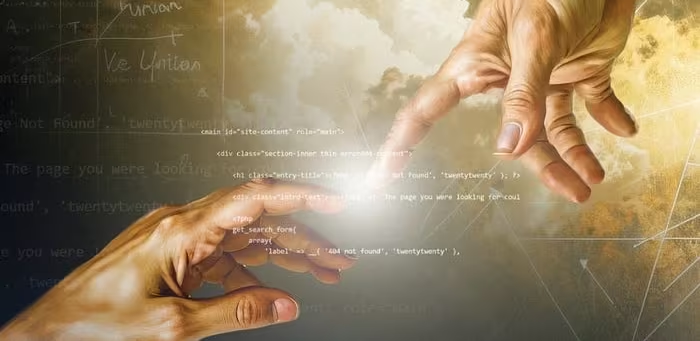
God as unity, not division
Follow
2 min read
·
1 hour ago
Listen
Share
God, in essence, is the single, invisible force that binds humanity together a presence that whispers in our hearts, guiding hope, morality, and the quiet pulse of life itself. Across lands and generations, however, we have each tried to give shape to this unseen unity. We have painted Him in countless forms, spun stories to explain His will, and crafted symbols to represent the ideals we long to see.
These interpretations, born of culture, imagination, and desire, have multiplied into a tapestry of beliefs, each claiming to hold the truth. And yet, in the shadow of this diversity, disputes arise, conflicts flare, and divisions deepen over what, if God is truly the one thread that links us all? If the divine is meant to unite, why do we let our invented forms tear us apart?
Get Ishita Pant’s stories in your inbox
Join Medium for free to get updates from this writer.
Subscribe
Subscribe
Perhaps the unity of God exists not in the images we create, but in the shared pulse of recognition that there is something greater than ourselves, binding all of humanity in silent accord.
There is nothing inherently wrong in believing in an idealised vision of God, in holding close a presence that nourishes the spirit, inspires hope, and fills the heart with positivity. Each person’s conception of the divine is a reflection of their own desires, culture, and understanding; a personal lens through which they seek guidance and comfort. Such faith can be a source of immense strength, a quiet light that steadies the soul in the face of uncertainty. But the problem arises when these personal ideals are hardened into dogma, when the imagined forms of God are wielded as weapons to assert superiority, to claim that one’s vision is truer or better than another’s. In these disputes, humanity forgets the simplest truth: God is one, indivisible, and eternal. No fragment of belief can claim the whole, and no story can capture the entirety of the divine. The unity of God exists beyond our interpretations, beyond the forms we have created. Yet we persist in dividing what cannot be divided, allowing our idealisms to become sources of conflict, rather than bridges of understanding.
And so, while each soul may cling to its own image of God, the divine remains one; and it is humanity’s folly, not God’s, that tears itself apart over illusions of superiority.
“The divine is whole , the truth is clear, yet we fight for visions we hold dear”