Sheep, pita and tent-shaped homes: A stay in one of Bosnia and Herzegovina's last semi-nomadic villages
BBC | 20.11.2026 15:00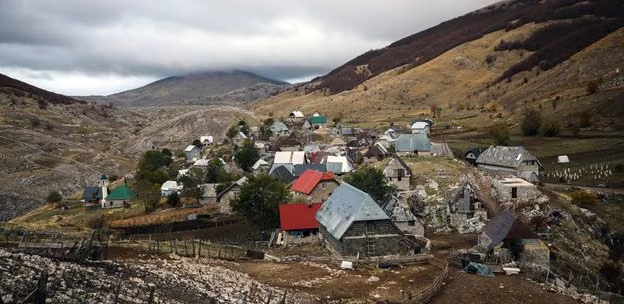
High in the Balkans, the village of Lukomir offers a rare glimpse into a place with centuries-old stone homes and nomadic tribal traditions.
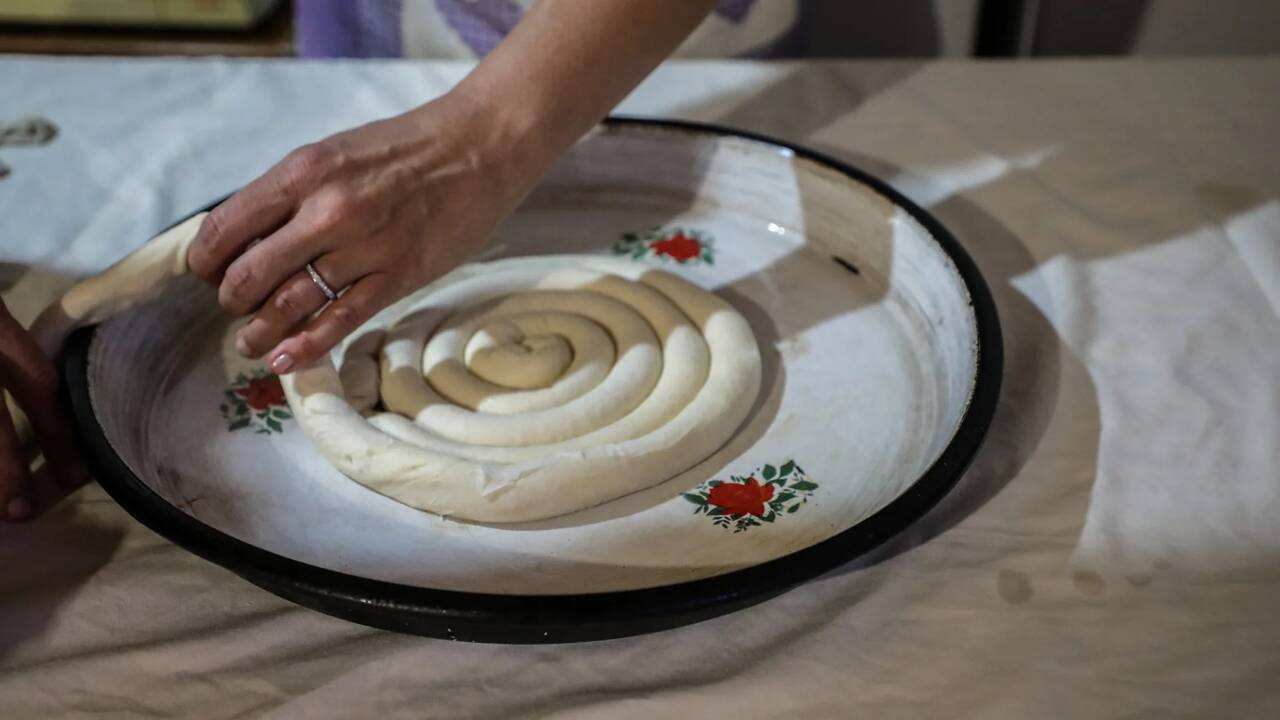
Inside her kitchen, Saima Čomor is showing me how to knead dough. I attempt to mimic her graceful rhythm, but kneading is harder than it looks. She holds my hands steady. We are in Lukomir – Bosnia and Herzegovina's highest, most isolated mountain village – and we are making pita, a savoury cheese-filled spiral pastry that has nourished people in the Balkans for centuries.
Together, we stretch the dough paper-thin. Saima adds the filling, a mixture of eggs and svježi kravlji sir (fresh young cow's cheese), raising the tablecloth to roll the dough into a long, thin snake. She coils it into a round pan, then coats the spiral in oil before baking it in her wood-burning oven. The experience transcends my tenuous grasp of the language; we communicate with our hands and eyes.
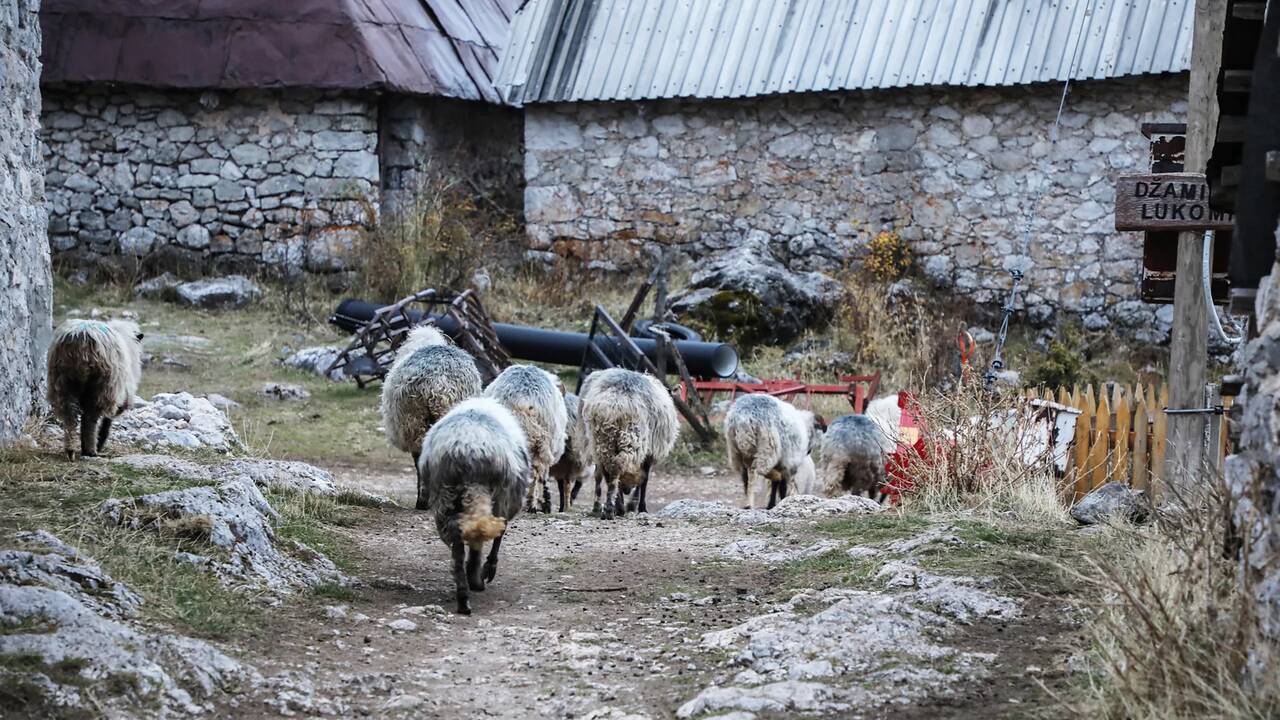
Pita is just one of Lukomir's ancient arts. Considered the last semi-nomadic mountain village in Bosnia and Herzegovina, this Balkan sheepherders' settlement is a living ethnological museum, offering a rare glimpse into a place where some locals still live in centuries-old stone homes, and nomadic tribal traditions have survived for centuries.
Plan your trip:
When to go: Depending on the weather, Lukomir is usually inhabited from 1 May until 1 November. Book accommodations and tours ahead of time during the busier summer months. Drive to Umoljani and undertake the medium-difficulty hike – roughly six to seven hours round trip, depending on fitness. Since some areas are rocky and steep, a full-day guided hiking trip from Umoljani to Lukomir is recommended.
Where to stay: Overnight stays at Saima and Omer's Čomor's house cost €30 ($33/£25); pita-making lessons cost €15 ($16.5/12.50). Guesthouse Ljetnja Basta Lukomir offers car parking and serves delicious traditional food in its restaurant.
A journey to the past
I've come to Lukomir with a friend, accompanied by Edin Ogrešević, a Bosnian tour guide. After a rainy, hour-long drive from Sarajevo, we arrived in the village of Umoljani on Bjelašnica Mountain; the trailhead for the 7km (4-mile) hike into Lukomir.
Lukomir has been home to herders and farmers for more than 500 years. Muslim shepherds are at the heart of this lifestyle: for centuries, villagers led flocks from Gornji Lukomir (Upper Lukomir) to the now-abandoned Donji Lukomir (Lower Lukomir).
The lifestyle is practiced to this day: locals still cultivate wool, and leave for their winter residences in late October or early November, mostly to Hadžići, a suburb of Sarajevo, or other villages in lower altitude areas. Those who still own sheep guide them on a 10-hour walk from Lukomir to their winter homes. The sale of sheep and wool products provide income for villagers. Some wear traditional embroidered headscarves, caps and wool socks.
But despite modernisation and international influence, some residents choose to live in the village's traditional katuns, two-room stone-and-wood structures with steeply pitched roofs. In recent years, the village has drawn tourists curious to explore this pristine landscape and ancient lifestyle. Through homestays like Saima's, visitors can experience century-old katuns and learn how to make pita, spin wool and crochet.
We started our excursion near Aždaja, an imposing rock formation locally called "the dragon," which sits high above Umoljani. "The village's legend about the dragon says that it came out of Rakitnica Canyon, passed through [the shepherd village of] Gradina, and with the tail of the dragon you got S-shaped river called Studeni potok," Ogrešević said. "The dragon froze in the rock above Umoljani."
As we hiked, heavy mist hovered over mountain peaks like ghosts and sweeping vistas revealed a riot of burnt autumnal hues. We passed a blush-red rose bush, stark against the wilting landscape. Ogrešević explained that locals dry and boil rose hips to make šipak tea: "We also make rose hip jam." Under Obalj Peak, we noticed a flock of sheep, and stopped to listen to a shepherd's melody emanating from a frula, a traditional Balkan flute.
Three hours later, we reached Lukomir. The entrance to the village was a dramatic V-shaped crevice between boulders. As we passed 14th-Century stećci (medieval tombstones), Ogrešević gestured to the cluster of renovated katuns, explaining that most of the structures were transformed into modern houses with patchwork tin or metal roofs after the Bosnian War ended in 1995, but they are often still called the original name. Hungry and tired, we were grateful to arrive at Saima and Omer Čomor's home, where we would be staying overnight. We were the last visitors of the season – when we arrived, the electricity was out. Lukomir has only been connected to the electrical grid for around 60 years, and the connection is notoriously unreliable.
Saima – whose modern kitchen has a dishwasher and microwave – welcomed us with a hearty lunch of spiral-shaped burek, stuffed with minced meat and potatoes, baked in her wood-burning oven. But before we could sit down to eat, she informed us that Lukomir's Imam (Muslim spiritual leader) and some local men had gathered at her friend, Uzeir Masleša's, house after džuma, the Friday congregational Islamic noon prayer. We were welcome to meet them.
In Uzeir and his wife Mirsada Masleša's smoke-filled kitchen, we found the men smoking cigarettes, sipping strong Bosnian coffee and eating hurmašice, syrup-drenched shortbread biscuits. Lukomir's Imam told us that experts had once determined that the village was approximately 1,000 years old.
Lukomir's population has dwindled since the end of the Bosnian war.
"Life before war was better," he said. "We lived like one family, went from house to house. In 1995 [there were] 14 weddings, then [the] girls married and left village. Now, everyone watches [their] phone."
The descendants of the Masleša and Čomor families still comprise the majority of Lukomir's population. According to Saima, there are 55 people and 25 families; most live two to a house.
Lukomir now gets approximately 100,000-150,000 tourists per year who want to witness the ancient lifestyle; hikers stop over along Via Dinarica, a trail running through the Dinaric Alps from Slovenia to North Macedonia. Saima has been fortunate to have good guests and has hosted a wide variety of people in her home, from America, Australia and Europe.
"God gave us mercy because tourists come," Saima said. "After that tough [rustic] life, now the whole world comes here."
The rustic life
We also visited Rahima and Vejsil Čomor, a couple in their 80s who live in one of Lukomir's remaining rustic two-room katuns – outfitted with just a wood-burning stove and an adjacent bathroom.
We took our shoes off in the entryway. I glimpsed the adjacent bedroom with two twin beds covered with handmade blankets.
The couple used to sell sheep: now, he carves spoons from white maple, and she sells traditional handmade wool socks. In winter, like many other villagers, they migrate to Hadžići, returning to Lukomir on the first of May.
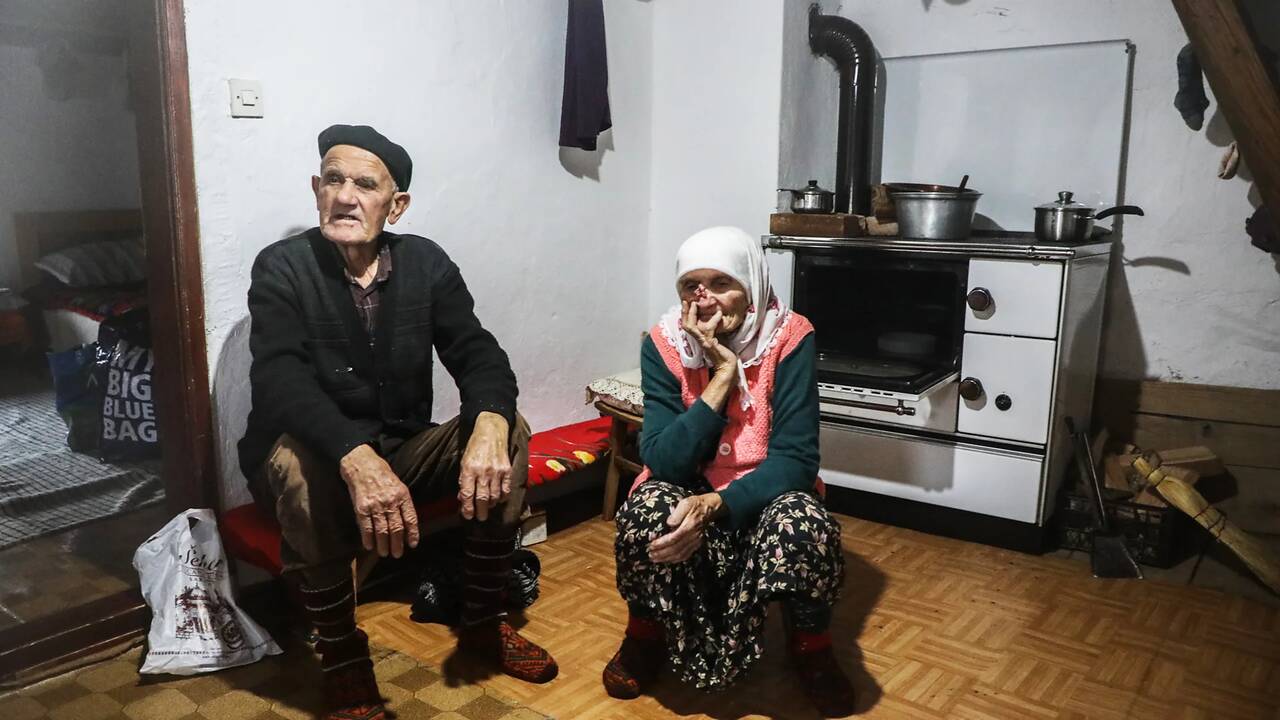
Vejsil has an old cell phone, not a smartphone. They own a radio, but no television. I asked how they liked life without electricity. "We didn't know any better, so it was fine," Vejsil said.
They miss the old days, when Lukomir was full of inhabitants and villagers more regularly participated in ganga – an ancient form of rural polyphonic folk singing native to the Dinaric mountain region – and kolo (circle) dancing. Today, they only do this at teferič, a traditional outdoor gathering held on the first Sunday in August. "It is not good now," Rahima said.
More like this:
• The European nation where horses roam free
• The village that survived a war
• A hiking trail linking 46 ancient Greek villages
Back at Saima's house, we drank rose hip tea and ate her rose hip marmalade with homemade bread and kaymak, a creamy dairy product. She dressed me in a traditional Lukomir folk costume, a long tunic with hand-stitched geometric embroidery, a headscarf, and thick hand-knitted wool socks. She showed me how to spin wool yarn on her manual spinning wheel.
We devoured our pita. By the end of the night, I was exhausted, and retired upstairs to sleep in my sloped-ceiling room with three twin beds and a pine wood ceiling.
As she bade us goodbye the next morning, Saima gave me a crocheted wool headband. "Now, you are not a stranger to me," she said in Bosnian, giving me a hug. "I will remember you." Although my visit to Lukomir was brief, I will remember her, too.
--
If you liked this story, sign up for The Essential List newsletter – a handpicked selection of features, videos and can't-miss news, delivered to your inbox twice a week.