“They Don’t Have a Brain of Their Own” – Malema Reacts to Alleged WhatsApp Plot Against Him
iReport South Africa | 04.04.2026 16:02
After revealing what he claims to be a WhatsApp chat about an alleged plan against him, Julius Malema responded violently, taking advantage of the opportunity to attack those he believes are involved.
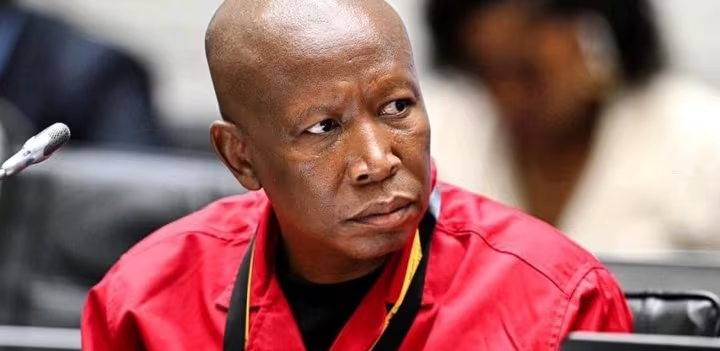
In response, Malema stated that Bafana Mathebula and his associates lack independent thought, suggesting that they are being guided rather than driven by their own initiative. His comments were part of an attempt to expose the purported message, which he says shows concerted efforts to hurt him.
Malema’s remarks quickly attracted notice because of his reputation for direct and often controversial speech. By making public the alleged WhatsApp chat, which focuses on power dynamics and internal conflicts, he has increased the already elevated political tensions and speculation.
Even while the specifics of the alleged message have not been independently confirmed, the episode demonstrates how digital communication channels like WhatsApp may occasionally spark political discussions, coordination, and controversy. Such forums are often the focal point of disputes, especially when accusations of internal cooperation or conspiracy surface.
The leader of the Economic Freedom Fighters has faced numerous high-profile political conflicts and difficulties, the most recent of which is this new development.
Malema’s speech is a combination of frustration and anger as he positions himself against what he perceives to be organised opposition. His word choice demonstrates how seriously he takes the alleged issue, even though he is disregarding the independence or dependability of the individuals he cited.
The question of whether formal investigations or explanations will follow the revelation will probably be the main topic of discussion. As of right now, the problem is still entwined in a larger political narrative that is marked by ambiguity, speculation, and divergent opinions.
This incident serves as more evidence of how political disagreements may quickly become public in the digital era, when private messages can quickly develop into scandals.