7 “Tacky” Decor Trends Designers Say Are Out for 2026
The Kitchn | 12.12.2025 04:00
We independently select these products—if you buy from one of our links, we may earn a commission. All prices were accurate at the time of publishing.
If you’re looking to refresh your home, you may be wondering what to keep and what to toss. Well, designers have more than a few suggestions for you. Here, the pros are breaking down seven types of decor that they consider to be on the “tacky” side of things — and no, they didn’t hold back with their feelings!
You should surround yourself with items that bring you joy, though. So if that means continuing to decorate with some of the things on this, that’s more than OK. Your home should make you happy, so you do you. But without further adieu, these are the seven “tacky” things designers would like to see less of in 2026.
Designer Mahsa Afsharpour, the founder of Saga Interiors, doesn’t think blanket ladders are all that practical. For that reason, she thinks they read as tacky in living rooms and bathrooms especially. “They’re just leaning against your wall with three perfectly arranged blankets you never touch because rearranging them is too much work,” Afsharpour says. “It ends up feeling more like a prop than something you live with.”
Blankets will always be important accessories in many rooms. So Afsharpour isn’t saying you should get rid of these textiles entirely. Instead of using a blanket ladder, though, she suggests putting throws in a nice basket or tucking them inside of a storage ottoman when they’re not in use.
While some fake plants are incredibly realistic looking, Afsharpour has had enough of unconvincing faux fiddle leaf figs and olive trees. “They collect dust, fool no one, and have that telltale plastic sheen that doesn’t exist in nature,” she says. If you can’t keep a real plant alive, the designer recommends you decorate in other ways. “Lean into beautiful vessels, dried arrangements, or actual art,” she suggests. “A room deserves better than pretend greenery.”
Designer Jess Harrell, the founder of The Styled Domicile, cosigns this take. “I’m not here to yuck anyone’s yum, but for me, ‘tacky’ isn’t about taste; it’s about faking it — and anything trying to be something it’s not will bring down your room,” Harrell says. “If you’re terrified of killing plants, plenty of real ones practically thrive on neglect.”
While you’re probably seeing fewer “Live, Laugh, Love” signs in 2025, word art hasn’t disappeared completely. This frustrates designers who think these pieces are generic and passé. “Your space should reflect your personality through how you live in it — not through literal instructions on the wall,” she says. “If you love typography, invest in actual art or vintage finds with character.”
Designer Ashley Fiocco agrees that word art isn’t the best option for a home. Instead, she explains, a little creativity can go a long way, even if you’re on a budget. “Hang up a framed picture you took that brings back a lovely, actually experienced memory, or frame your kids’, nephews’, or nieces’ artwork and hang them proudly on display,” the designer suggests. “These are conversation starters and reflect personality and human connections.”
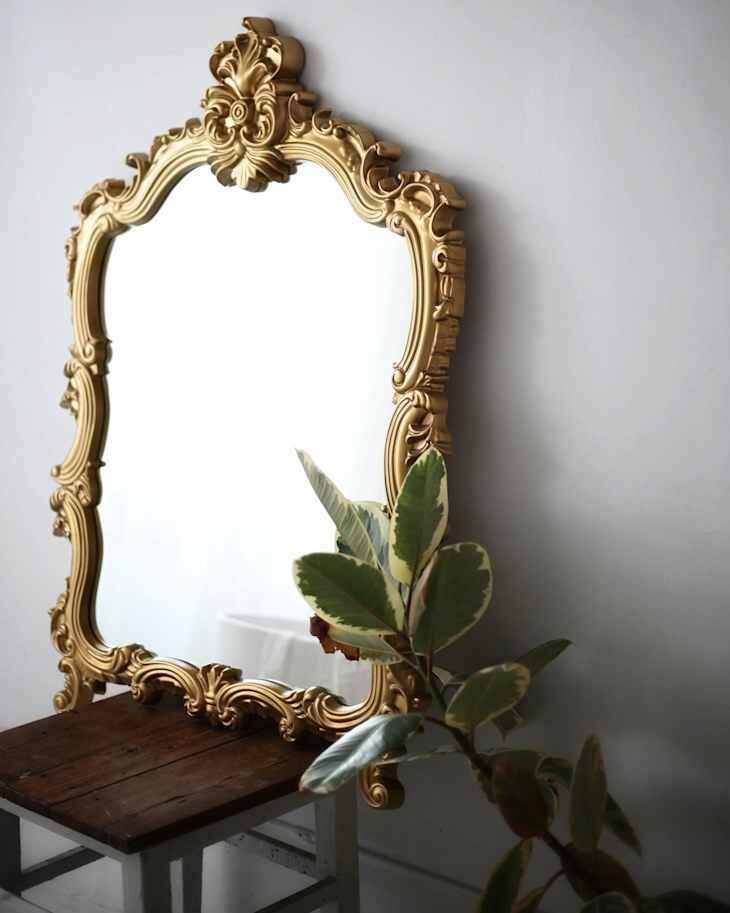
Vintage-inspired gold mirrors are everywhere these days, but in designer Juliana Ghani Sullivan’s view, they’re just never as compelling as the real deal. “I think the finish looks totally cheap and spray-painted,” the founder of G. Atelier says of some of the low-quality replicas on the market. “Buying a vintage mirror with ornate details will give you that collected feel.”
Some good news here? Often, preloved mirrors are going to be less costly than new ones, anyway! So looking for a vintage design could also be better for your budget.
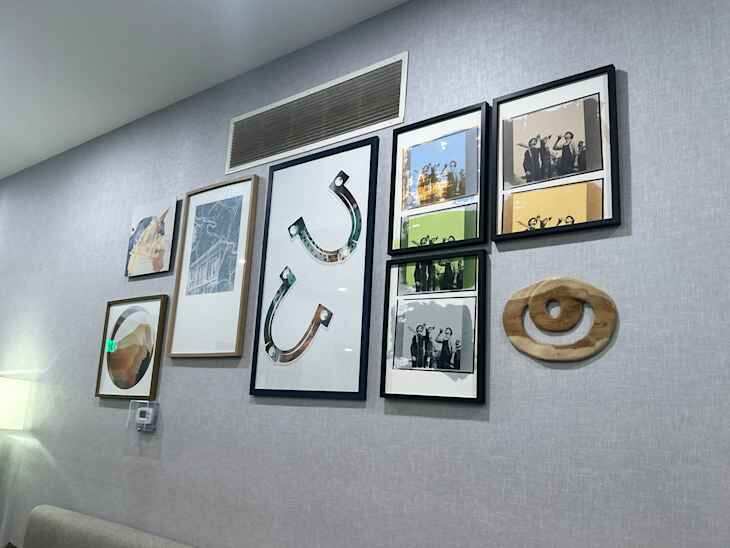
If you’re going to hang a gallery wall in your home, be sure to vary the size of your pieces to avoid a “tacky” look, Ghani says. When people group together small works only, things appear bitsy and off-balance. “It looks cluttered and lacks impact,” she explains. “It’s also busy, and your eye has nowhere to land.”
Ghani would rather you go larger in scale with your art and include pieces in a range of sizes in your gallery wall. While you’re at it, add some mats to your frames, too. “This is visually easier and more refined to take in,” she says.
Speaking of artwork, designer Jayme Ritchie wants you to skip mass-produced, generic prints and pieces. “Mass-produced art can zap the personality out of a space so easily,” she says. “If you’ve seen it on the shelves at the big-box store, so have all of your friends. It becomes obvious that this piece has no personal connection to your life.”
Instead, the designer recommends collecting art over time. You can still go the affordable route, she points out, noting that thrift stores are excellent resources for sourcing. Just don’t rush the process and feel like you have to fill your walls all at once.
Whether it’s part of a set or just too matchy-matchy in general, ultra-coordinated furniture will read as “tacky” in any home, according to designer Elana Mendelson. “These tend to flatten personality, lack creativity, make a space feel dated and not at all curated,” Mendelson says. Instead, mix things up a bit, and don’t be afraid to combine furniture with different finishes, from various periods, and the like. Doing so, Mendelson says, “makes the space much more interesting than looking like a catalog spread.”
Designer Laura Chapetto, the founder of Element Design Network, agrees. “Our home doesn’t need to look like it was ordered straight out of the same page of a catalog,” she says. “Mix materials, play with scale, and let your space evolve. Luxury is about collected pieces over time.