From Yard Work to Mars: How Luther Mosher Spent 13 Years Building Mars Lightning
Medium | 03.02.2026 22:21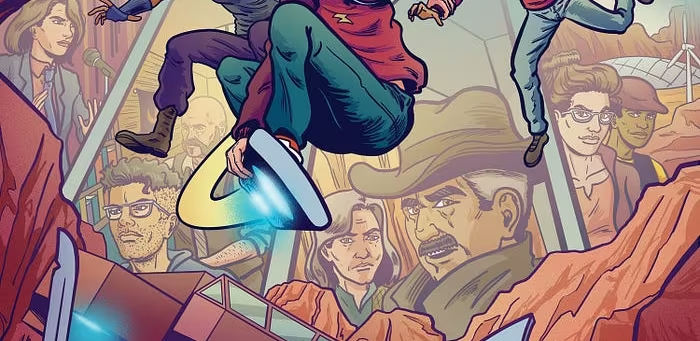
From Yard Work to Mars: How Luther Mosher Spent 13 Years Building Mars Lightning
What happens to the kid who grew up watching TaleSpin and went door to door doing yard work just to afford the next Animorphs book? The answer, it turns out, is simple. He pours thirteen years into writing, creating, and illustrating his own space fantasy.
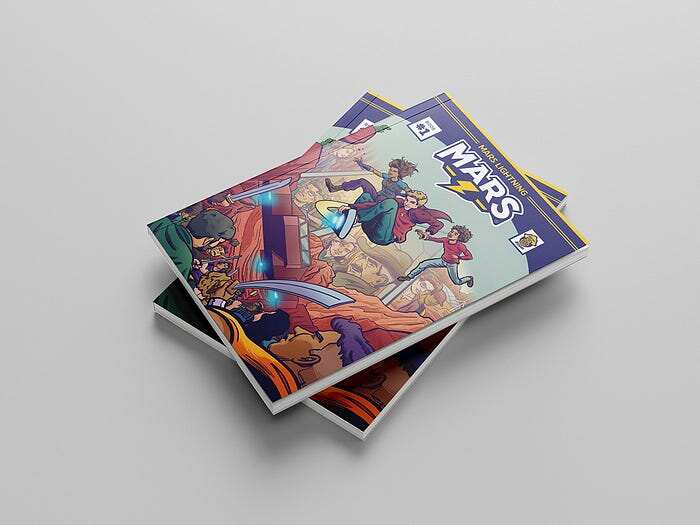
That kid is Luther Mosher, and the result of that lifelong dedication is Mars Lightning—a graphic novel about awkward teenage years, doing the right thing even when it isn’t easy, space pirates, government corruption, and just enough romance to keep things human. I had the chance to sit down with Luther to talk about how Mars Lightning came to be and, more importantly, where he plans to take it next. Buckle up—this is a fun one.
From the start of our conversation, one thing became immediately clear: Luther isn’t afraid to pull inspiration from anywhere, and he wears it proudly. There’s the scrappy charm of Firefly, a Marty McFly–style protagonist, and a reimagining of TaleSpin—only this time, it’s set on Mars. There are also subtle nods to Star Wars and Animorphs for eagle-eyed readers. Yet despite those influences, Mars Lightning never feels like a remix. Luther knows how to draw from the things he loves without losing his own voice. The result is a story that feels familiar in the best way, while remaining unmistakably his own. At the center of it all is Charlie Storm—a character who feels destined to become someone’s favorite action figure sooner rather than later.

The initial spark for Mars Lightning came from an unexpectedly ordinary place. Luther laughed as he recalled standing in line at a grocery store when a National Geographic magazine about the possibility of colonizing Mars caught his eye. Like any good creator, his mind immediately began connecting dots—life on Mars, future tech, hoverboards—and just like that, the foundation for Mars Lightning was born. One idea became non-negotiable almost instantly: Charlie needed a hoverboard. Some things, Luther admitted, are simply cool—and worth building a story around.
Charlie’s creation was personal in more ways than one. His name comes from a close family member, while his physical appearance was inspired by another. His personality, however, was drawn from Luther’s own memories of being an awkward teenager—impulsive, well-meaning, and occasionally reckless. Charlie is cool, but not too cool. He’s the kind of protagonist who might save the day, but is almost guaranteed to get hurt along the way. Luther was also intentional about avoiding familiar tropes, particularly the damsel in distress. Instead, he created Varisha Wolfe as a strong female character who doesn’t need saving—helping ground Charlie, and the world around him, in something that feels real and human.
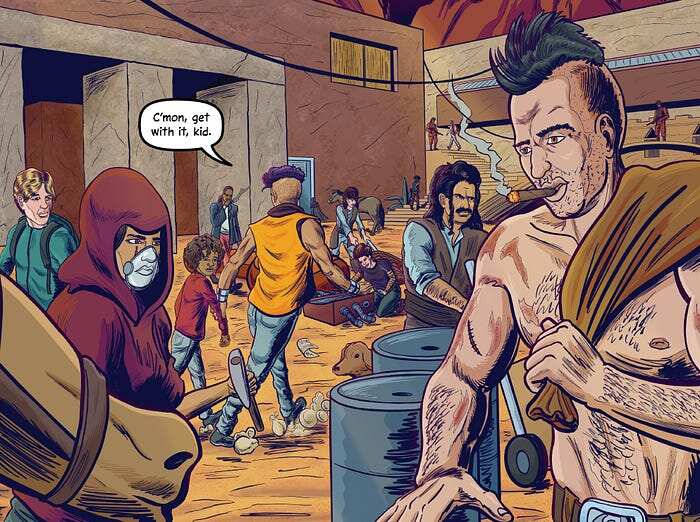
That same thoughtfulness extends to the story’s villains. Rather than relying on a single type of threat, Luther deliberately built two very different kinds of antagonists. On one side are the space pirates—scarred, angry, violent, and openly dangerous. On the other are corrupt politicians—smiling figures in tailored suits who shake your hand, make promises, and earn your trust before exploiting it. Luther explained that part of this approach was inspired by shows like Black Sails, particularly its exploration of power, corruption, and moral ambiguity. Evil, in Mars Lightning, wears more than one face—and not all of them are easy to spot.
Get Jesse Nazario Young Reporter Media’s stories in your inbox
Join Medium for free to get updates from this writer.
Subscribe
Subscribe
There was room for humor in our conversation too. When I pointed out that one of the characters bore a striking resemblance to Luther himself, he laughed and insisted it was entirely accidental. That said, he admitted what most artists already know to be true: creators inevitably pull from what they know—friends, family, and occasionally, their own face.
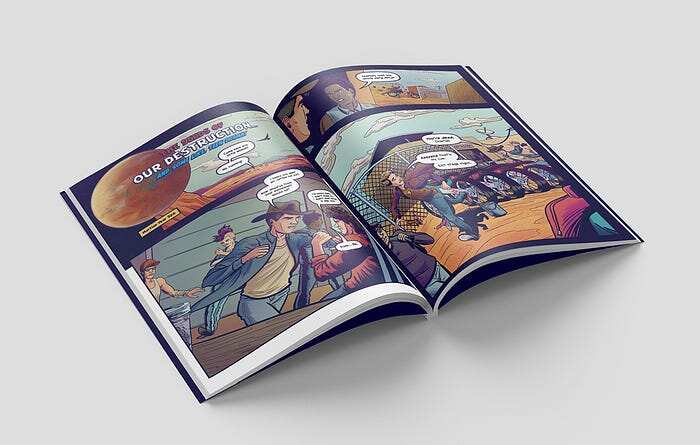
One of the reasons Mars Lightning feels so approachable is that it never talks down to its audience. When I mentioned that it was something I enjoyed and felt comfortable handing to my teenage son with a strong recommendation, Luther’s response was thoughtful and firm. Younger readers, he said, deserve stories that respect their intelligence. Growing up on 1990s cartoons, he watched shows aimed at kids that were never afraid to engage with darker themes and complex ideas. He wanted to bring that same philosophy into his own work. The result is a story that works across age groups—accessible without being simplistic, honest without being overwhelming.
Naturally, I had to ask what comes next. Is Mars Lightning just the beginning? Luther didn’t hesitate. He already has plans for ten graphic novels. Seven are largely mapped out, with three supported by strong outlines, and he knows exactly where the story is headed—including how it ends. This isn’t a world he’s figuring out as he goes; it’s one with a long runway ahead of it.
That led to a more playful question. If Mars Lightning somehow landed at Netflix as a live-action series, who would play Charlie Storm? Luther paused, thought it through, and landed on Joe Keery—citing the hair and the attitude as a surprisingly good fit. The idea doesn’t feel far-fetched.
But if you ask Luther how he truly envisions Mars Lightning, his answer is immediate: as a cartoon. Growing up on X-Men: The Animated Series and Spider-Man: The Animated Series, that format has always been the dream. When I suggested how powerful it would be to see the words Created by Luther Mosher at the beginning of an animated Mars Lightning series, he paused. After a moment, he admitted that it would make him feel at peace. Creative goals shift, he explained, but that moment would feel final—in the best way. Accomplished.
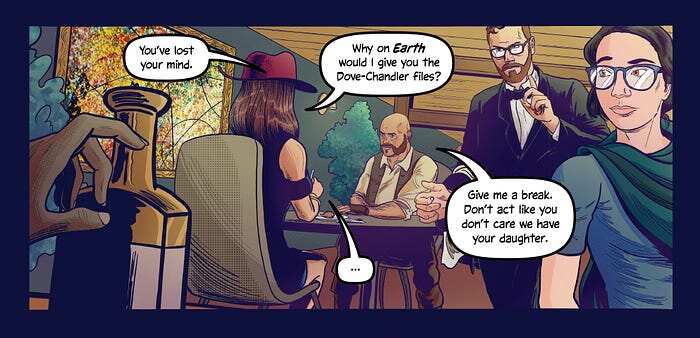
As our conversation wound down, I wanted to know what he found most challenging about writing and illustrating his own comic. Luther was blunt. He loves writing. He loves drawing. But drawing is far harder. The constant sketching, redrawing, and revising can be overwhelming—but it’s also unavoidable. For him, it’s simply the cost of getting the story out of his head and onto the page.
When asked what advice he’d give to aspiring comic artists, his answer was simple and honest: work a little every day, even if it’s only five or ten minutes. Keep going when it’s hard, and don’t waste energy beating yourself up if progress feels slow—it’s okay. Trust yourself to see it through. If you believe in what you’re making, you’ll get it done.

For a man named after his great-grandfather, Luther Mosher did exactly that. He trusted himself. And in doing so, he gave us Mars Lightning—a comic well worth your time.
Disclaimer
This article was suggested by me after purchasing and reading Mars Lightning. I firmly believe that good art deserves to be shared. As for Luther Mosher, he genuinely comes across as the kind of creator you want to root for—kind, thoughtful, and deeply passionate about his work. I highly recommend picking up Mars Lightning before you’re the last one who hasn’t.
All images used in this article were provided via Luther Mosher’s press kit. Luther did not guide or influence this interview in any way. The interview was conducted via Zoom, with notes taken freely during the conversation. All responses are Luther’s own, though they have been lightly edited by me for clarity and readability.