Julius Malema Under Fire After Social Media Post Sparks Immigration Tension Debate
iReport South Africa | 09.05.2026 19:58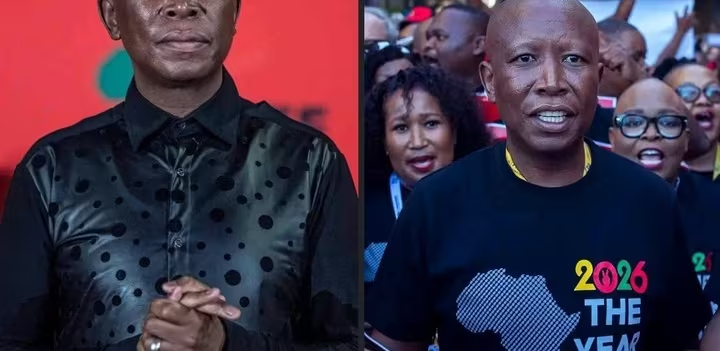
The recent social media activity of Julius Malema, the leader of the Economic Freedom Fighters (EFF), has ignited a fierce national debate, once again bringing South Africa’s complex relationship with immigration into the spotlight. Known for his provocative political style, Malema’s latest comments have drawn sharp criticism from those who believe his rhetoric risks inflaming social tensions in a country already grappling with deep-seated economic anxieties.
Immigration remains one of the most sensitive issues in South African politics. For years, the presence of foreign nationals has been linked in public discourse to challenges such as high unemployment rates, the overextension of government resources, and localized social conflicts. Against this backdrop, political analysts warn that statements from influential figures can act as a catalyst for unrest. They argue that leaders have a heightened responsibility to choose their words carefully, as social media allows even nuanced comments to be stripped of context and spread rapidly, potentially swaying public opinion in dangerous directions.
However, Malema’s supporters view the situation differently. They contend that the backlash is a misinterpretation of his true intent. From their perspective, the EFF leader is simply addressing structural issues regarding border management and the economic pressures facing the working class—topics they believe are often ignored by the political establishment. For his backers, these comments are not an attempt to divide, but a necessary provocation to spark an honest conversation about the country’s future and its resource allocation.
The reaction online reflects a nation deeply divided. While many South Africans are calling for a more measured and unifying tone from their representatives to prevent xenophobic sentiment, others defend the right of political figures to challenge the status quo, no matter how polarizing the subject may be. Ultimately, this controversy underscores the immense influence Malema holds over the national narrative. It serves as a stark reminder that in a fragile social climate, the line between robust political debate and the erosion of social cohesion is incredibly thin, leaving many to call for a more productive and responsible approach to discussing the nation’s challenges.