Drushantha Ramsamy returns to the Madlanga Commission: What to know
Explain | 05.08.2026 17:48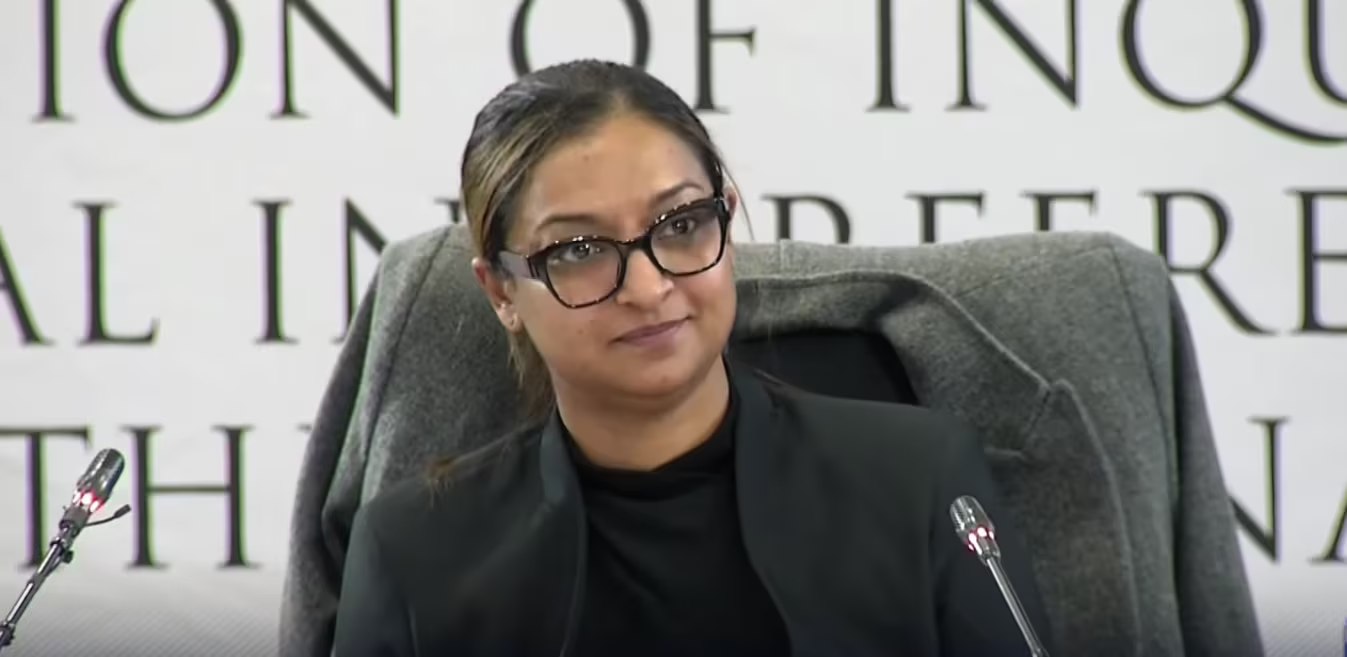
State advocate Drushantha Ramsamy returned to the Madlanga Commission on Wednesday after her previous testimony produced viral clips, an explosive recording and serious questions about the Investigating Directorate Against Corruption. Here is what you need to know before she continues.
The most important part of Drushantha Ramsamy’s testimony is not the shocked faces, smirks or laughter that followed her bombshell testimony; it is what her evidence could reveal about dysfunction inside South Africa’s specialised anti-corruption unit.
Ramsamy returned to the Madlanga Commission on Wednesday after, among other things, accusing her former boss, Andrea Johnson, of misleading the inquiry about her role in investigations involving senior Crime Intelligence officials. She also played a recorded conversation in which Johnson told Ramsamy that they would need to figure out a way for her to avoid testifying.
The clips of her testimony made Ramsamy an instant social media favourite. But beneath the meme-worthy moments sits a serious institutional question: can South Africans trust the Investigating Directorate Against Corruption, or IDAC, to follow the law while investigating other people for allegedly breaking it?
Who is Drushantha Ramsamy?
Ramsamy is a state advocate at IDAC, the National Prosecuting Authority unit responsible for investigating and prosecuting serious corruption.
She was involved in work linked to investigations into Crime Intelligence head Lieutenant General Dumisani Khumalo and Technical Support Services head Brigadier Dineo Mokwele. Ramsamy has told the commission that there were numerous irregularities in the decisions to investigate, arrest and prosecute the officials.
Why is she back before the commission?
During her testimony on Thursday, 30 July, Ramsamy disputed Johnson’s account of how closely she had been involved in IDAC investigations.
Johnson had sought to distance herself from some operational decisions, saying she relied on information provided by investigators. Ramsamy offered a very different version. “She was the dictator of this matter,” Ramsamy told the commission.
She alleged that Johnson oversaw major steps in the investigations and was in regular contact with chief investigator Dylan Perumal. Ramsamy described Johnson’s attempt to distance herself from the work as “a straight lie”, adding that she feared being victimised when she returned to the office.
The commission has since indicated that it is prepared to provide Ramsamy with protection if necessary.
What was in the recording?
Ramsamy played a recording of a phone call she received from Johnson after one of Johnson’s appearances before the commission. In the recording, Johnson is heard saying that they needed to find a way for Ramsamy not to testify. She also suggests that Ramsamy should leave the country if the commission calls her.
The call produced the kind of reaction usually reserved for a reality-TV reunion: dropped jaws, laughter and loud silence.
Johnson also criticised the commissioners, calling them nitpicky and unprofessional. She complained that commissioners had made her feel “as dumb as two bricks” and said they would damage both women’s reputations.
The recording is dramatic, but its possible significance extends beyond embarrassing comments. The commission will need to consider why the former head of an anti-corruption body appeared to be discussing how a subordinate could avoid giving evidence to a public inquiry.
Johnson must now be given an opportunity to explain the conversation and respond to Ramsamy’s wider allegations.
What is the underlying investigation about?
The dispute centres partly on how IDAC handled a complaint submitted by National Coloured Congress leader and MP Fadiel Adams in 2024.
The complaint led to investigative steps involving Crime Intelligence officers; the investigation has been widely panned.
Evidence before the commission raised questions about which affidavit IDAC relied on, whether officials followed the correct legal procedures and how much Johnson knew about the decisions being made.
Ramsamy testified that the complaint Johnson presented to the commission was not the same version she had previously been shown.
The documents used to authorise an investigation help determine what investigators are legally permitted to examine and whom they may question. A questionable document or an investigation outside IDAC’s mandate would be far more serious than office gossip between unhappy colleagues.
Why should South Africans care?
IDAC was created to tackle high-level corruption. Its credibility depends on prosecutors following proper procedures, exercising independent judgement and being honest about who authorised important decisions.
If Ramsamy’s version is correct, the commission is not simply dealing with a personality clash between a boss and her former subordinate. It may be looking at an institution where instructions changed repeatedly, staff feared challenging senior leadership and responsibility was shifted once controversial decisions came under scrutiny.
Those remain allegations, not established facts. But they go directly to whether the country’s anti-corruption machinery can be trusted.
What should we watch for next?
Ramsamy’s return is expected to see her give an account on disputed investigations and the instructions she had received. The key questions are whether she produces further documents or recordings, whether her evidence supports claims that IDAC departed from its normal procedures and how the commission tests contradictions between her version and Johnson’s.
Johnson is expected to return to answer the new allegations. That response could be just as important as Ramsamy’s evidence.
The recording gave South Africa its reality-TV moment. Ramsamy’s next testimony could tell us whether the real scandal is not what was said on the phone, but what was happening inside the institution tasked with fighting corruption.