The Crisis of Police Awareness and Citizen Rights in India
Medium | 28.12.2025 22:07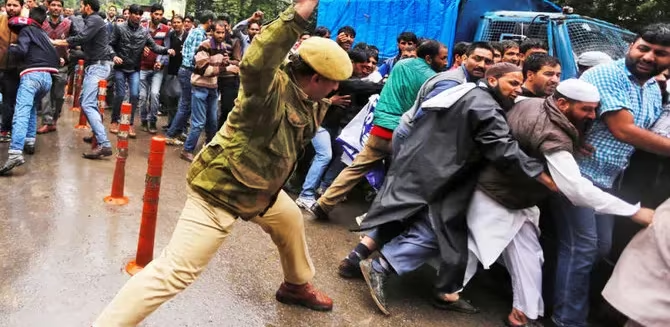
The Crisis of Police Awareness and Citizen Rights in India
In India, the police are entrusted with the responsibility of maintaining law and order, protecting citizens, and enforcing justice. However, multiple observations and reports reveal a serious and recurring problem: many police officers lack awareness of their own legal limits and the fundamental rights of the citizens they are meant to protect. This gap in understanding not only endangers public trust but also contributes to widespread human rights violations.
For many citizens, interaction with law enforcement is associated with fear rather than protection. Eyewitness accounts describe repeated incidents of physical intimidation, beating, and verbal abuse during routine policing, arrests, and crowd control operations. Such behavior occurs in everyday encounters, reflecting a systemic problem rather than isolated incidents. The absence of accountability exacerbates the issue. Victims frequently have no effective means to challenge misconduct, and officers are rarely subjected to independent investigations. This creates an environment in which excessive use of force can continue without consequence, undermining both constitutional protections and public confidence in the justice system.
A significant concern is the police’s consistent disregard for due process. During arrests or detentions, citizens are often not informed of the reasons for their detention, their right to legal counsel, or other procedural protections guaranteed under the law. Standard protocols, such as proper documentation, filing necessary approvals, or maintaining custody records, are frequently neglected. This procedural negligence is compounded by a lack of legal awareness among officers themselves. Many seem unfamiliar with constitutional safeguards, procedural requirements, or international human rights standards that govern law enforcement conduct. Consequently, even routine police work can lead to arbitrary treatment, abuse of power, and violation of citizens’ rights.
Verbal abuse and intimidation by police personnel are frequently reported. Swear words, threats, and demeaning language are used against individuals during arrests, questioning, or public interactions. Such conduct is not merely disrespectful; it reflects an institutional culture in which accountability is limited and the exercise of power is unchecked. The combination of physical aggression and verbal intimidation instills fear among citizens, particularly those from disadvantaged communities, and signals that law enforcement is not an impartial protector but an unpredictable authority figure.
The problem is not only about direct misconduct. In many observed cases, police fail to intervene when citizens face harassment, abuse, or threats from others. This passivity, sometimes in the presence of powerful individuals or politically connected actors, results in selective enforcement of the law. Vulnerable citizens are left unprotected, while those with influence or resources face fewer consequences for similar or even more serious actions.
At the core of these issues is a pervasive lack of awareness — both among police officers and the citizens they serve. Many individuals are unaware of their fundamental rights, while officers are insufficiently trained or informed about legal limits, procedural obligations, and human rights standards. This dual gap creates a cycle in which violations occur frequently, go unchallenged, and become normalized.
When police exceed their authority or fail to enforce laws impartially, the consequences are profound. Citizens lose trust in law enforcement, fear replaces cooperation, and marginalized groups are disproportionately affected. The democratic principle of rule of law is undermined when those responsible for enforcing justice are themselves unaware or negligent.
The repeated failure of police to respect legal boundaries, inform citizens of their rights, and maintain procedural standards represents a critical challenge to India’s justice system. Excessive force, verbal abuse, arbitrary arrests, and selective inaction highlight a systemic crisis rooted in lack of awareness and accountability. Until these foundational issues are addressed, law enforcement risks remaining a source of fear and inequality rather than protection and justice.