Experts warn over rising pedestrian deaths in SA
Explain | 29.05.2026 18:40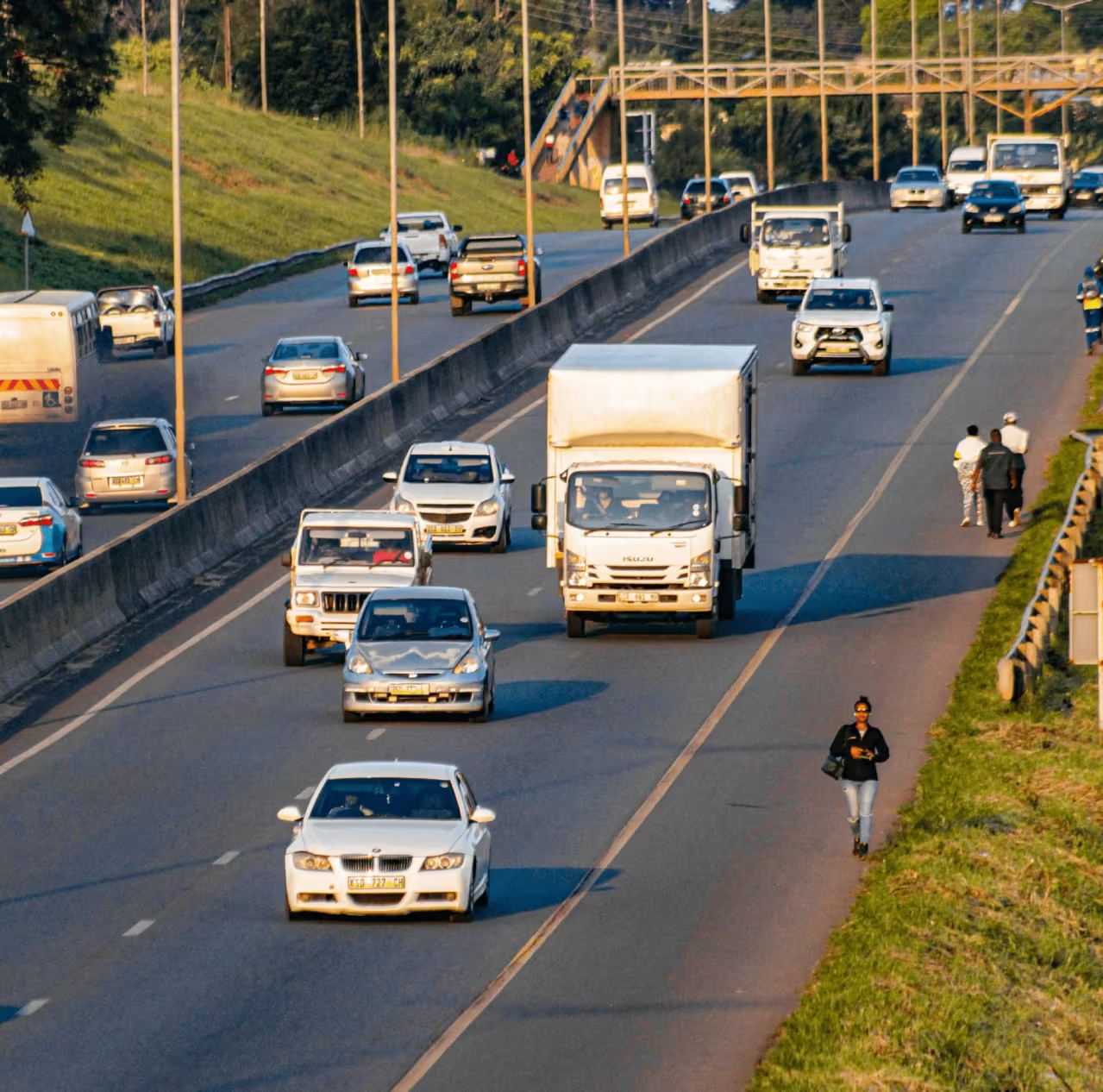
Pedestrian fatalities continue to rise in South Africa as unsafe roads, speeding, weak infrastructure and limited alternatives put vulnerable road users at risk.
The issue of pedestrian deaths has yet again come into the spotlight after two crashes that claimed six lives in Limpopo’s Vhembe District last week. Two of the victims were pedestrians.
According to Limpopo’s Department of Transport and Community Safety, three more pedestrian fatalities were recorded this week alone: an 82-year-old man near Thavhani Mall in Vhembe, a 40-year-old woman in Phalaborwa, and a 70-year-old woman in Sekhukhune. Authorities say all three incidents involved pedestrians crossing in unsafe areas.
But for many South Africans, particularly people living in townships, rural communities and informal settlements, avoiding dangerous roads is often easier said than done.
Every day, Kea Marobane walks alongside high-speed traffic and heavy trucks to get to work. “It is the hardest experience to get through,” he told /explain/. “I try to be as quick and careful as I can because of the risks.”
Marobane, who has been using the same route for nearly three years, said he has no safer alternative. “This is the only way.”
His experience reflects the reality faced by thousands of pedestrians across South Africa, who rely on walking as their primary mode of transport despite unsafe road conditions.
Why pedestrian deaths are so common
Road Safety Partnership South Africa general manager Lucky Molaudzi said many communities were never designed with pedestrian safety in mind.
“A large number of people rely on walking as their primary mode of transport, particularly in townships, rural areas, and informal settlements, yet the infrastructure often does not adequately protect them,” he said.
Molaudzi said speeding, drunk driving, distracted driving, poor visibility at night, and weak law enforcement all contribute to crashes involving pedestrians.
He added that many people are forced to walk long distances along highways and busy roads with few pavements, pedestrian bridges, or safe crossing points. In many communities, pedestrians are forced to share roads directly with fast-moving vehicles and trucks.
“The higher the speed of a vehicle, the lower the driver’s reaction time and the greater the impact during a collision,” Molaudzi said.
Infrastructure and enforcement failures
South Africa’s road-safety challenges are also linked to infrastructure problems. Many roads lack basic pedestrian protections such as pavements, marked pedestrian crossings, proper lighting, and speed humps. Poorly maintained roads, potholes, faded road markings, and inadequate signage increase the danger even more.
Night-time conditions are especially risky, with poor visibility contributing to a significant number of pedestrian deaths. Authorities and road-safety organisations say stronger law enforcement is equally important. Speeding, reckless driving, drunk driving, and failure to yield to pedestrians continue to place lives at risk.
The Limpopo Department of Transport and Community Safety has urged both motorists and pedestrians to obey road rules.
Road-safety experts say reducing pedestrian deaths requires cooperation between the government, communities, schools, and civil-society organisations.
Molaudzi said pedestrian safety cannot be addressed through infrastructure alone. “Road safety is a shared responsibility,” he said.
Pedestrians are encouraged to avoid crossing roads in unsafe areas, walking on highways, or using cellphones and earphones while navigating traffic. Heavy trucks and fast-moving vehicles have larger blind spots and longer stopping distances, making visibility and awareness critical for survival.
For pedestrians like Marobane, however, awareness alone cannot solve the problem. As long as safer alternatives remain out of reach, many South Africans will continue to risk their lives simply trying to get to work and back home again.