his rage, my ‘female’ rage
Medium | 22.01.2026 09:02
his rage, my ‘female’ rage
Follow
7 min read
·
1 hour ago
Listen
Share
When He Bleeds, It’s Byron: How male pain gets a leather jacket while female pain gets a prescription
I was sixteen when I realized my sadness had the wrong aesthetic.
A friend—let’s call him James, because of course—had just published an essay about his depression. It was all rain-streaked windows and whiskey at 2 AM, Bukowski references and that particular kind of beautiful devastation that gets called "raw" and "unflinching." People shared it widely. They called it brave. Someone compared him to David Foster Wallace.
I had written about my depression too, a few months earlier. Mine included panic attacks in grocery store aisles and the specific humiliation of crying at school. It included the exhausting labor of appearing fine. A few people told me it was "relatable." One person suggested I might want to talk to someone.
His pain was literature. Mine was a symptom.
There’s a scene in Fleabag where the protagonist watches a man she’s interested in wipe his mouth with his hand after kissing her—casual, animal, confident. "That’s it," she says to the camera. "That’s the move. If I did that, I’d look like a cow."
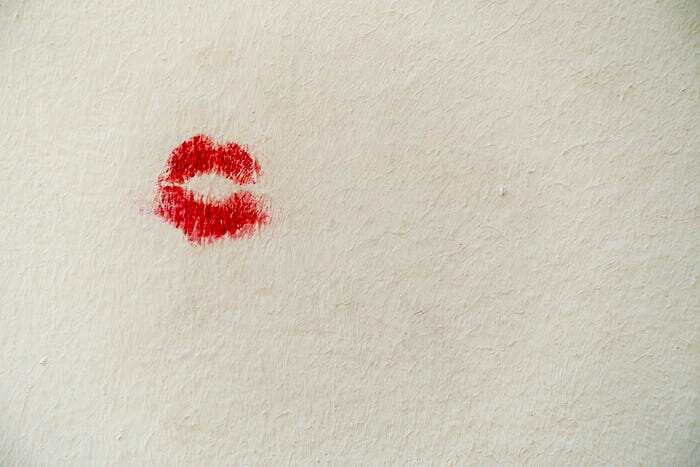
The observation is funny because it's true. We understand implicitly that the same gesture carries different weight depending on who performs it. But we talk less about how the same applies to suffering.
When a man is angry, he’s passionate. Intense. Think of every brooding hero from Heathcliff to Tyler Durden—their rage is romantic, even admirable in its purity. It’s given weight, context, philosophical import. His anger means something about the world. It’s diagnostic.
When a woman is angry, she's hysterical. The addition of the adjective "female" before "rage" isn't descriptive—it's diminishing. It creates a subcategory, implies that women's anger is somehow a different species of emotion, one requiring its own taxonomy. As if anger, in its true form, is inherently male, and we're just performing a variation.
I keep thinking about that phrase: "female rage." We don't say "male rage" unless we're specifically trying to critique toxic masculinity. Regular rage—the default, universal kind—is assumed male. Women have to qualify.

In The Odyssey, Achilles' rage is mēnis—divine wrath, the kind that shapes the fate of nations. It opens the Iliad: "Sing, O Goddess, the anger of Achilles." His fury is so monumentally important it requires divine witnessing.
Meanwhile, Medea's rage—which, granted, involves murdering her children—gets pathologized as female hysteria, the madness of a scorned woman. Never mind that the gods literally drove her to it. Her pain doesn't get to be cosmic. It's personal, private, small.
This double standard runs through everything. Hemingway's alcoholism was tragic; a female writer's would be messy. Cobain's depression was profound; a woman's is attention-seeking. The male artist suffers for his art; the female artist is just difficult to work with.
I started noticing this everywhere once I saw it. How my male classmates could be "intense" while I had to manage being "too much." How their emotional honesty was authentic while mine risked being unprofessional. How a man’s confessional essay was brave and a woman’s was oversharing.

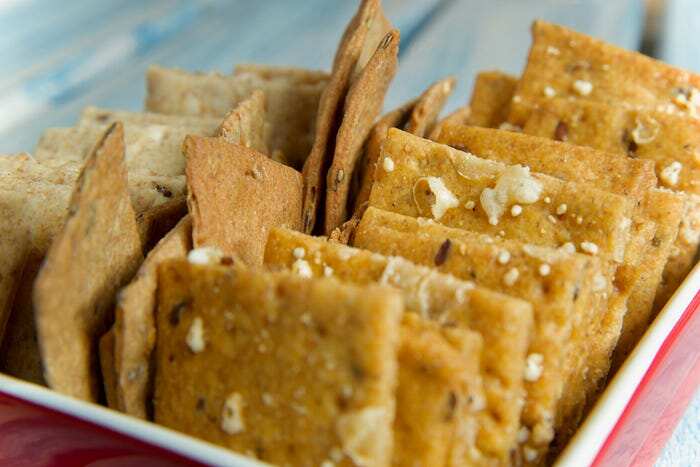
Part of what makes this so insidious is how it colonizes our interior lives. We learn to translate our own experiences into terms that might be taken seriously. I caught myself doing this recently, rewriting a piece about grief. In the first draft, I'd included specific, unglamorous details—the way I couldn't shower for days, how I ate crackers standing at the kitchen counter because sitting at a table felt like pretending at normalcy I couldn't maintain.
In revision, I found myself reaching for broader language, universal themes. Making it less specific, less bodily. More palatable. I wanted my grief to be the kind that could be read as insight rather than incapacity.
Get Celia Solstice’s stories in your inbox
Join Medium for free to get updates from this writer.
Subscribe
Subscribe
I had to force myself to put the crackers back in.
Carson, as usual, is doing several things at once. But what strikes me is the universality of her "you"—not gendered, not qualified. Just: you are full of rage because you are full of grief. The equation is clean, human, undifferentiated by identity.
But in practice, that universal "you" tends to default male. We have centuries of literature about male grief converting into rage converting into art. We have far fewer models for what it looks like when a woman's pain is allowed to exist without immediately becoming a cautionary tale about female emotion.
What would it mean to let women's pain be as messy, as complicated, as philosophically rich as men's has always been allowed to be? Not "female pain" as a subcategory, but pain—unqualified, ungendered, given the same weight and attention we've historically reserved for male suffering?
I’m not arguing that men don’t suffer, or that their pain isn’t real. I’m talking about whose pain gets to be poetic. Whose suffering is allowed to mean something beyond the personal. Whose rage gets to be righteous rather than just crazy.
The poet Anne Sexton wrote, "I am torn in two / but I will conquer myself." Then later: "And if I say that I am death / it is because we are very intimate." Her work was often dismissed as too personal, too confessional, too concerned with the body and its breakdowns. As if Sylvia Plath’s "Daddy" wasn’t as much about power and history as it was about family. As if Emily Dickinson’s fascination with death wasn’t a philosophical inquiry.
The male confessional poets—Lowell, Berryman, Schwartz—were praised for their unflinching honesty. The women were "confessional," a term that carried the faint whiff of therapy and oversharing, of making readers uncomfortable with too much feeling.
My pain doesn’t need to be packaged as insight to be legitimate. It doesn’t need to be poetic. It doesn’t need to teach anyone anything or connect to larger themes about the human condition.
Sometimes my depression is just depression—not a dark night of the soul, not a descent into productive darkness. Just the exhausting work of getting through days that feel heavier than they should.
Sometimes my anger is just anger—not female rage, not even rage at all really, just frustration at the thousand small ways the world demands I be smaller, quieter, easier.
And somehow, paradoxically, giving myself permission to let it be unpoetic, un-universal, just mine—that's when it actually starts to connect to something larger. Because the truth is, male pain was never actually more universal than female pain. It was just given more space to expand into.
I'm writing this now, and I'm aware of all the ways I'm still performing. Still trying to be smart enough, literary enough, to deserve your attention. Still worried about being too angry, too raw, not insightful enough.
But I’m also aware that this worry—this constant self-monitoring, this impulse to qualify and contextualize my own experience—is itself part of the story. Part of what it means to write while woman, to feel while woman, to suffer while trying not to inconvenience anyone with it.
I’m tired of translating my pain into terms that might make it acceptable. I’m tired of watching men’s suffering get elevated to art while women’s gets diagnosed. I’m tired of "female rage" and "female pain," as if our emotions are always somehow marked, always a subspecies of the real thing.
My pain isn't female pain. It's just pain. And yours is too—whatever gender you are, however you suffer.
The trick they pulled was making some of us believe our pain needed an adjective. That without the right aesthetic, the right references, the right amount of controlled intensity, our suffering didn't count as serious. That we were too much or not enough, too emotional or not emotional in the right ways.
I think about James sometimes, and his rain-streaked windows. I hope his essay helped him. I hope the recognition felt good, felt deserved.
But I also think about that moment when I was sixteen, realizing my sadness had the wrong aesthetic. How I almost let that silence me. How I almost decided that if my pain couldn’t be poetic, maybe it wasn’t worth expressing at all.
I'm glad I didn't. I'm glad I kept the crackers in, kept the grocery store panic attacks, kept all the unglamorous specificity that makes suffering real rather than romantic.
Because the truth is, pain doesn't need to be Byron to be valid. Sometimes it's just standing at a kitchen counter at 3 AM, eating crackers because you can't quite manage anything else, and that's enough. That's the whole story. That's all the poetry it needs.