Real Politics: The poor pay for South Africa’s broken immigration system
Scrolla | 29.06.2026 15:13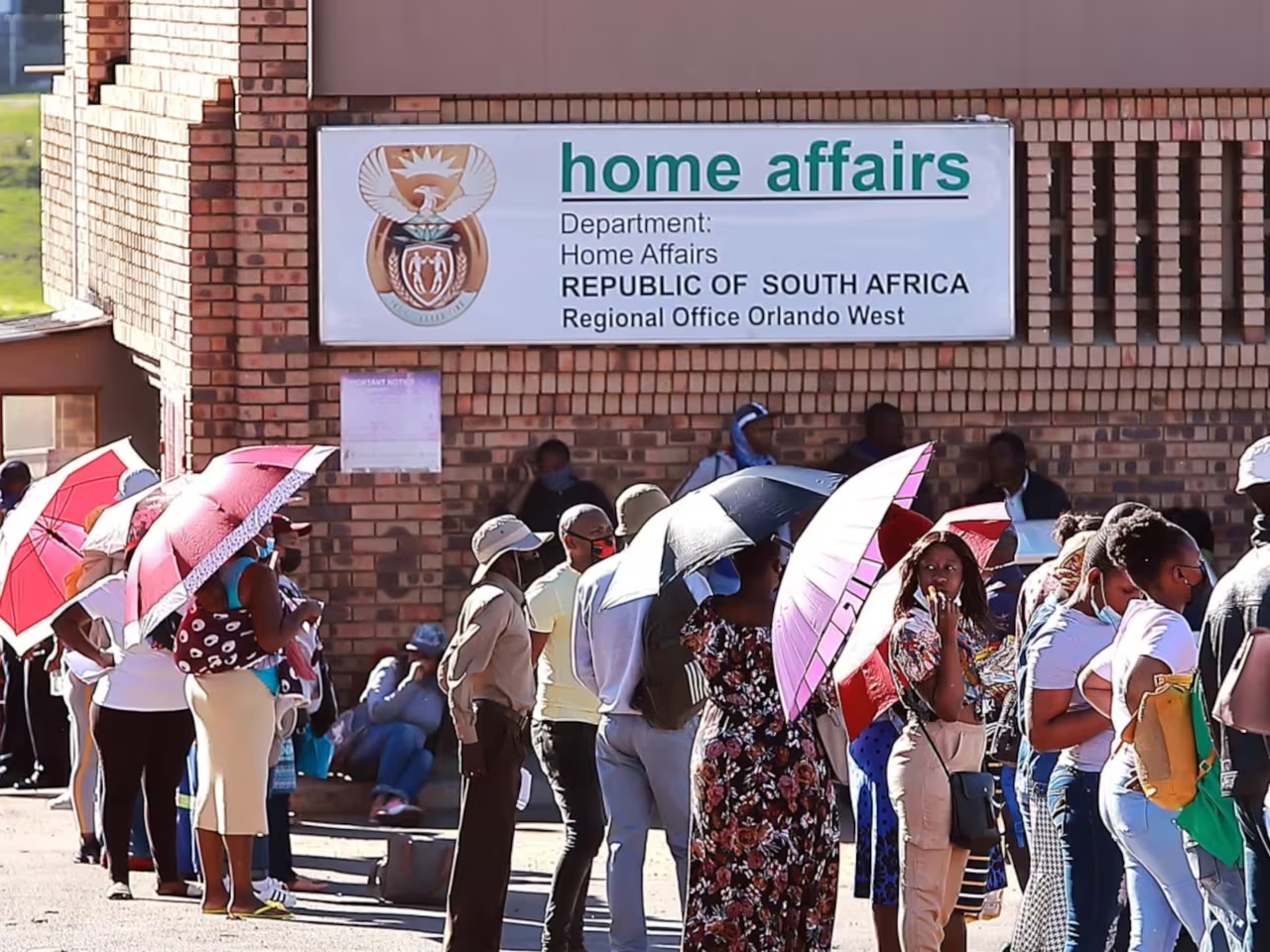
As South Africa edges toward another flashpoint over immigration, one uncomfortable truth cannot be ignored. The loudest anger is not coming from the leafy suburbs of Cape Town, Durban and Sandton, writes Zukile Majova in Real Politics.
The loudest noise is coming from townships and villages where unemployment is high, public services are collapsing and every opportunity feels like a fight for survival.
For many poor South Africans, immigration is not an abstract political debate. It is something they experience every day.
Walk through many townships in Johannesburg, Durban or Cape Town and the pattern is clear. Foreign nationals are heavily represented in spaza shops, informal trading, delivery services, e-hailing and hospitality. Around mining communities, illegal mining syndicates — many involving foreign nationals — have brought violence, extortion and fear.
Whether every perception is accurate is almost beside the point. These communities are responding to what they see in front of them, while the state appears unable or unwilling to enforce its own immigration laws.
The people least affected by this reality are often the quickest to dismiss it. Families in affluent suburbs are not competing for entry-level jobs, RDP houses, places in overcrowded public schools or space in government clinics. Their children attend private schools. They use private healthcare. Their security is paid for. Immigration is largely an intellectual debate for them.
For township residents it is not a debate. It is a daily reality.
Every day they stand in longer queues at clinics. They compete for casual work that disappears within minutes. They watch small businesses struggle against fierce competition. They live in overcrowded settlements where housing shortages worsen every year.
The frustration grows because many South Africans believe the rules are not being enforced.
South Africa allows many visitors to enter legally for limited periods. Most comply with the law. But others overstay their permits or work without the authorisation required by law. Weak enforcement, corruption and slow immigration systems mean many remain in the country for years. A legal arrival becomes an illegal stay, while employers willing to ignore the law gain access to cheaper labour.
Universities face similar pressure. Every year thousands of South African matriculants spend one or two years trying to secure a place because there are simply not enough spaces. When people believe immigration rules are not being enforced properly, it fuels the perception that citizens are being pushed to the back of the queue.
Crime deepens those fears. Most foreign nationals are law-abiding people trying to earn a living. But criminal syndicates involved in illegal mining, drug trafficking, counterfeit goods and human trafficking have damaged public confidence. Communities near illegal mining operations have seen armed gangs take control of entire areas while the state struggles to respond.
South Africans are often told these concerns amount to xenophobia. That is too simple.
Violence against foreign nationals is wrong. Innocent people should never be attacked because of where they were born. But rejecting violence does not mean pretending there is no problem. A country has both the right and the responsibility to control its borders, enforce its immigration laws and decide who may live and work within them.
South Africa has failed on all three counts.
For years the government has spoken about Pan-African solidarity while allowing corruption, weak border management and a broken asylum system to undermine public confidence. Instead of fixing those failures, politicians too often dismiss public anger as ignorance or prejudice. That response has only widened the gap between government and the communities carrying the greatest burden.
South Africa is not alone in wrestling with these tensions. Across Europe, immigration has become one of the defining political issues of our time. In the United Kingdom, France, Germany, Italy and the Netherlands, voters have backed parties promising tougher immigration laws. Concerns about pressure on jobs, housing, healthcare and public services — alongside organised crime — have driven that shift. South Africa’s circumstances are far more severe because unemployment and poverty are so much higher. But the underlying question is the same: how do you manage immigration in a way that is lawful, orderly and fair to citizens and arrivals alike?
The answer to South Africa’s crisis is not mob justice. It is not intimidation or attacks on foreign nationals.
It is a government that finally enforces its own laws. That means secure borders, faster decisions on asylum applications, action against visa overstayers, deportation of those who remain unlawfully, prosecution of employers who hire illegal workers and a determined fight against corruption inside the Department of Home Affairs.
Most of all, it means recognising that poor South Africans are not imagining the pressures they face.
The rich experience immigration as a political argument. The poor experience it as another queue, another missed job, another overcrowded classroom and another day wondering whether their own government still puts its citizens first.
Until the state regains control of its immigration system, that frustration will only continue to grow.
Pictured above: A queue outside a Home Affairs office.
Image source: Democratic Alliance