MK Party Names 3 to National Assembly Impeachment Committee
iReport South Africa | 21.05.2026 15:01
The uMkhonto weSizwe (MK) Party just officially announced their three senior figures heading to the National Assembly’s impeachment committee, and this is a major move that signals they’re ready to play a serious role in one of Parliament’s most high-stakes processes!
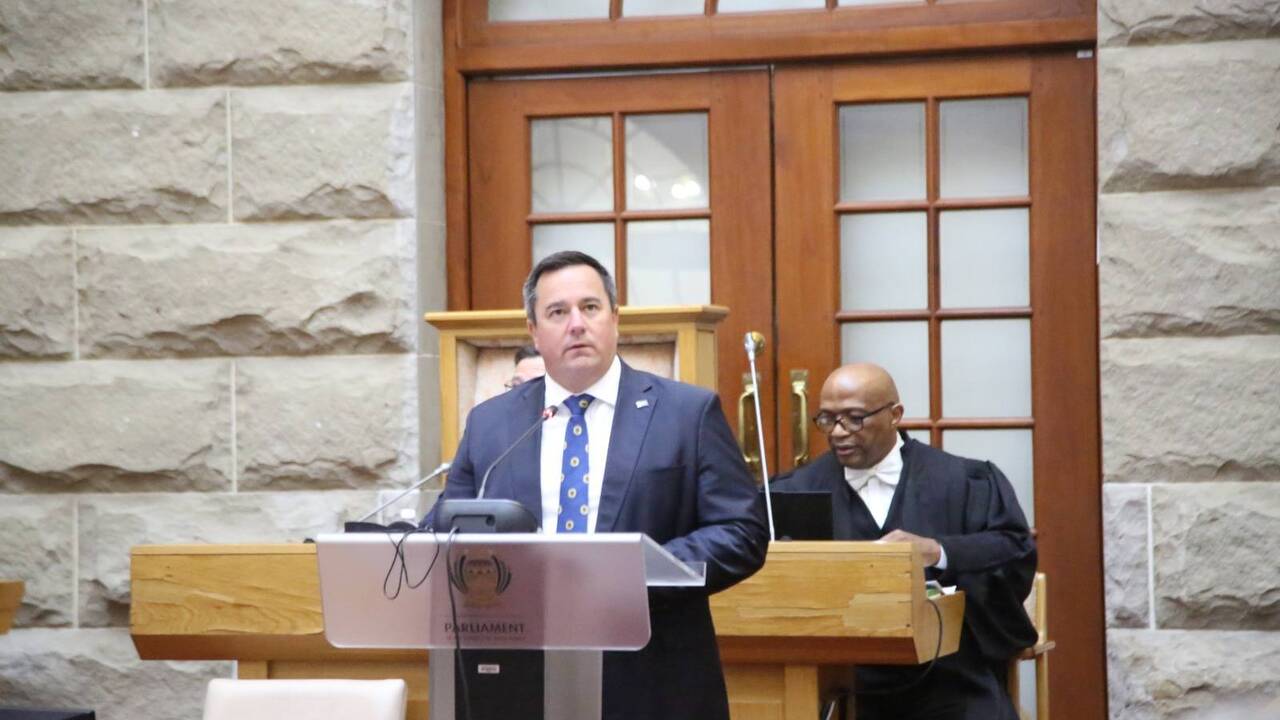
The MK Party’s delegation is being led by John Hlophe, with Chief Whip Mmabatho Mokoena-Zondi and MP Khanyisile Litchfield-Tshabalala rounding out the team. The party announced it through their official X platform, making it clear they’re stepping into the impeachment proceedings with some serious firepower.
Hlophe’s placement immediately puts one of the MK Party’s most recognizable parliamentary figures front and centre in this process. As the party’s First Deputy President and parliamentary leader, he’s been a dominant voice in debates about governance, constitutional issues, and executive accountability. Having him lead the delegation shows the MK Party is treating this seriously.
Mokoena-Zondi’s deployment strengthens the party’s parliamentary team even more. The MK Party recently elevated her to the influential Chief Whip position after she served in the National Council of Provinces. Party leadership has praised her for her discipline, organizational leadership, and commitment to pushing the MK Party’s parliamentary agenda. She’s clearly someone they trust to handle high-pressure situations.
Litchfield-Tshabalala completes the three-member team that the MK Party believes will firmly represent their position during the committee’s work.
The impeachment committee has already grabbed national political attention, with opposition parties ramping up pressure inside Parliament. Recent tensions in the National Assembly have seen MK Party MPs openly challenging proceedings involving President Cyril Ramaphosa, arguing that impeachment-related concerns can’t be ignored. So this deployment shows the MK Party is doubling down on their involvement in accountability issues.
Political analysts are expecting the committee’s work to become one of the most closely watched parliamentary developments in the coming weeks. Parties are positioning themselves strategically ahead of key debates on accountability and governance, and the MK Party’s move shows they want to be right in the middle of those conversations.
The MK Party said their three deployees are ready to execute their responsibilities in line with the party’s constitutional and political mandate within Parliament. Translation: they’re prepared to push their agenda hard during these proceedings.
So here’s what everyone’s wondering: will the MK Party use this committee position to genuinely hold the government accountable, or are they using it as a platform to advance their own political interests?
President Cyril Ramaphosa has dismissed four Cabinet members in less than two years, but critics argue that recycling compromised leaders into new posts undermines accountability.
The latest minister to be removed was social development minister Sisisi Tolashe. She follows higher education minister Nobuhle Nkabane, forestry and fisheries minister Dion George, and deputy trade minister Andrew Whitfield. This tally already surpasses former president Jacob Zuma’s record for dismissals within a two year period.
Ramaphosa acted swiftly against George and Whitfield, who are from the DA, but took longer to move against ANC members Nkabane and Tolashe. However, the article notes a troubling pattern: ministers dismissed for misconduct or incompetence often resurface in new deployments.
Thembi Simelane, accused of soliciting a bribe as mayor of Polokwane, was moved from justice to human settlements. Nkabane, dismissed for nepotistic appointments, returned as ANC deputy chief whip in parliament.
Since 1994, redeployment has been the default remedy, with failed ministers rebranded as ambassadors, MPs, or senior officials. Critics argue this happens while capable individuals wait for opportunities.
The article contrasts South Africa with China, a close ally, where Beijing acts decisively against corruption with heavy penalties. South Africa, by comparison, talks about corruption but rarely punishes it.
The absence of consequences emboldens repeat offences. Dismissing ministers is progress, but redeploying them elsewhere signals that misconduct is a temporary inconvenience rather than a career ending breach of trust.
The author argues that genuine accountability requires not just dismissal but exclusion from future positions of power. Without such resolve, Cabinet discipline will remain a revolving door, and South Africa’s democracy cannot afford this cycle of recycling.