Government gets tougher on illegal mining
Scrolla | 12.08.2026 15:15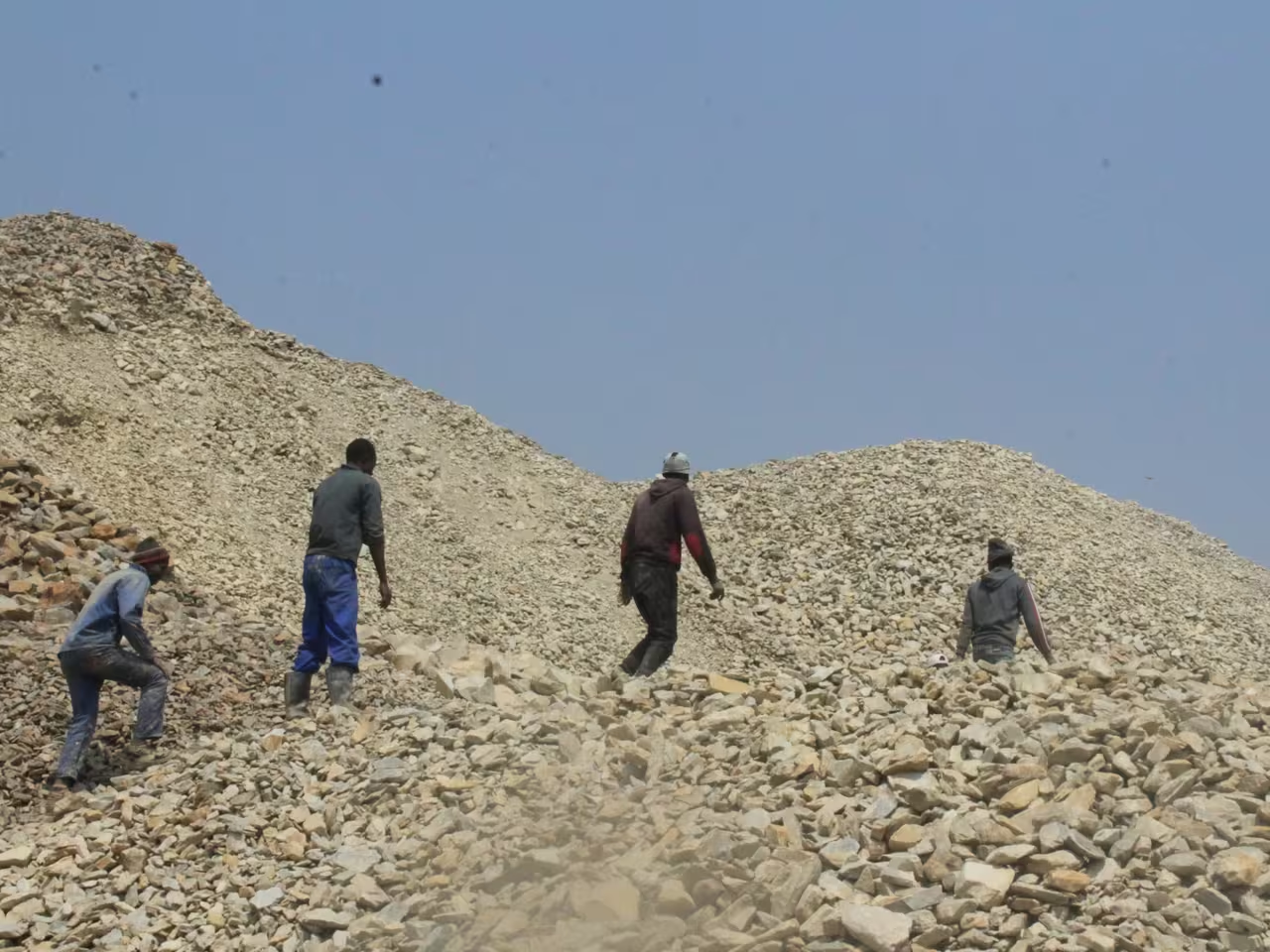
By Palesa Matlala
• The proposed General Mining Laws Amendment Bill would change several laws and introduce a specific offence aimed at cracking down on illegal mining.
• Lawyers for Human Rights welcomed tougher laws but warned that enforcement should also target those behind illegal mining operations, not only zama zamas.
The government wants tougher laws to tackle South Africa’s illegal mining problem.
The proposed General Mining Laws Amendment Bill is being presented as an important new weapon against illegal mining operations.
One of the biggest proposed changes would make illicit mining a specific criminal offence.
The bill proposes changes to several existing laws instead of dealing only with mining legislation.
These include the Criminal Procedure Act, the Mineral and Petroleum Resources Development Act and the Precious Metals Act.
The changes are aimed at giving authorities stronger legal tools to deal with illegal mining.
Illegal miners, commonly known as zama zamas, have often been at the centre of police operations against illicit mining.
But Lawyers for Human Rights has warned that simply going after zama zamas will not solve the bigger problem.
The organisation welcomed the proposed changes but said authorities should be careful about where enforcement is focused.
It warned against concentrating only on miners working underground, saying many of them are pushed towards illegal mining by poverty and unemployment.
The proposed changes come as the government works on several pieces of legislation.
Justice and Constitutional Development Minister Mmamoloko Kubayi has also announced the Legal Practice Amendment Bill and the Regulation of Trusts Bill.
Those bills have been gazetted for public comment.
Another proposed law deals with the difficult line between freedom of expression and encouraging people to commit crimes.
The move follows a 2020 Constitutional Court judgment in a case involving the Economic Freedom Fighters.
The Constitutional Court found that Section 18(2)(b) of the Riotous Assemblies Act of 1956 was unconstitutional.
The section dealt with the incitement of crimes.
The court found that criminalising the incitement of a crime in the way the law did placed an unjustified limit on freedom of expression.
Government now wants to replace that legal provision with legislation that addresses the Constitutional Court’s concerns.
Kubayi said the proposed law is intended to protect freedom of expression while still allowing the law to deal with people who encourage violence.
Cabinet has approved the Conspiracy, Instigation and Incitement to Commit Offences Bill.
It will now be sent to Parliament, where lawmakers will consider and process it.
The mining bill, meanwhile, could become an important part of the government’s response to illegal mining if it eventually becomes law.
But the proposed legislation still has to go through the required processes before it can take effect.
The public also has an opportunity to have a say on legislation that has been gazetted for comment.
South Africans have until 11 September to submit comments on the three bills currently open for public input.
The debate around the mining changes is likely to focus not only on tougher punishment but also on who should be held responsible for illegal mining.
While zama zamas are the most visible part of the problem, Lawyers for Human Rights says poverty and unemployment must also be considered when the government decides how the new laws will be enforced.
For now, the government is hoping the proposed changes will give authorities stronger powers to tackle a problem that existing laws have struggled to contain.
Pictured above: Government has proposed new laws aimed at strengthening the fight against illegal mining and making illicit mining a specific criminal offence.
Image source: File.