The diplomatic hunger games: Why countries fight so hard for temporary UN seats
Explain | 05.06.2026 14:22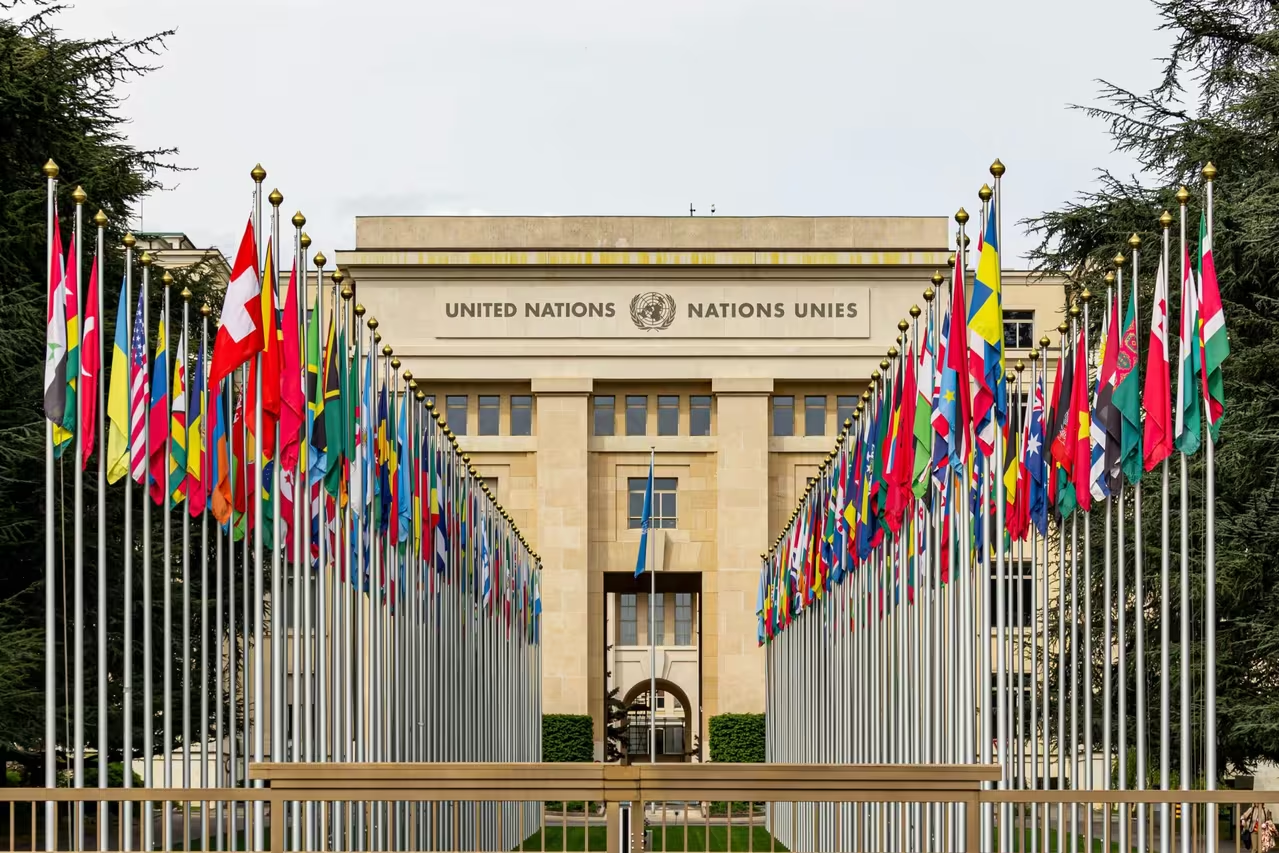
No veto, two-year term, endless lobbying. So why do countries fight so hard for a temporary seat on the UN Security Council?
On Wednesday, diplomats from around the world gathered at the United Nations headquarters in New York for one of global politics’ strangest popularity contests: the election of five new non-permanent members to the UN Security Council.
The winners were Austria, Portugal, Kyrgyzstan, Zimbabwe, and Trinidad and Tobago. They will each serve two-year terms from 1 January 2027, joining the 15-member council responsible for international peace and security.
But why do countries spend so much time and money on a position with so little longevity?
And, here’s the kicker: these countries won’t even have veto power. That belongs only to the council’s five permanent members: China, France, Russia, the United Kingdom. and the United States.
And yet countries still spend years campaigning for a temporary seat at the table. What this grants them is access, influence, prestige and proximity to power.
Richard Gowan is the International Crisis Group’s former UN director. He told /explain/ that, even without a veto, a Security Council seat gives countries entry into “some of the most sensitive debates in world politics”.
Elected members can use their terms to promote their interests, polish their national reputation, and build diplomatic networks with the big powers that last long after their two years are up.
In other words, you may not own the house, but for two years, you get a key to the front door.
The Security Council matters because it can authorise peacekeeping missions, impose sanctions, and shape the UN’s response to wars and crises.
Non-permanent members cannot simply boss the council around. At the end of the day, Gowan said, the veto powers still decide the trickiest issues. But elected members are not just furniture in the room.
They can influence debates, chair committees, shape language in resolutions, and, when they work together, send strong political messages. Gowan pointed to elected members uniting on issues such as Gaza as an example of how they can still matter, even when the permanent members are divided.
They can also do quieter work behind the scenes. According to Gowan, skilled diplomats from elected countries have played an important role in managing back-channel conversations between veto powers on divisive issues.
That is particularly important at a time when relations between major powers are, to use the technical diplomatic term, a hot mess.
Researcher Isel van Zyl told /explain/ viewing veto power as the only form of power in the Security Council is simplistic. Non-permanent members can use their position to signal national priorities, build alignment with permanent members, and strengthen their regional influence.
Political activist, researcher, and lecturer Dale McKinley put it more plainly: “It is about sitting at the big table.”
That table can offer higher profiles, diplomatic connections, and even potential trade opportunities, depending on a country’s location, resources, and strategic importance.
Winning a seat is not as simple as raising your hand and saying, “Pick me, I love peace.”
Candidates need to gain a two-thirds majority in the UN General Assembly. If all 193 member states vote, that means 129 votes. Even countries running unopposed still campaign hard, because the size of their vote matters. A big win says: we have friends. A weak win says: maybe fewer friends than we thought.
Gowan said candidates spend years working for votes, with plenty of |diplomatic horse-trading and schmoozing” involved. Smaller UN member states can become particularly important because their votes may be shaped by personal relationships, promises of support, or broader diplomatic deals.
South Africa knows this game well. When it campaigned for its 2011-12 Security Council term, then international relations and cooperation minister Maite Nkoana-Mashabane held bilateral meetings with several countries to secure support.
South Africa argued that it was well placed to take up the seat because of its focus on peace and security, both domestically and internationally, and because of its previous 2007-08 term.
That’s the thing about these campaigns: they are not just about what a country stands for. They are also about how well it can sell itself.
Van Zyl said the competition is mostly about diplomacy and what the seat can do for its occupant. McKinley was even more blunt, saying that although some countries have used the council to drive a more representative agenda for the Global South, most are driven by national self-interest.
The biggest surprise this time round was Germany’s defeat. Portugal secured 134 votes, Austria got 131, and Germany received 104. Germany’s loss has already triggered some soul-searching in Berlin, with reports suggesting its positions on Ukraine and Israel may have hurt its campaign among some UN members.
Kyrgyzstan’s win over the Philippines was another big moment. It will be the country’s first time on the council since joining the UN in 1992.
Is the Security Council outdated?
This is where things get awkward.
The Security Council was built for the world that emerged after World War II. That is why the five permanent members still hold veto power. But the world has changed dramatically since then. India, Brazil, South Africa, and other countries have long argued that the council no longer properly reflects today’s global power balance.
Gowan’s view is simple: the council is outdated, but reform is extremely difficult, so the world is probably stuck with it for now.
Van Zyl sees it slightly differently. She argues the council reflects current global power dynamics because it remains the theatre in which major powers display their influence. But she also said that if the council’s purpose is to deliver peace and security, its failures in a multipolar world raise serious questions about its ability to achieve that goal.
McKinley agrees that the council reflects power to some extent, as the most powerful military and economic states remain at the table. But he said it no longer captures the full picture, particularly as global crises – from pandemics to financial shocks – have shown how interconnected and competitive the world has become.
Even a flawed formulation still results in a table at which decisions are shaped, alliances are built, and influence is traded.
A non-permanent Security Council seat may not come with a veto. It may only last two years. It may involve endless meetings, careful wording, and more diplomatic smiling than any human being should reasonably have to endure.
But for countries trying to raise their profile, build influence, and cosy up to the big powers, it is still one of the hottest tickets in international politics.