Spain announces plans to ban social media for under-16s
BBC | 04.02.2026 03:32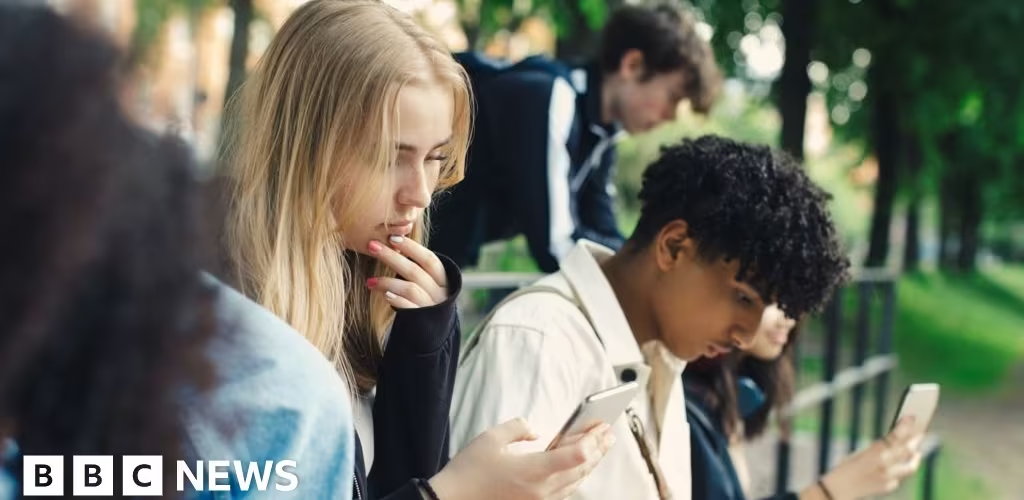
Spain has become the latest European country to make plans to ban social media for children under the age of 16.
"We will protect them from the digital Wild West," Prime Minister Pedro Sánchez said at the World Governments Summit in Dubai on Tuesday.
The ban, which still needs parliamentary approval, is part of a raft of changes that include making company executives responsible for "illegal or harmful content" on their platforms.
Australia became the world's first country to bring in a ban last year, with others watching - and judging - its success.
France, Denmark and Austria have also announced that they are considering their own national age limits.
The UK government has launched a consultation on whether to implement a ban for under-16s.
Social media companies have argued that the bans would be ineffective, difficult to implement and could isolate vulnerable teenagers. Reddit is challenging Australia's ban in the High Court.
"Today, our children are exposed to a space they were never meant to navigate alone," Sánchez said, describing social media as a place of "addiction, abuse, pornography, manipulation [and] violence.
"We will no longer accept that. We will protect them."
Sánchez first mooted a possible ban in November, but on Tuesday, the plan was fleshed out.
Under the changes, social media platforms would be required to have effective age verification systems, "not just check boxes, but real barriers that work," the prime minister explained, in a possible reference to the loopholes Australian children use to bypass checks - including simply using a photo of an adult.
The new laws would also criminalise manipulating algorithms to amplify illegal content.
"This is something created, promoted, and disseminated by certain actors whom we will investigate, as well as the platforms whose algorithms amplify disinformation in exchange for profit," Sánchez said.
"Hiding behind code and claiming that technology is neutral is no longer acceptable."
There would also be a new system designed to track "how digital platforms fuel division and amplify hate". No further details were given on how this would work.
Another measure, Sánchez said, would be to "investigate and prosecute the crimes committed by Grok [X's AI tool], TikTok, and Instagram".
The European Commission has launched an investigation into Grok over concerns it was used to create sexualised images of real people.
The UK has announced its own investigation into Grok and on Tuesday in France, the offices of X were raided by the Paris prosecutor's cyber-crime unit as it looked into allegations of offences including unlawful data extraction and complicity in the possession of child pornography.
X is yet to respond to either investigation - the BBC has approached it for comment. It has previously characterised the French investigation as an attack on free speech.
Sánchez said he hoped to get the laws passed next week, but that could prove difficult because his left-wing coalition government lacks a parliamentary majority.
Spain's main opposition party, the conservative People's Party, seems to approve of the ban, saying it has previously proposed similar restrictions. The far-right Vox party has spoken out against it, however.
In response to the announcement, X owner Elon Musk labelled Sánchez as a "tyrant and traitor to the people of Spain".
France has led the charge in Europe, with President Emmanuel Macron saying he wants a ban for under-15s in place by the start of the next school year in September.