‘No more coalition auctions’: How the DA plans to negotiate after November
Explain | 17.08.2026 19:58
South Africa has not even voted yet, but the DA is already thinking about what happens the morning after.
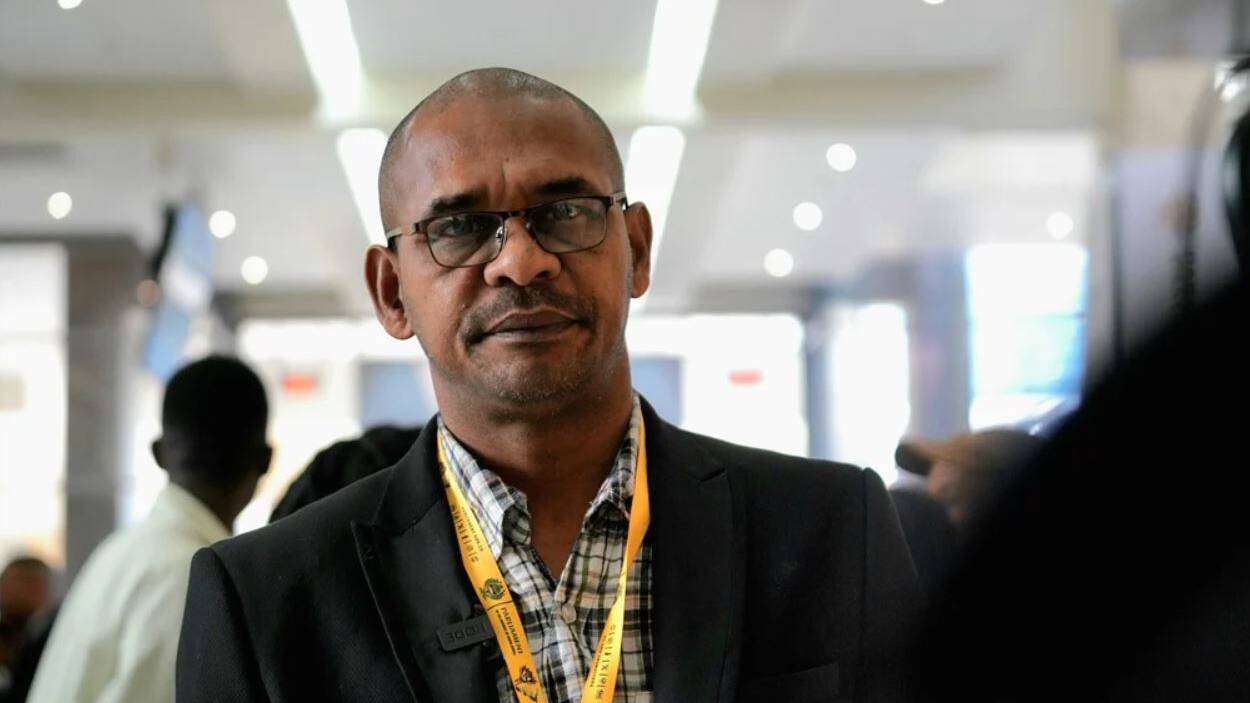
With local government elections set for 4 November, coalition governments are likely to be part of the conversation in several closely contested municipalities. If the DA finds itself sitting around negotiating tables again, federal chairperson Solly Msimanga says the party wants those talks to work very differently.
His main complaint? Too many coalition negotiations become an “auction” for political positions.
“One minute someone is talking to you and then, the next minute, they start talking to someone else because that person has said they’ll give them what you’re offering and more,” Msimanga told /explain/ on the sidelines of the DA’s local government manifesto launch in Johannesburg.
Tweet
His proposed solution sounds simple: decide what the government needs to accomplish before deciding who gets which job.
What does the DA want to do differently?
Msimanga says future negotiations should begin with an agreement on what parties actually intend to deliver.
In Johannesburg, for example, that could mean agreeing upfront on priorities such as stabilising the city’s finances, repairing infrastructure and reducing water losses.
Only after that, he argues, should parties negotiate political positions. “We’re going to be talking about what we need to deliver,” he said.
According to Msimanga, beginning with mayoral committee posts and other positions encourages parties to treat coalition talks as a bidding war rather than negotiations about running a municipality.
“To get coalition talks right, we have to move beyond talking about positions and start talking to parties that are looking for more than just positions,” he said.
The DA has been arguing for stronger coalition agreements for some time. In 2022, it proposed legally recognised agreements containing clear principles and dispute-resolution procedures, partly in response to instability in municipalities such as Johannesburg.
But Msimanga says the lesson has become even clearer after the party’s more recent experiences.
The ghost of Gauteng 2024
The obvious example is what happened after the 2024 general election. Neither the ANC nor the DA won a majority in the Gauteng legislature, opening the door to negotiations over a provincial unity government. Those negotiations collapsed.
The ANC and DA gave very different accounts of why. The DA accused the ANC in Gauteng of failing to negotiate in good faith and argued that the arrangement being offered did not reflect the parties’ respective electoral strength. The ANC, meanwhile, said the DA had made unreasonable demands and accused it of trying to dictate terms. The ANC ultimately proceeded without the DA.
Msimanga told /explain/ that Gauteng Premier Panyaza Lesufi wanted to chart a course separate from the national ANC-DA negotiations and was under pressure to distribute positions among different ANC structures.
Msimanga also says the DA wanted commitments on corruption investigations and wasteful spending before joining the provincial government.
“For us to have bought into the provincial government, we said that corruption cases needed to be addressed and we said that we wanted to change things which led to money being wasted, but [Lesufi] was not willing to do that,” he said.
That is the DA’s account. Lesufi and the Gauteng ANC have previously rejected the DA’s characterisation of the failed talks.
The important thing for November is that the experience appears to have hardened the DA’s view that coalitions need an agreed programme before they start dividing up offices.
Why Johannesburg makes this particularly urgent
Since the 2021 local government elections, the city has experienced repeated coalition breakdowns, government changes, and battles over mayoral positions. The DA has previously argued that political fragmentation and constant renegotiation among smaller parties have made the city especially unstable.
With no guarantee that any party will win an outright majority in November, another coalition is a very real possibility. Msimanga says simply agreeing on policy is not enough.
Coalition partners would also need a framework for resolving disputes without every disagreement turning into a motion of no confidence. Msimanga argues that partners need to know they can disagree without immediately detonating the entire administration.
So who will the DA actually work with?
Msimanga told /explain/ that, at this stage, the DA has not identified any party it would automatically refuse to negotiate with after the election.
That is notable given the DA’s much harder language around potential coalition partners in previous election cycles, when it regularly warned voters about an ANC-EFF “Doomsday Coalition”.
Msimanga’s red line now, at least according to his comments to /explain/, is less about the party’s name and more about what it brings to the negotiating table.
“We have to negotiate based on what can be delivered, what should be delivered, and what are the priorities,” he said.
If another party’s opening demand is essentially, “Which position do we get?” he says the DA would walk away. That does not mean the DA will suddenly discover ideological harmony with everyone.
It means Msimanga is signalling that the first test for a potential coalition partner will be whether it can agree on a programme of government.
Easier said than done
There is, of course, a rather large gap between the theory of coalition politics and the actual thing. Parties can agree on water, roads and budgets and still fight over who becomes mayor.
They can sign detailed agreements and later decide those agreements are inconvenient. When a few council seats can determine who controls a major metro, political positions inevitably become part of the negotiation.
The DA knows this better than most. It has been involved in coalition governments across South Africa and has experienced both relatively stable partnerships and spectacularly messy ones.
South Africans vote on 4 November. Only then will parties know who actually has the numbers to govern together. If no one wins outright in cities such as Johannesburg, the coalition horse-trading will begin almost immediately.
Msimanga says the DA wants the first question at that table to be: ‘What are we actually going to fix?’ Whether everyone else turns up asking the same question is another matter.
Prashalan Govender is a journalist who was shortlisted for the Vodacom Young Journalist of the Year Award twice. He is focused on reporting the stories that shape everyday life in South Africa, with a particular interest in politics, economics, and social issues.