Strangled, beaten and enslaved by my in-laws
BBC | 03.12.2025 07:26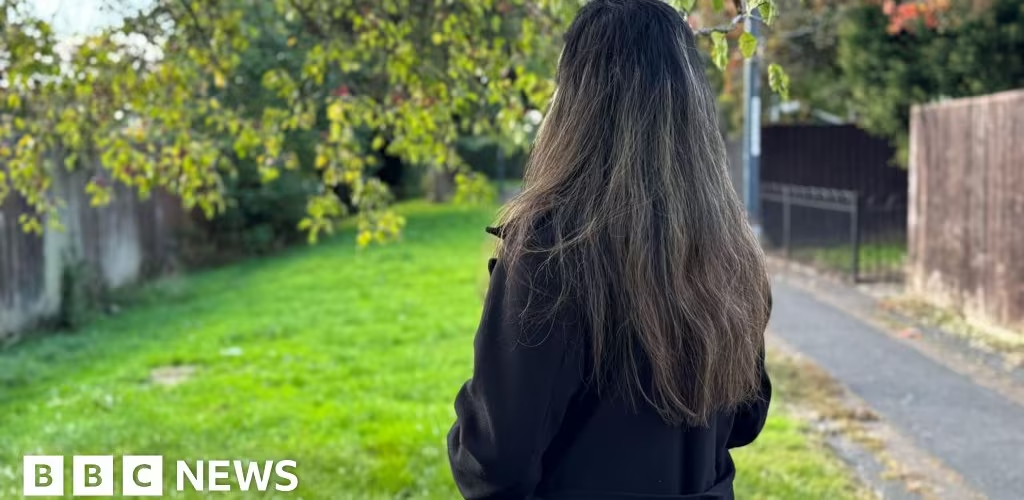
Isolated and alone, Sara says she felt powerless when the husband she was forced to marry in Pakistan became abusive. She was 21.
"He used to light a lighter on my face to scare me, [he said] 'I will burn you'," she says.
She says his controlling behaviour got worse when she was brought to the UK, and moved in with his parents in 2022.
Instead of the happy married life promised by her family, she was then attacked by her husband and forced to work as a slave by her in-laws.
A forced marriage is where one or both people do not consent to the marriage and pressure, or abuse, is used to force them into it.
It became illegal in the UK in 2014 as part of the Anti-social Behaviour, Crime and Policing Act and can result in a prison sentence of up to seven years.
Last year, according to Crown Prosecution Service figures, there were 30 prosecutions for the crime, which led to 16 convictions.
But charities like Karma Nirvana, which helps women affected by forced marriage, say the prosecution rates do not reflect the true number of victims.
The Derby-founded charity says it received 624 calls to its helpline last year, nearly three times the 229 calls recorded by the Home Office's Forced Marriage Unit.
'You'll be raped'
We have changed Sara's name and not disclosed the location she was brought to in the UK to protect her identity.
It was Sara's first time in England, she didn't speak the language and had very little knowledge of the country.
She recalls being reassured by family and friends that she would enjoy a "better life" in England and for a few weeks, the marriage did improve.
"Then slowly, everything seemed to be getting restricted, 'don't go out, don't do this, don't do that, don't do a job, stay at home only'," Sara says.
She adds she was told she would be raped or murdered by British people if she ever left the marital home.
Sara says: "In the UK, I was told 'you can't go out, if you go out alone, you'll be raped, don't go out alone, daytime or evening'."
Sara suddenly found herself unwillingly living a life of servitude.
She says her mother-in-law forced her to do household chores, and didn't allow her to leave the house.
Sara adds her mother-in-law described her as a "maid" and "servant".
Her situation deteriorated when her husband became physically violent.
"Sometimes he used to throw anything on me, he used to push me, sometimes he used to kick me," she says.
Things became even more unbearable for Sara, when she realised her husband and his family had switched off the wifi on her phone.
'He held my neck'
Unable to contact friends and family back home and feeling scared and alone, she says she found the courage to ask her husband why she had no wifi.
The consequences were devastating.
She says he lashed out in anger - throwing the TV remote and keys at her, which hit her in the face.
"He held my neck. He pushed me against the wall. He hit me three to four times on my head," Sara says.
She felt she was suffocating and thought she going to die.
Looking back, she recalls her mother-in-law watching it all "play out", simply telling her she should have kept quiet.
And then that night, she says her husband "slept near the door so that I didn't come out".
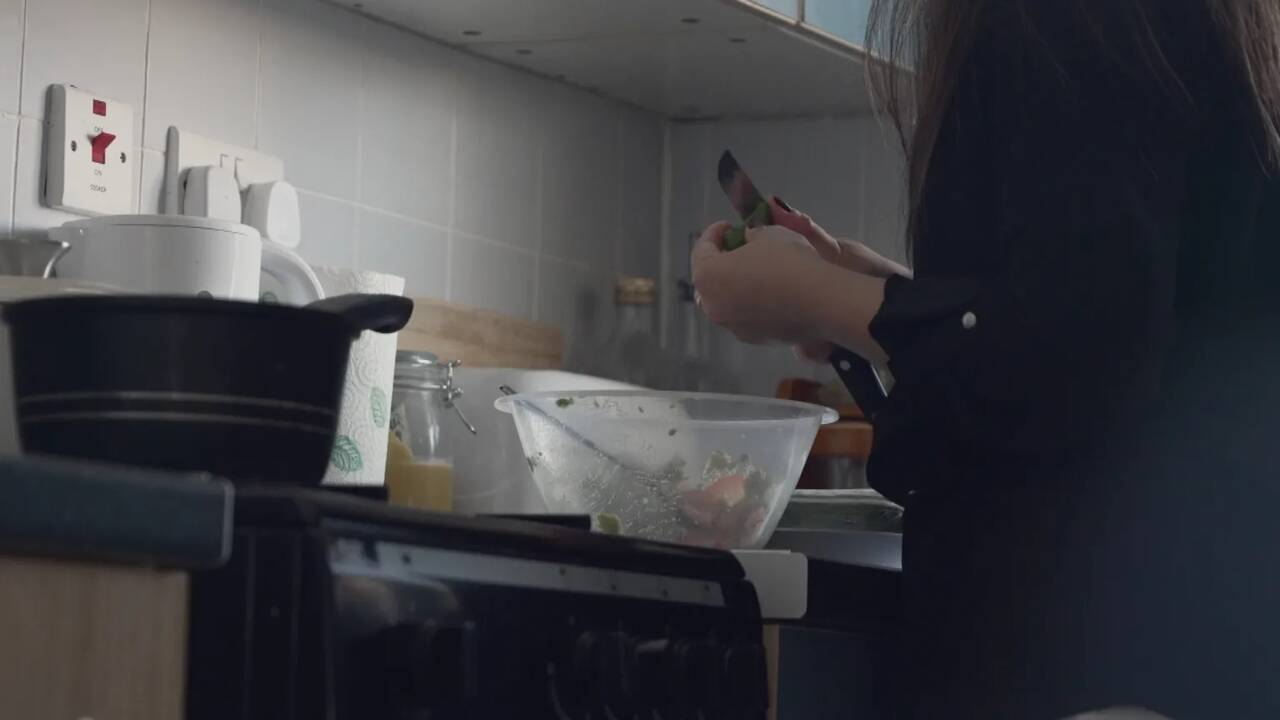
Sara remembers how frightened she felt after the attack by her husband, which she says left her with a "swollen face".
"I don't know what I did, how I did it, but I called the police after thinking and crying all night, at six in the morning," she adds.
Five minutes later, Sara heard officers knocking at the door.
She remembers one coming upstairs and into her bedroom as she curled up in a corner.
"When he came and saw me, my body was shaking so much. I was cold, my heartbeat was fast, my blood pressure was low," Sara says.
Police removed Sara from the family home, finding her refuge at a shelter in Leeds in December 2022.
Sara's husband was arrested, but she says she did not want to take any further action because she was worried about the safety of her family in Pakistan. He was not charged with any offences.
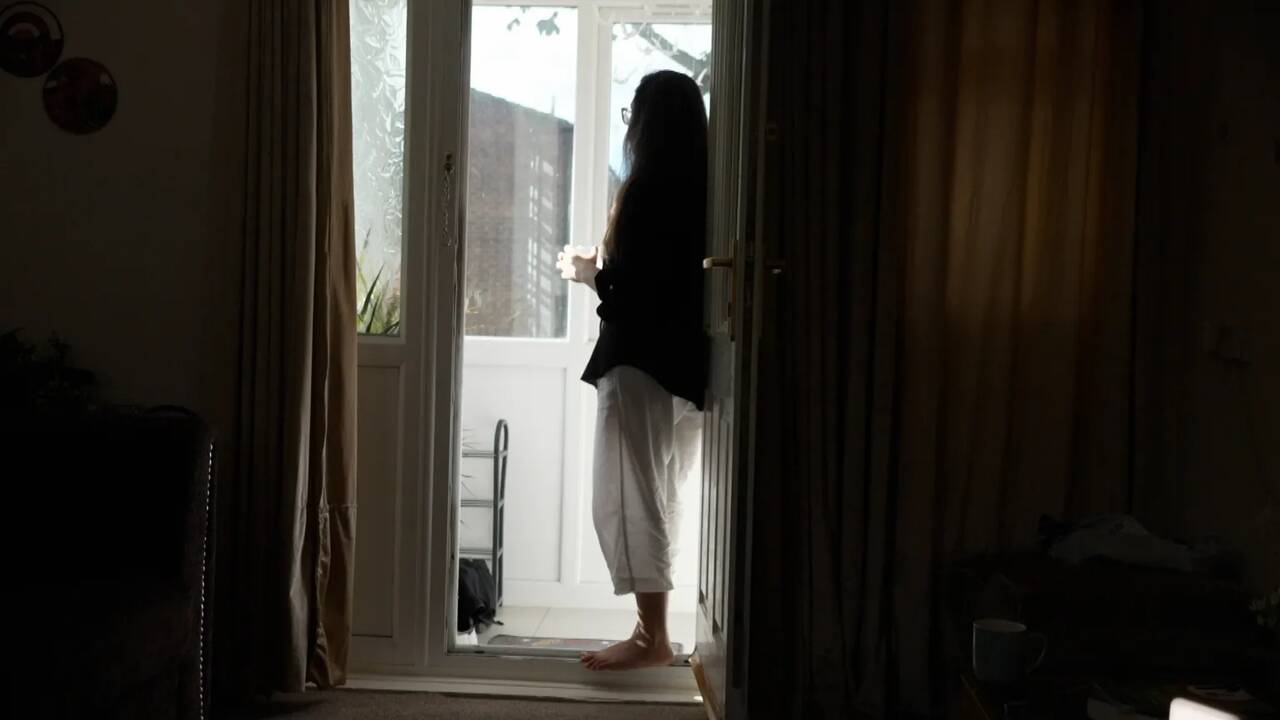
Eventually in July last year, Sara divorced her abusive husband.
She says she did not want to return to Pakistan, because she says divorced women are stigmatised there, and she was worried she would be forced into another marriage.
"What happens with family members is that they get her married again in some way or another," she says.
She now has settled status in the UK, is learning English and rebuilding her life in the Derbyshire area.
Sara has urged those involved in forced marriage to stop.
"By having a forced marriage, you are ruining the life of another person," she says.
"It's not that a girl's life is ruined, boys' lives are also ruined. We should first think about it, see it, understand it."
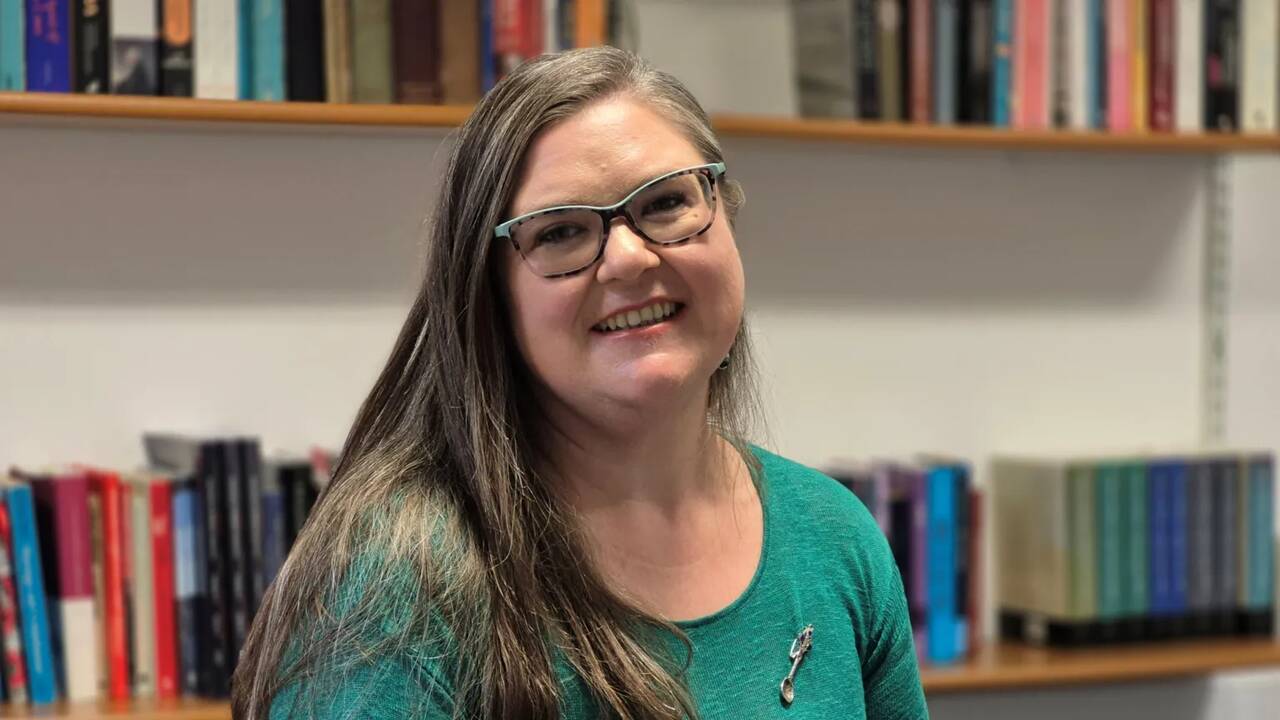
Sara is one of many forced marriage victims living in the UK. Currently, there are no reliable figures measuring how many people are affected.
To change this, the Home Office has said it will pilot a prevalence study looking at how widespread forced marriage is, as part of a raft of measures to crack down on honour-based abuse.
The department has been working with a team of professors at the University of Nottingham and the University of Birmingham to create a data tool in order to do this.
"We recommended to the government that they needed some new data," says Dr Helen McCabe, associate professor of political theory at the University of Nottingham.
Dr McCabe says this will be the first prevalence study of its kind in England and Wales, and could help to establish how many people are affected, whether forced marriage is increasing and how policy could be changed to help reduce it.
"Unless we know how many people are affected, we can't tell whether the police should change their practice or the Crown Prosecution Service or anything else without some baseline data of how many people are involved," Dr McCabe says.
The Home Office is set to build on the feasibility study by the universities, by testing and developing the tool to measure forced marriage and female genital mutilation.
It is expected to conclude by March, and aims to help the government understand the scale of the problem and identify what resources are needed.
In a statement, Jess Phillips, minister for safeguarding and violence against women and girls, said: "This government is introducing changes to laws and other measures to tackle this debilitating form of abuse and setting a clear direction for front-line staff that they must treat these crimes with the seriousness that they deserve.
"My message to those who commit these crimes is simple: we will bring you to justice."