Cala farmer plants his way into creating jobs
Scrolla | 12.08.2026 22:58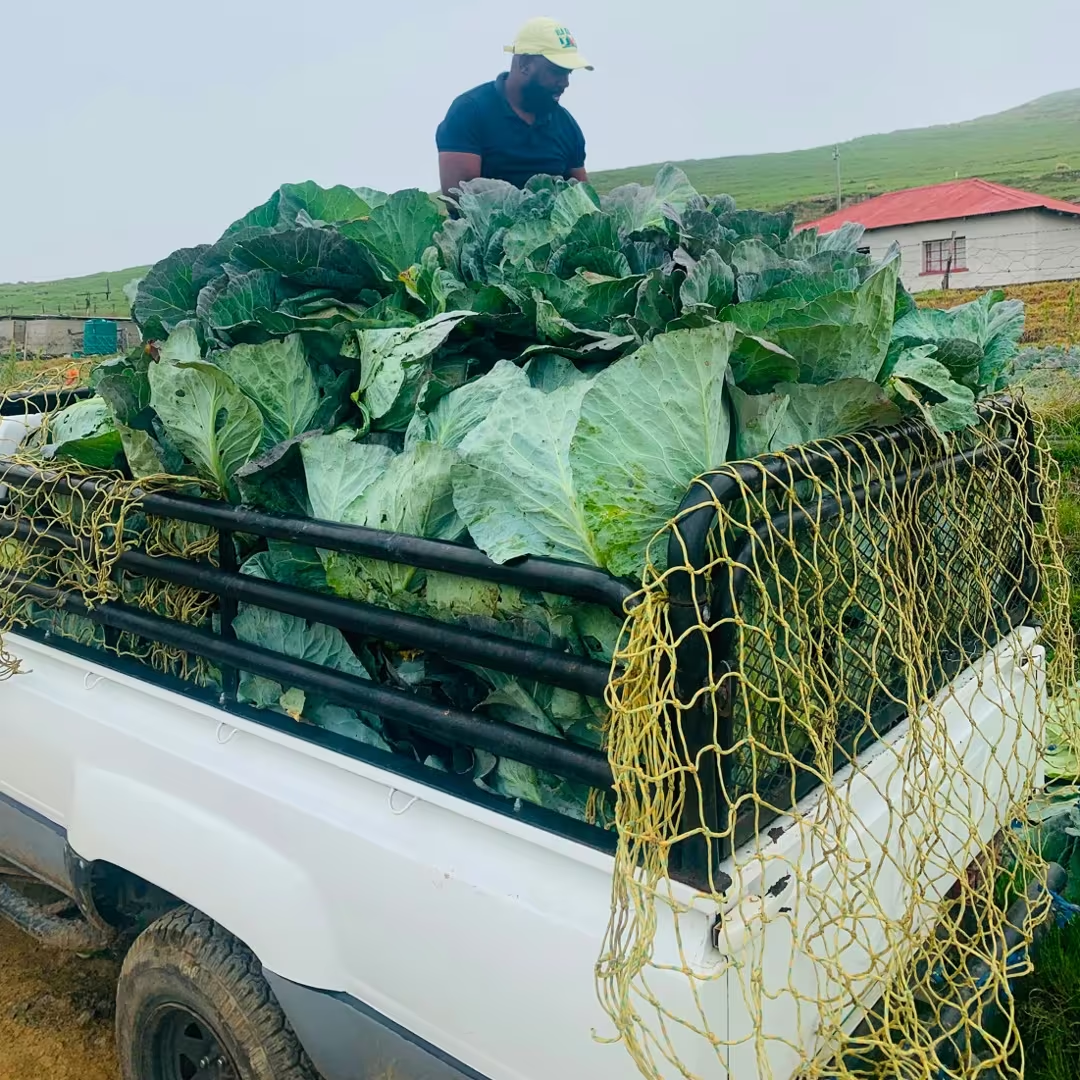
By Buziwe Nocuze
• Sivuyile Mapayi started with 2,000 cabbage and spinach seedlings during lockdown before growing his farming operation to 50,000 seedlings.
• Mapayi has created three jobs and hopes his growing vegetable business can provide more work for people struggling with unemployment in Cala.
What started as a way to put food on the table during lockdown has turned into a growing farming business for Sivuyile Mapayi.
Mapayi, who works as a technical employee at a security company in Cala in the Eastern Cape, started planting cabbage and spinach at his home in 2020.
South Africa was under the national Covid 19 lockdown and Mapayi suddenly had much more time at home.
Instead of sitting around, he decided to get his hands dirty.
“During the lockdown, I had many days spent at home, so I decided to use the time wisely by planting cabbage and spinach because I didn’t want to go hungry,” he said.
His sister soon joined him.
At first, they were growing vegetables mainly to make sure they had food.
But their garden produced something much bigger than they expected.
Community members became interested in buying their vegetables.
Local businesspeople also started buying from them.
“My sister joined me, and before we knew it, we were selling to community members and business people around our community,” Mapayi said.
The small garden slowly developed into a small-scale commercial farming operation.
Mapayi said they started by planting about 2,000 seedlings.
Those seedlings cost between R950 and R1,000.
Today, the operation plants as many as 50,000 seedlings.
But growing the business has also meant dealing with rising costs.
Mapayi said 50,000 seedlings now cost about R4,300.
As his farming costs increased, he had to increase the price of his vegetables.
Cabbages that once sold for R10 now cost R20.
But Mapayi said he remains aware that many people in his community are struggling financially.
“When pricing, we keep prices affordable for a community under economic strain,” he said.
His biggest achievement is not only the number of vegetables he can now grow.
The business has also created jobs.
Mapayi currently employs three people.
He knows three jobs will not solve South Africa’s unemployment crisis, but for the families receiving those salaries, the jobs matter.
“Our country has a big problem with high unemployment,” he said.
“Yes, to some people, employing three people might not be a big deal, but I am happy that the people we employed can take care of their families and don’t go to bed hungry.”
One of those workers is 54 year old Mntomnintshi Pololo.
Pololo said finding employment at his age can be difficult because many employers prefer younger workers.
He was grateful Mapayi gave him an opportunity.
“Having people like him in our communities is a blessing because no one wants to hire older people anymore,” Pololo said.
“He had younger applicants, but he never had a problem with hiring me. Now I can take care of my family with the money I make.”
The farming operation still faces challenges.
Mapayi said fertiliser is expensive and farmers also need products to protect cabbage and spinach from insects.
Those expenses add to the cost of producing vegetables.
Despite the difficulties, he said support from residents and local businesses has helped keep the operation going.
He also tries to give something back to the community when he can.
One of his regular customers, Lungiswa Dyonta, has been buying vegetables from Mapayi for four years.
She said freshness and quality keep bringing her back.
“I like his service, and his cabbages are big, just what customers like,” Dyonta said.
“He sells fresh vegetables. As a vendor, it is important to always make sure that you buy fresh vegetables.”
Mapayi now wants to take what started during one of the country’s most difficult periods and grow it even further.
His dream is to expand the farming operation and create more jobs for people in Cala.
“I pray that our business keeps growing so that we can employ more people,” he said.
For Mapayi, those first cabbage and spinach seedlings planted during lockdown were simply about making sure there was food available.
Six years later, the garden that started as a survival plan is feeding customers, supplying vendors and putting money into the pockets of three workers.
And Mapayi hopes 50,000 seedlings are only the beginning.
Pictured above: Sivuyile Mapayi from Cala, whose lockdown cabbage and spinach garden grew into a farming business that now provides three jobs.
Image source: Sivuyile Mapayi.