NSFAS crisis deepens as Buti Manamela faces scrutiny
Explain | 22.05.2026 20:07
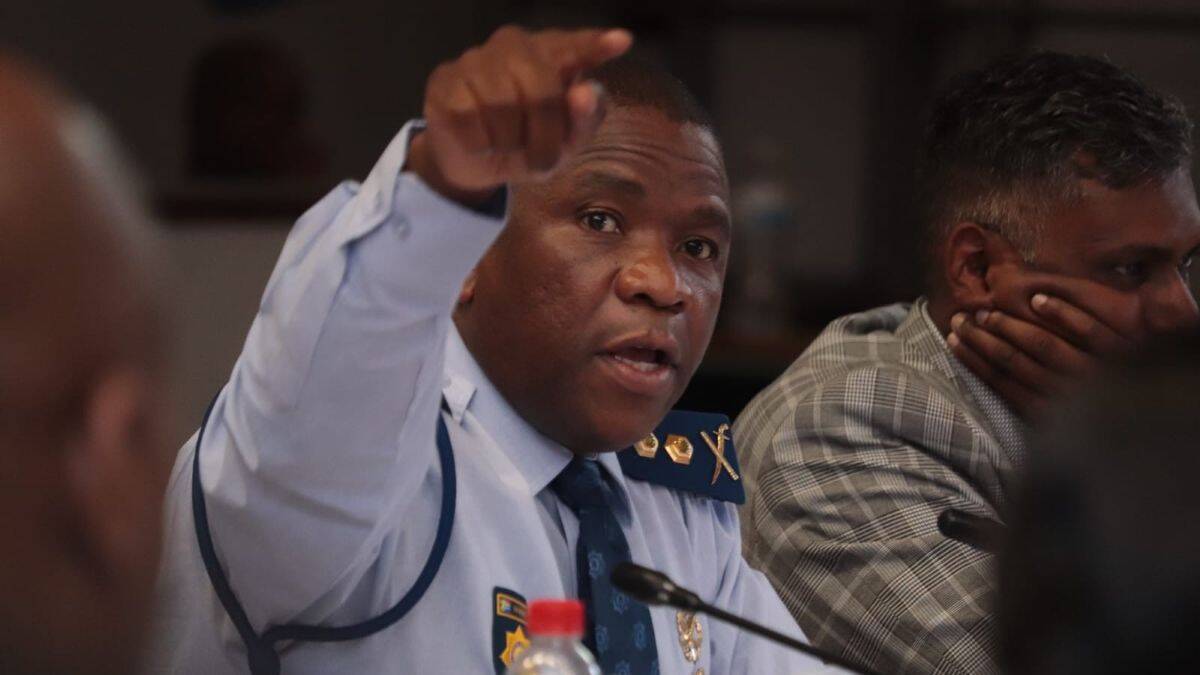
Higher Education and Training Minister Buti Manamela may have wiggled out of appearing before Parliament on Tuesday, but he’s not off scot free. Parliament’s portfolio committee on higher education and training has now rescheduled his appearance for 29 May.
The committee is set to hear from Manamela on why he placed the National Student Financial Aid Scheme (NSFAS) under administration. It’s the third time unlucky for the scheme, which has had three administrators since 2018. Meanwhile, seven members of the dissolved NSFAS board are heading to court on 2 June, asking that the administration decision be reversed.
On 4 May, Manamela invoked sections 17a to 17d of the NSFAS Act to dissolve the board and appointed Professor Hlengani Mathebula as administrator for the next 24 months. The decision followed the auditor-general’s disclaimer on NSFAS’s 2024/25 finances, in which R45 billion in bursary spending could not be verified.
NSFAS has a budget of more than R54.3 billion in the current financial year, meant for more than 744,000 students across South Africa’s universities and TVET colleges. Nearly 894,000 applications landed on its desk this year alone.
Despite the pressing nature of what’s going on at NSFAS, Manamela’s initial date before Parliament was cancelled at the last minute. DA higher education spokesperson Dr Delmaine Christians told /explain/ that Manamela had requested “more time at the 11th hour while citing legal considerations”. She argued the cancellation raises questions about preparedness, transparency, and accountability.
The EFF, in an official statement, argued the cancellation was procedurally invalid – “Parliament is not governed through WhatsApp messages” – and that “no chairperson possesses the authority to unilaterally reverse a duly adopted committee resolution”.
However, higher education and training portfolio committee chairperson, ANC MP Tebogo Letsie, said he had sent all committee members a formal letter, rather than a WhatsApp, according to News24.
For critics watching the slow collapse of governance at NSFAS, the cancellation is only part of the story.
The Organisation Undoing Tax Abuses’ (Outa) head of investigations, Rudie Heyneke, has tracked the institution for years. He points to a deeper failure. NSFAS board chairperson Dr Karen Stander and three chartered-accountant directors have resigned since October, and their seats have remained vacant. “If he [Manamela] had acted earlier, this could have been prevented,” Heyneke told /explain/.
As the dissolved board heads to the high court on 2 June, it’s important to keep the bigger question in mind. If NSFAS is repeatedly put under administration, is this no longer the exception but the system itself? Three administrators in eight years is not a leadership problem: it is a structural one.
NSFAS was established under the NSFAS Act of 1999, but by August 2018, the institution was in crisis mode. Then, Higher Education Minister Naledi Pandor appointed Dr Randall Carolissen as administrator, marking the first takeover. A year later, Carolissen warned Parliament that NSFAS was heading toward a cycle of permanent intervention: either being placed under administration again in two years’ time or collapsing.
His warning has proven prophetic.
The second administration emerged in response to pressure from outside the institution. In 2022, OUTA released findings on the procurement record of then-chief executive Andile Nongogo. In January 2024, another Outa report linked board chairperson Ernest Khosa to payments provider Coinvest.
Khosa left, and Coinvest’s contract was terminated. Then, Higher Education and Training Minister Blade Nzimande dissolved the board and appointed Sithembiso Freeman Nomvalo as administrator. Nomvalo’s assessment was blunt: NSFAS does not possess credible student data. He left at the end of his 10-month contract.
Now Mathebula takes over as the third administrator since 2018. But the same issues that plagued his predecessors remain. The first fault line is financial. The Treasury allocates funding to NSFAS, which then distributes it through universities, colleges, and fintech-payment intermediaries. But the system repeatedly fails to verify who actually qualifies.
In 2023, the Special Investigating Unit (SIU) found that roughly R5.1 billion had been paid to about 40,000 ineligible students. A separate SIU probe uncovered another R1.7 billion in misallocations between 2016 and 2021. The second problem is political. NSFAS fully funds households earning less than R350,000 per year. Meanwhile, students from families earning up to R600,000, the so-called “missing middle”, are pushed toward a loan system that has not yet scaled effectively.
The third is technological. In 2020, the SIU was scathing in its assessment of NSFAS’s ICT systems. Years later, the infrastructure still struggles to process nearly 900,000 applications a year without delays, errors, or disputes. Each time the institution is placed under administration, layers of oversight are stripped out. As Heyneke puts it, administration concentrates power into “one person with all the powers: the accounting authority, the board, the CEO”.
That may stabilise NSFAS temporarily. But it also raises questions about the scheme’s long-term sustainability. Mathebula not only has to steady the ship, but also ensure it is fit to sail into the future. If that doesn’t happen, it is Mzansi’s students who will suffer.
Yeshiel Panchia is an investigative journalist and producer with a focus on transnational crime, politics and data journalism. His bylines include BBC Africa Eye, Al-Jazeera English, Daily Maverick, News24 and his photojournalism can be found on the Associated Press, Agency-France Press, European Pressphoto Agency and Xinhua. He is based in Johannesburg.