'Inhuman World Cup contract decision left us emotionally damaged'
BBC | 04.02.2026 23:41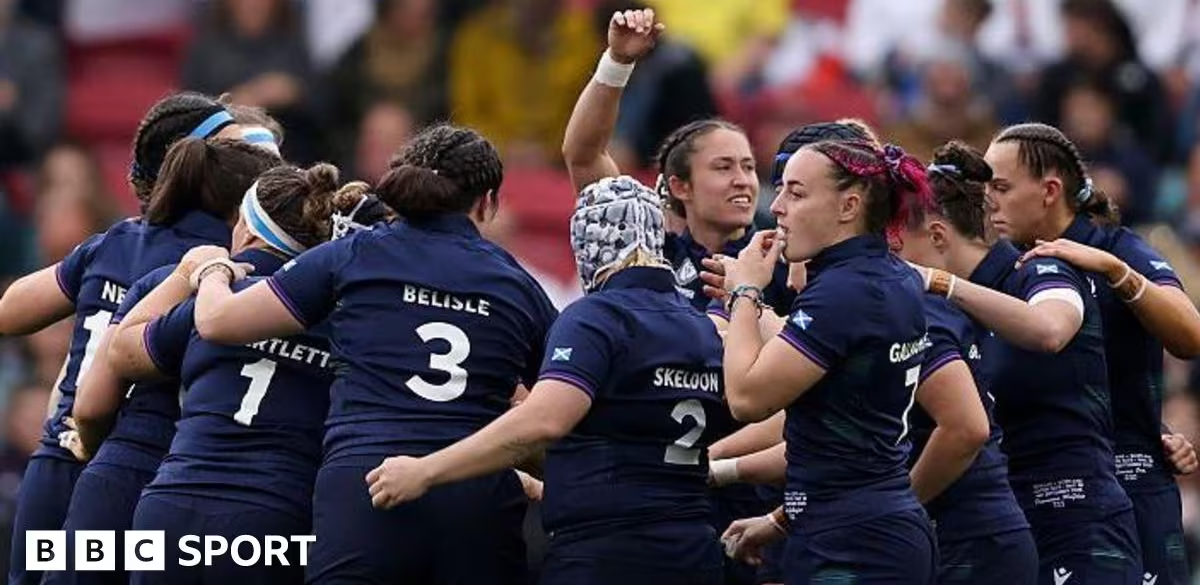
When Scotland left the pitch following their gutsy 2025 Women's Rugby World Cup quarter-final defeat by England, for some of the squad it was a moment of pride that marked how far the team had come.
For others the full-time whistle signalled the end of an emotionally damaging tournament from which some say they are still struggling to recover.
Reaching the last eight was the team's best performance at a World Cup in 23 years.
However, players have since told BBC Sport that behind the scenes Scottish Rugby's management of player contracts before the tournament left them in "probably the worst case of mental health" they had ever had, with one saying she suffered a breakdown as a result.
"I had an actual real-life breakdown in club to one of my coaches," she said.
"I've been put on medication for depression because of the impact that it's had on me."
Another said: "I came back from the World Cup in a hole, a shell of myself."
In response, Scottish Rugby said the union was "aware of the potential challenges players faced in their mental health during this time" and that a package of support was put in place.
"We would not question the personal experience of an individual athlete," the union's response continued.
"We would, however, dispute the lack of care referenced."
BBC Sport spoke to four players involved in the World Cup and one who was in the wider Scotland training squad. Contributors wished to remain anonymous out of fear of jeopardising their future in the sport.
Players said their contracts were due for renewal in June 2025, two months before the World Cup began in August, and that they had asked for 12-month deals beyond that to ensure job security and so they could focus on their performances at the tournament.
However, according to those contacted, while some players in Scotland's 32-player World Cup squad were given 12-month contracts in May 2025, a quarter were told their deals would end in October, a decision one player described as a "big shock".
At the time, contracts ranged from £18,000 to £27,000 and in most cases were the player's main source of income. Those playing in the Premiership could also earn up to about £10,000 from their club contracts.
The players who spoke to BBC Sport said that having to compete at the World Cup knowing their jobs and international careers were potentially about to come to an end put them under huge mental strain.
They also said they were not given the proper support by Scottish Rugby to cope with the situation.
Some of those who were told they would lose their funding after October had been part of the Scotland team for many years and were regularly starting international matches.
One said that "despite clear signs" that some were suffering with the news, "no transitional help" was offered by Scottish Rugby.
Another said she spent downtime between World Cup matches searching for a job.
In 2025 Scottish Rugby said it would increase the number of contracts available to players from 32 to 35 for the 2025-26 season.
One player said "everybody understands contracts aren't going to be guaranteed every year", before questioning why Scottish Rugby did not provide access to career advisors or psychologists for those affected.
Another added: "It's not about contracts. It's not about resources. It's literally about treating people like human beings."
Scottish Rugby's response stated that psychological support was embedded in Scotland camps and available to all players regardless of contract status.
It said a player development manager supported players on off-field matters, including employment, and that exit meetings were held at the end of contracts to identify any potential physical or psychological support that may be needed.
Asked if she felt Scottish Rugby had failed in its duty of care to players, one player responded "without a doubt" and referenced the death of international Siobhan Cattigan aged 26 in 2021.
"How many people need to die before you take it seriously?" she added, addressing Scottish Rugby. "You've clearly not learned."
Cattigan's family said undetected rugby-related brain damage caused a "catastrophic decline" in her health and led to her death.
In 2023 Scottish Rugby said it "let down" Cattigan's family and chairman John McGuigan apologised "wholeheartedly for any anguish we caused Siobhan during her time with Scottish Rugby".
McGuigan added at the time: "We have listened and heeded the lessons and, in Siobhan's memory, commit to making changes to ensure we are a better organisation in the future."
Another player said the communication of selection decisions left her "unbelievably unwell", adding: "There are loads of harsh realities of elite sport: injury and non-selection. How you manage people is more important than ever.
"You can't treat people like they're just disposable, regardless of the elite sport wheel being a forever turning one.
"We still need to have empathy. And I just didn't feel like there was much at all."
Scottish Rugby's response to this story said: "We are very uncomfortable with this comparison to Siobhan's own tragic situation and the inference in any way that we were negligent in our support to her."
Players told BBC Sport that the squad discussed boycotting one match during the 2025 Women's Six Nations - five months before the World Cup began - to try to reach a resolution with Scottish Rugby on its request for 12-month contracts.
All the players contacted say they were told contract decisions were based on performance and that they may still get a new contract should they perform well at the tournament, adding further pressure.
"It literally was a do or die lifeline," one player said.
"It's like I need to do everything I can on this rugby pitch, otherwise I'm not going to have a job and I'm going to struggle to pay my rent.
"When you're not sleeping, you don't have an appetite. You're just miserable most of the day. It's really hard to then put in a performance or do yourself justice."
Scottish Rugby's response said that players were told "on a number of occasions that their standalone playing performance at the World cup was not the sole criteria for any possible change to their contract situation".
Told her contract would end in October, one player said she was on job search websites "most nights" during the tournament looking for jobs "that were appropriate" for her life as a club rugby player.
She said: "Before you even started a job, you're trying to bargain and speak with a new employer and be like, 'Can I finish at this time?' Because I have to actually go to my other job [club rugby training].
"Then I'm going to come in tired in the morning because I've not got into bed until midnight."
Players no longer on contracts can still represent Scotland, but they now fall under the country's National Team Agreement, which offers them £75 a day, not including rest days, for attending Scotland training camps.
One player said "she can't be involved" for that amount, adding: "I won't be able to afford to pay my mortgage."
Another player said concerns over her future took "an emotional toll", adding: "I didn't want to be there. I look back on it with exhaustion. It was such a big opportunity but I have nothing but negative thoughts around it.
"[After the tournament] I removed myself from social settings, any settings where people could ask me loads about rugby.
"If I did get into that environment, I would try to remove myself as quickly as possible because it made me panic and stress."
The player said Scotland Rugby had not been in contact about any follow-up support.
"There's been no kind of input about, 'do you need psychology?' or anything like that," she said.
Players 'were offered package of support'
Scottish Rugby detailed the steps put in place to support players:
- Access to clinical psychology and a player development manager.
- A mandatory medical exit meeting to "identify any potential physical or psychological support".
- An independent HR exit interview and a six-week post-contract window to access "exit support services" if needed.
Scottish Rugby said: "From the outset of this process we recognised that players - particularly those whose contracts were due to end - would need additional support during the Rugby World Cup period and in planning their next steps.
"We believe we did deliver on our duty of care by the provision of both psychological and career guidance support throughout 2025, including in the lead-up to and during, the RWC.
"The entire playing group were out of contract in June 2025 and we made the decision to extend all contracts through to the end of October 2025 to provide a degree of stability through the RWC itself.
"The timings involved were designed to give clarity to all players as early as possible, following a timeline agreed and requested by the players themselves."