Why did it take the DA’s finance chief so long to step aside amid a R4 billion crypto probe?
Explain | 20.08.2026 19:01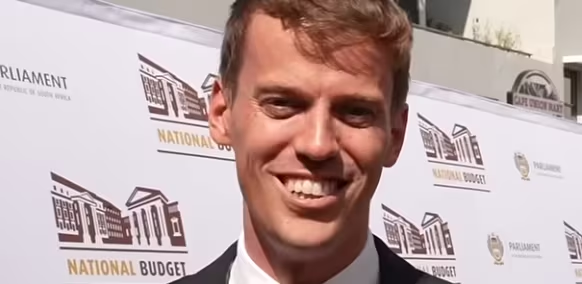
The DA has finally removed its finance chief from key parliamentary roles amid growing scrutiny of a R4 billion crypto scheme linked to a company he founded. The bigger problem for the party is not simply whether Mark Burke did anything wrong. It is how long it took the DA to recognise the conflict of interest staring it in the face.
Burke co-founded fintech company Kastelo with his brother Nicholas and previously ran the business. The Reserve Bank is investigating whether Kastelo’s crypto arbitrage model breached South Africa’s exchange-control rules. The model used clients’ legal foreign-investment allowances to move money offshore, buy cryptocurrency more cheaply, bring it back to South Africa and sell it at a higher price. Some clients were even loaned money by Kastelo to participate.
The Reserve Bank suspects transactions involving at least R4 billion may have broken the rules. Its concerns include allegations that some clients did not fully understand transactions being conducted in their names and that their individual allowances may effectively have been used for Kastelo’s benefit. Kastelo strongly denies wrongdoing and says that clients gave it authority to act on their behalf.
The Reserve Bank has reasonable grounds for its suspicions and has allowed a freeze on roughly R13 million in Kastelo funds to remain in place while the investigation continues. Burke says he left Kastelo’s day-to-day operations in 2024 and stopped chairing the wider group in February.
Burke was the DA’s finance spokesperson and sat on parliamentary structures responsible for scrutinising the Reserve Bank that was investigating his former company. He says he declared the litigation and recused himself from relevant meetings. But after initially insisting he had no case to answer, the DA changed course on Wednesday. Burke stepped down as finance spokesperson and from Parliament’s finance cluster to avoid even the perception of a conflict.
This year has already seen Steenhuisen’s party credit-card saga go on, which an internal probe cleared him of misappropriation over but which exposed personal spending on the card, as well as allegations that Tony Leon’s Resolve Communications used its proximity to DA politicians to secure access for private clients. Leon denies improper influence. None of those controversies proves a wider culture of wrongdoing, but together they are making the party’s “clean governance” brand harder to defend without qualification.