What Steenhuisen’s exit tells us about the DA’s ceiling
Explain | 06.02.2026 15:29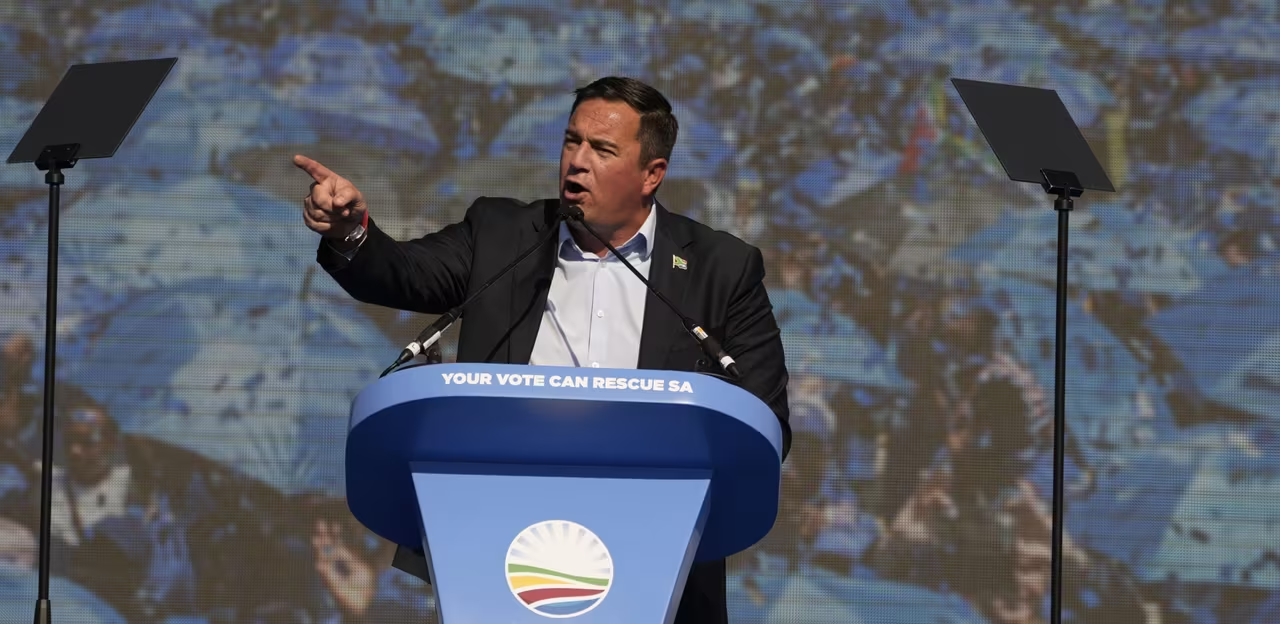
John Steenhuisen steps down as DA leader after two terms, paving the way for Cape Town mayor Geordin Hill-Lewis. The party struggles with a vote ceiling and internal tensions remain.
The rumours swirling earlier this week turned out to be bang on. John Steenhuisen will not be running for a third term as leader of the DA. “It’s mission accomplished for me,” Steenhuisen said during his highly anticipated announcement on Wednesday morning in Durban — the city where his political career began, and where it now, more or less, plateaus.
Behind the scenes, the move looks less like a victory lap and more like a tactical retreat. Steenhuisen was reportedly staring down a humiliating defeat at the DA’s elective congress in April and is believed to have struck a deal to retain his ministerial position in the Government of National Unity (GNU). By stepping aside now, he clears the runway for the more popular Geordin Hill-Lewis, Cape Town’s mayor, to take over. Hill-Lewis is a long-time friend of Steenhuisen’s, and according to sources cited by News24, both were keen to avoid a bruising, public battle.
At his conference, Steenhuisen tried to bow out on a high note, listing his achievements — from nurturing younger leaders to his much-hyped “moonshot pact”, later rebranded as the multiparty charter ahead of 2024’s national election. The idea was to prevent the so-called “doomsday coalition”: an ANC alliance with populist parties like the Economic Freedom Fighters and uMkhonto weSizwe Party. Under Cyril Ramaphosa, that outcome was avoided via the GNU, though the moonshot pact itself never quite left the launchpad.
That failure largely comes down to the DA’s underwhelming electoral performance under Steenhuisen. The party famously ousted his predecessor, Mmusi Maimane, after its vote share dropped from 22.23% to 20.77% in 2019. A string of high-profile departures by black leaders followed as the party drifted rightwards. Steenhuisen, however, failed to reverse the slide, managing only a modest bump to 21.81% in 2024 — a ceiling the increasingly white DA appears stuck beneath.
Add to that a series of uncomfortable scandals: a public spat with fellow DA minister Dion George, who was removed at Steenhuisen’s behest; awkward questions about Uber Eats charged to the party credit card; and grumbling within DA ranks that he was too cosy with the ANC.
Still, Steenhuisen gets a notably soft landing — more than Maimane ever did. He used his speech to pivot to his ministerial work, highlighting the growing crisis facing cattle farmers as foot-and-mouth disease spreads.
Now, the spotlight shifts to Hill-Lewis. He is widely viewed as a rising star within the party and enjoys backing from senior DA figures like former leaders Helen Zille and Tony Leon, who called him “a remarkable individual” and predicted he would be “a very effective leader of this party”.
Whether that prediction holds is the DA’s next big gamble.