Building Across Industries: The Multi Business Growth Strategy of Ndiitwani Rerani
StartUp Magazine | 25.02.2026 15:30
Building Across Industries: The Multi Business Growth Strategy of Ndiitwani Rerani. Every entrepreneur dreams of building something that lasts. Few manage to build several thriving ventures across different industries at the same time. The business journey of Ndiitwani Rerani stands out because it shows what happens when ownership, operational control, and strategic alignment come together in one ecosystem.
As a commercial farmer and entrepreneur, Rerani owns multiple businesses across technology, agriculture, and hospitality. His portfolio includes UNA Technologies in Pretoria, Kwa Max Car Wash and Eatery, UNA Animal Farm (Pty) Ltd, and UNA Car Wash and Shisanyama. He owns 100 percent of each enterprise, creating a tightly connected network of operations that reinforce one another.
His journey offers clear lessons about integration, diversification, and long term thinking.
Owning the Value Chain From Production to Service
One of the most defining elements of Rerani’s business model is vertical integration. His agricultural operation does not exist in isolation. UNA Animal Farm supplies livestock and eggs directly to his hospitality businesses, including Kwa Max Car Wash and Eatery and UNA Car Wash and Shisanyama.
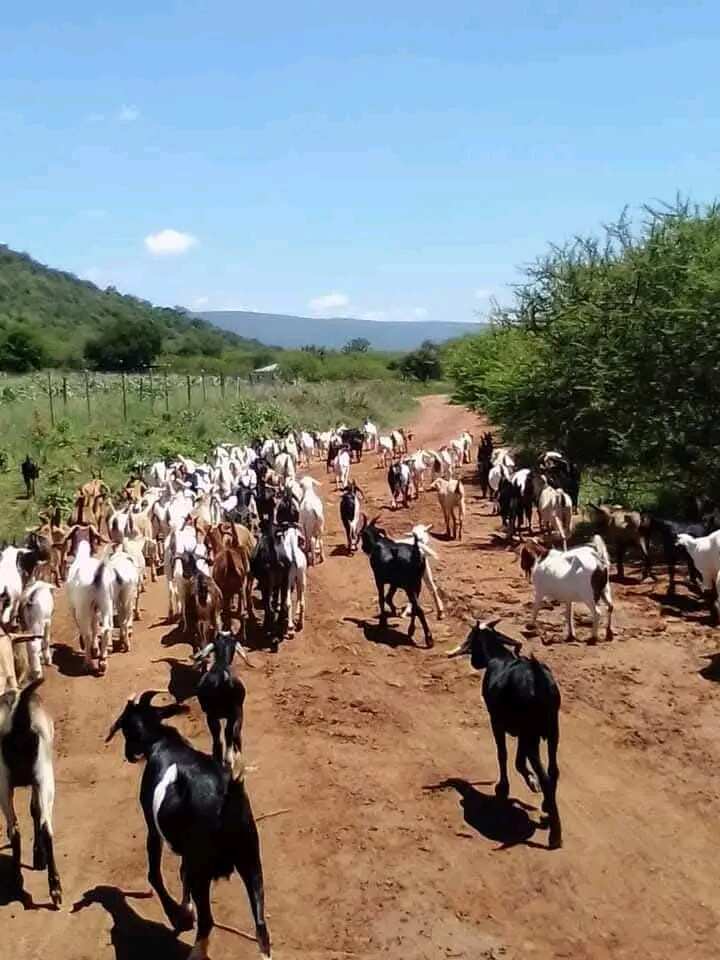
This structure reduces dependence on external suppliers and gives his businesses greater control over quality, pricing, and availability. The farm maintains a wide range of livestock and poultry, including pigs, goats, sheep, rabbits, ducks, and multiple types of chickens, with egg laying chickens forming a significant part of production.
For entrepreneurs, the lesson is clear. When possible, control supply sources. Integration strengthens stability and improves operational efficiency.
Diversifying Across Industries Without Losing Focus
Many business owners struggle to expand beyond a single industry. Rerani operates across technology services, agriculture, and hospitality, yet each business has a clear role.
UNA Technologies focuses on ICT supply and services, employing 20 people, including 15 trained technicians. This venture positions him in a high demand sector driven by digital infrastructure and technical support needs.
His hospitality ventures create customer facing experiences through food and social spaces. His agricultural operation supplies essential inputs. Each sector supports a different revenue stream, reducing dependence on one market.
Diversification works when each business has purpose and structure. Expansion without clarity creates complexity. Expansion with defined roles builds resilience.
Building Employment Through Structured Growth
Across his enterprises, Rerani has created multiple employment opportunities. UNA Technologies employs 20 people. Kwa Max Car Wash and Eatery employs 24. UNA Car Wash and Shisanyama employs 7. UNA Animal Farm employs 5.
Growth is not presented as abstract scale. It is measured through people, operations, and capacity. Each venture contributes to local economic participation while strengthening operational output.
Entrepreneurs often measure success only in revenue. Workforce development reflects a deeper form of growth. Structured hiring supports sustainability and service delivery.

Strengthening Business Through Operational Alignment
Rerani’s businesses are not independent fragments. They operate as an interconnected system. Agricultural production feeds hospitality. Technology services operate as a specialised professional arm. Local service businesses create community engagement and market presence.
Alignment reduces waste and strengthens efficiency. Resources circulate within the network instead of flowing outward unnecessarily.
Entrepreneurs can apply this principle by asking a simple question. Can one business support another? When ventures reinforce each other, the whole becomes stronger than the parts.
Scaling Through Capacity Rather Than Speed
The size and diversity of livestock at UNA Animal Farm reflect deliberate capacity building. From thousands of broilers to hundreds of pigs and goats, production is scaled in a way that supports consistent supply rather than sudden expansion.
Sustainable growth requires infrastructure, planning, and operational readiness. Scaling too quickly without support systems introduces risk. Scaling through capacity ensures stability.
Entrepreneurs should grow where they can maintain standards, not where expansion appears easiest.
Lessons From a Multi Business Entrepreneur
Rerani’s journey demonstrates practical principles that any entrepreneur can apply. Ownership provides control. Integration reduces dependency. Diversification spreads risk. Alignment improves efficiency. Capacity driven scaling protects stability.
Most importantly, growth becomes stronger when businesses serve each other as well as the market.
His approach shows that building multiple ventures is not about chasing opportunities randomly. It is about designing a system where every part strengthens the whole.
A Model of Connected Enterprise
The story of Ndiitwani Rerani is not defined by one company or one industry. It is defined by structure. Each business plays a role in a broader strategy built on control, connection, and long term thinking.
For entrepreneurs seeking lasting impact, the message is clear. Build deliberately. Connect your operations. Let every venture reinforce the next.