hays code killed queer happy ending
Medium | 04.02.2026 08:15
hays code killed queer happy ending
Follow
8 min read
·
1 hour ago
Listen
Share
Censored to Death: The Hays Code taught generations that certain lives were only worth telling if they ended in punishment
I’ve been thinking about endings lately. The predetermined kind—the ones written before the story even begins. The kind where you know from the opening frame that certain characters are marked for tragedy, not because of dramatic necessity, but because of who they love.
For thirty-four years, from 1934 to 1968, American cinema operated under the Production Code, better known as the Hays Code—a set of moral guidelines that functioned less like suggestions and more like scripture. Will H. Hays, a Presbyterian elder and former Postmaster General, presided over this era of cinematic censorship with the fervor of someone who believed movies could corrupt souls. And perhaps he was right to worry about their power, just wildly wrong about what needed protecting.
The Code’s language reads like a Victorian fever dream. "No picture shall be produced that will lower the moral standards of those who see it," it declared. But buried in its seemingly neutral prohibitions—against excessive violence, against mockery of religion, against "lustful kissing"—was a specific, targeted erasure. Homosexuality, described in internal memos as "sex perversion," was absolutely forbidden from sympathetic portrayal.

What this meant in practice was brutal in its simplicity: queer characters could exist in Hollywood films, but only as villains, tragic figures, or cautionary tales. They could appear, but they couldn't survive. Or more precisely, they could only survive by remaining invisible, coded, perpetually dancing around the thing they could never name. It's hard to overstate how complete this prohibition was. While the Code officially "suggested" rather than mandated tragedy for queer characters, the effect was the same—death, madness, or last-minute conversion were the only acceptable narrative exits.
I find myself returning to "The Children's Hour" (1961), released near the Code's twilight years but still thoroughly under its shadow. Shirley MacLaine's character realizes she loves Audrey Hepburn's character, confesses this truth aloud for the first and only time, and then—because this is what queer cinema demanded—hangs herself offscreen. The movie treats this as inevitable, almost merciful. What else could happen to her? The film never asks this question because the Code had already answered it decades earlier.
Or consider "Rope" (1948), where Alfred Hitchcock encoded a queer relationship between two murderers, their homosexuality simultaneously the film's open secret and its explanation for their moral depravity. The movie is brilliant and unbearable in equal measure—you can feel Hitchcock straining against the Code's restrictions while ultimately reinforcing its basic premise that queerness and villainy share the same address.

This wasn't just censorship; it was pedagogy. These films taught audiences—queer and straight alike—a story about the world that became difficult to unlearn. They established patterns that outlasted the Code itself, echoes we're still trying to write our way out of. Even now, we have a term for it: "bury your gays," that weary recognition that queer characters remain statistically more likely to die than their straight counterparts, especially in moments when they've just found happiness or articulated desire.
The damage runs deeper than representation, though representation matters immensely. The Code functioned as a massive cultural instruction manual, training generations to see certain lives as inherently tragic. It normalized the idea that queer joy was narratively impossible, that happy endings for queer characters would somehow violate the natural order of storytelling itself. When you tell a story often enough, with enough authority and reach, it starts to feel like truth rather than fiction.
I think about James Baldwin, who left America for France partly because he needed to write about queer Black life without the crushing weight of American morality pressing down on every sentence. "The question of human affection, of integrity, of the terrors and mysteries of flesh, must eventually be addressed," he wrote. But Hollywood couldn't address these mysteries—not honestly—because the Code had already decided which mysteries were permissible and which were perverse.

The queerness that survived on screen during the Code era survived as shadow—in glances that lasted too long, in the theatrical mannerisms of unmarried supporting characters, in subtext that everyone understood but nobody could acknowledge. This wasn't nothing; queer audiences became expert readers of these signs, building community around shared interpretation. But it was survival rations, not sustenance. And it came at the cost of seeing ourselves die over and over, our deaths treated as morally instructive rather than tragic.
Get Celia Solstice’s stories in your inbox
Join Medium for free to get updates from this writer.
Subscribe
Subscribe
What gets lost in discussions of the Code is how thoroughly it shaped not just what appeared on screen but what got written in the first place. Screenwriters learned to self-censor, to internalize the restrictions so completely that they stopped imagining alternatives. Whole narratives never made it to paper because everyone knew they'd be impossible to produce. We'll never know how many stories about queer joy, queer survival, queer mundane happiness were simply never written down because the writers knew the Code would kill them anyway.
The Code's defenders argued they were protecting children, preserving decency, maintaining standards. But standards for whom? Decency according to what? The Code's vision of American values was narrow enough to exclude most Americans, yet powerful enough to enforce that exclusion across decades. It didn't just restrict what queer people could see on screen—it restricted what everyone could imagine about queer lives.
By the time the Code formally ended in 1968, it had done its work. The narrative patterns it established—that queer desire leads to destruction, that queer characters serve as warnings rather than protagonists, that queer stories are tragedies by definition—had become cinematic grammar. You can see its fingerprints on films made long after its official death, in the way queer characters still disproportionately suffer, still often function as narrative sacrifices for straight protagonists' development.
And yet, something remarkable happened too. Queer artists learned to write in code, to hide entire love stories in plain sight. They became masters of subtext, experts at communicating through implication. This created a rich tradition of queer reading practices, ways of interpreting culture that assumed layers of hidden meaning. The Code tried to silence queer voices and inadvertently taught them to speak in frequencies that only certain audiences could hear.
Still, I resist romanticizing this oppression. The fact that queer artists and audiences developed ingenious survival strategies doesn't make the original violence acceptable. We shouldn't have had to become cryptographers just to see ourselves on screen. Every coded gesture and tragic ending represented a failure to imagine us as fully human, deserving of the same narrative possibilities as everyone else.
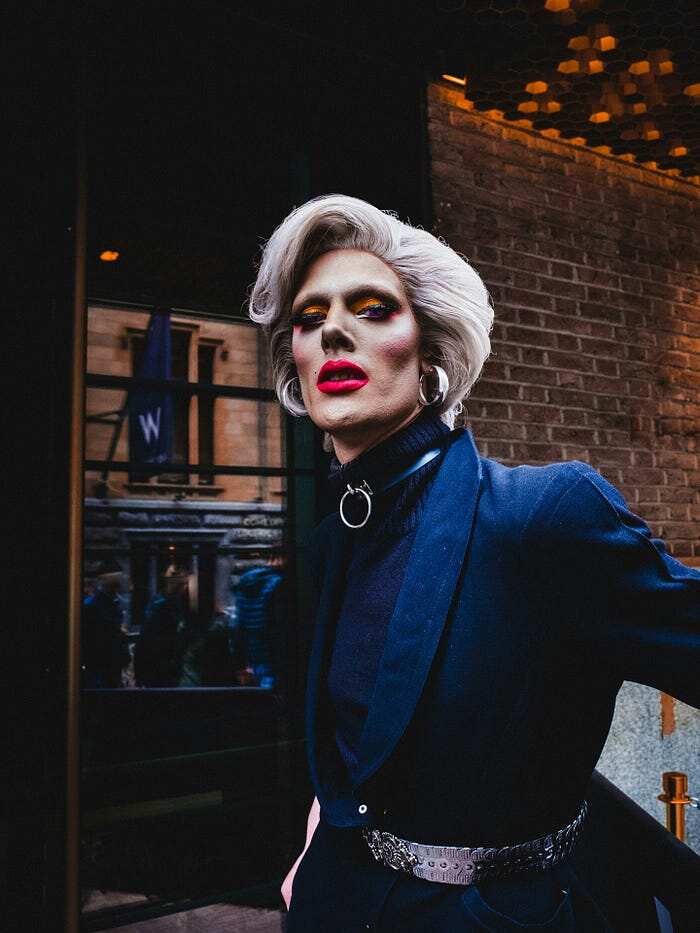
I think about contemporary debates around representation, the complaints that LGBTQ+ characters in current media are "everywhere" or that their inclusion feels forced. What these complaints miss is how recent this visibility is, how many decades we spent watching ourselves die for the crime of existing. The Hays Code wasn’t ancient history—it shaped the formative movie-watching experiences of people still alive, still making films, still teaching the next generation of storytellers.
The world the Code created—where queerness meant tragedy, where certain loves could never be shown as anything but destructive—that world didn't end when the Code did. It continues in subtler forms, in whose stories get funded and whose don't, in which narratives feel "realistic" and which feel like "agendas." The Code taught us to see queer happiness as inherently unrealistic, and we're still unlearning that lesson.
Sometimes I wonder what those thirty-four years cost us in untold stories, in imaginations trained to see certain lives as impossible. I think about all the queer kids who grew up watching movies that confirmed their worst fears about themselves, who learned from Hollywood that people like them didn't get happy endings. The Code didn't just censor films; it censored futures, teaching young queer people that their lives were cautionary tales rather than adventures.
But I also think about resilience, about how even the most totalizing systems of control create their own resistance. Queer audiences learned to find themselves in the margins, to claim characters the Code tried to code as cautionary tales. We became expert at finding hope in shadows, at seeing past the mandatory tragic endings to imagine what might have been. This skill—reading against the grain, insisting on our own humanity in the face of culture that denied it—remains useful.
The Hayes Code is dead, but its ghost writes every budget meeting where a queer story gets questioned, every note suggesting that LGBTQ+ characters need to "earn" their presence, every time a happy ending for a queer couple feels surprising because we've been trained to expect tragedy. We're still writing against its influence, still proving that our stories can end in ways other than death or conversion.
I started thinking about endings, about how some are written before the story begins. The Hayes Code tried to predetermine our endings, to ensure that every queer narrative resolved in punishment or erasure. But here's what it couldn't quite manage: it couldn't actually kill the stories themselves, only their expression. Those stories survived in whispers and subtext, in coded glances and double meanings, waiting for the chance to be told properly.

And now we're telling them. Not perfectly, not without struggle, but we're telling them. Every queer character who survives, who finds love, who gets to be boring and happy and alive—each one is a refutation of what the Code tried to teach. We're writing new endings now, ones not predetermined by someone else's morality. And maybe that's the best revenge against censorship: not just to survive it, but to outlast it, to keep telling stories until the tragic endings start feeling like the historical aberration they always were.