BBC vows to better reflect working-class audiences around UK
BBC | 29.01.2026 23:40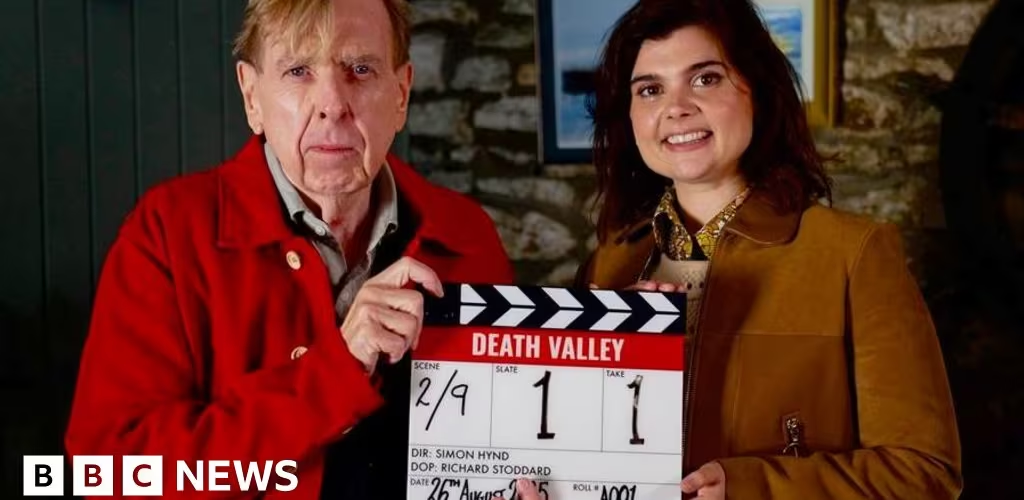
The BBC has committed to strengthening how it measures the ways audiences from different socio-economic and geographical backgrounds are portrayed and represented in its output.
On Thursday, the corporation published the findings of an independent review across all BBC content, assessing how accurately and authentically it reflects groups and communities across the UK.
It noted how the BBC was making "significant progress", but said "further steps" should be taken to better represent working class people outside London, and older women.
BBC bosses have now committed to reflecting the lives of "all the communities, classes and cultures" across the UK.
The review was undertaken by former Bafta chair Anne Morrison and independent media consultant Chris Banatvala.
They said the BBC "plays a central role in the UK's cultural life, shaping our shared experience and reflecting the country to its audiences", and it has made "significant progress in portraying and representing the UK across its content".
Their review highlights "areas for particular focus", they added, saying they welcomed the BBC's recent announcements "which align with these priorities".
'A matter of urgency'
The BBC is "much more inclusive and authentic" in the way it portrays UK communities now than "even a few years ago", the review found.
But, it stressed, it should be "measuring class on and off-air as a matter of urgency".
And while audiences may "feel more satisfied than not with their portrayal and representation" in BBC content, "further steps need to be taken".
"The two most persistent issues that we identified are the need for the BBC to focus on and connect better with working class audiences and those based outside London and the south of England," the report read.
It also said that when considering diversity, the BBC tends to concentrate on race, disability - though still not to an "adequate" level - and, "to some extent", female representation.
"Significantly less attention" has been paid to "geography and class" it said.
It recommended that the "geographical background of presenters and contributors should in future be monitored as a diversity characteristic" for all programmes and "commissioners held accountable".
"Looking at the review year, across the board, we believe the BBC does represent working-class people," it continued.
"However, it varies by genre and, according to audience groups and people we interviewed, more could be done, particularly in the choice of presenters in news and factual content."
"We believe it is not so much the quantity of working class representation which is the issue but the way working-class communities are portrayed and understood that needs further consideration."
Often when shows appear "clunky" or inauthentic, the review suggested, it was because "diversity seems superimposed rather than arising out of the subject".
"Audiences are particularly unforgiving of this if it challenges their expectations of what they have switched on to see," the review said.
"If there's an Agatha Christie murder mystery over the Christmas period, they won't expect to be taken into anti-colonial struggles, alongside the country-house murder.
"Unless it's very skilfully done, there is a danger it will feel overly didactic and preachy, as if the viewer is being lectured or a point is being made heavy-handedly. A vital component of quality for the viewer is authenticity."
It also said that overall, there appears to be less positive portrayal of white, working-class men and women in BBC output, particularly when looked at cumulatively," it also noted.
"Portrayal of working class communities can often rely on the themes of poverty, crime, addiction and de-industrialisation with an absence of role models."
In December, the BBC announced it was doubling spending on content in the four nations by channelling more money from central budgets across the UK.
Now it has pledged to strengthen that commitment, while accelerating its increase in the number of roles outside London in commissioning and decision-making.
As the review pointed out: "Communities outside London differ considerably in their make-up from the capital."
BBC chair Samir Shah thanked the authors for their "important piece of work".
He stressed it was "vital" to ensure that under-represented audience groups are reflected authentically.
"It is vital the BBC authentically reflects the lives of all the communities, classes, and cultures across the UK," he said in a statement.
"Decision-making must happen closer to audiences if we want to ensure that everyone feels represented and that the BBC remains an engine for growth within the creative industries.
"The Board welcomes the challenge set out in the report and the actions the BBC Executive want to take in response."
Focus on older women
The review also found that there are "still more men than women" featured in BBC News, nations and factual programming, referring to both presenters and contributors.
Another finding was that male presenters "significantly outnumber female presenters in the older age groups" - those over 60.
"We were told that, as they get older, men in the media are portrayed gaining gravitas and wisdom associated with authority," it stated.
"It works differently for women. It was argued that, if they stayed on television, older women had either to try and keep looking younger, or to opt out altogether from being judged on their looks and develop idiosyncratic personas."
'More to do'
In an email shared with staff, Peter Johnston, BBC director of editorial complaints and reviews, highlighted recent TV series including Riot Women - about a punk band of menopausal women in Hebden Bridge - along with Death Valley, a crime mystery comedy set in South Wales/
He called them "good examples which we want more of: stories authentically rooted in real communities across the UK".
BBC chief content officer Kate Phillips said its "commitment to homegrown storytelling, regional investment and support for the creative industries across the UK is unwavering."
She added that while the review noted the BBC's pledge to move more production and commissioning across the UK, it was also clear "there is still more to do - both here and across the industry.
"We accept that challenge and we are committed to going further to meaningfully reflect the lives of the audiences we serve."