Juventus, Inter and Milan compared: Oaktree lead on revenue, Cardinale on lower debt, Elkann on property
Goal | 24.11.2026 16:15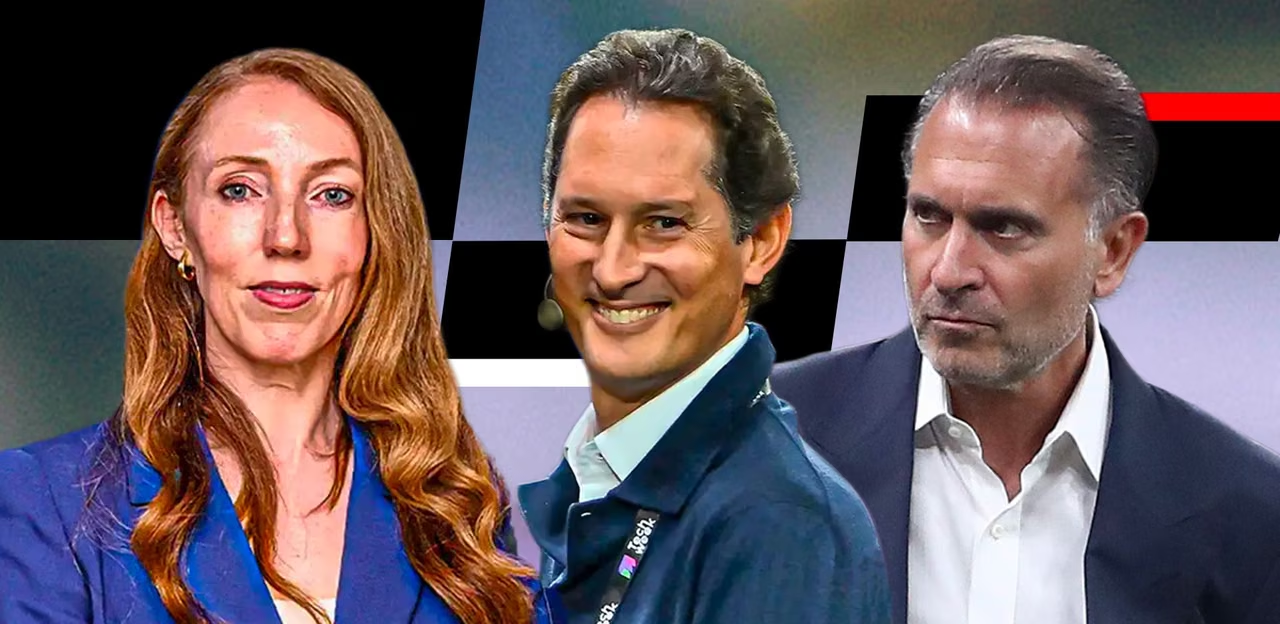
Inter, Juventus and Milan, in strict alphabetical order, are Italy's three biggest clubs, at least for now, by finances and turnover. American investment funds own the two Milan clubs, Inter and Milan: RedBird Capitals and Oaktree respectively. Juventus remain under Exor, the Agnelli-Elkann family's holding company.
The sums these clubs handle matter beyond Italian football because of the economic activity they generate across the country. An analysis of their accounts for the year ended 30 June 2025, pieced together by the Gazzetta dello Sport, shows that the three clubs follow strategies that overlap but differ sharply in key areas.
TURNOVER AND PROFIT - As of 30 June 2026, Inter had ended the year with the highest turnover at €518 million, followed by Juventus on €474.7 million and Milan on €464.6 million. Juventus recorded a loss of €66 million, while Milan finished €24 million in the red after three years of small profits. Inter posted a profit of €23 million, though that was down on the previous year.
OAKTREE AND MAROTTA LEAD ON REVENUE - Since 2021-22, president Beppe Marotta and Inter's Italian management have pursued revenue growth through results on the pitch. Regular Champions League appearances, including two runs to the final, and income from the Club World Cup a year ago boosted sporting revenue, including UEFA prize money, and commercial revenue from sponsors. Merchandising, stadium and ticket income helped take the total to €485 million for 2025-26. Player trading had very little impact on Inter's accounts.
Without European football, Milan were instead "forced" to rely heavily on player trading to make up for lost revenue. Even so, revenue fell from €411 million in 2024-25 to "just" €357 million in 2025-26. Juventus also needed to diversify their revenue despite the Champions League money coming in. Their figure fell from €420 million to €417 million.
SQUAD COSTS - Juventus had the highest squad costs in wages and player amortisation, at least until the end of last season, when Dusan Vlahovic was still in the squad. They cut their wage bill from €220 million to €210 million but remain comfortably ahead on overall squad costs, with amortisation rising from €117 million to €121 million.
Inter are only slightly behind on wages, spending €204 million a year on their players. They offset that cost with amortisation of "just" €59 million, also down slightly on the previous year. Milan sit between the two on amortisation at €95 million. Their strategy has been to keep wages low, with a bill of "just" €146 million, down on 2024-25.
EQUITY AND FINANCIAL DEBT: MILAN COME OUT ON TOP - Cardinale has already changed course drastically on squad costs this season. Until then, that approach had helped leave Milan in a better position than the other two clubs on equity and financial debt. Unlike Inter and Juventus, Milan have no bank debt or outstanding bonds. Their equity is far higher than that of the other two clubs, at €176 million, against net financial debt of €145 million.
Inter's equity is also slightly positive at €10 million, as is Juventus' at €12 million, though for different reasons. Another capital increase requested from Exor and funded by John Elkann proved vital for Juventus. Inter have benefited from profits over the past two seasons.
JUVE LEAD ON PROPERTY OWNERSHIP - A figure reported by the Gazzetta dello Sport puts Juventus ahead of the other two clubs on property ownership. Juventus have long owned the properties most important to their growth strategy: their stadium, headquarters, training centre, youth pitches in Vinovo, JMedical, JHotel and "creator lab". Their estimated value is €180 million, a figure that could triple on the market if necessary. Milan's equivalent figure is just €37 million for training facilities and the land in San Donato, while Inter's training facilities account for €26 million. The two Milan clubs' joint purchase of the San Siro site and their new stadium project will push those figures up, but not before 2031.