Enzo Maresca compares Man City rebuild to post-Arsene Wenger & Sir Alex Ferguson eras after frustrating Napoli draw
Goal | 25.11.2026 10:47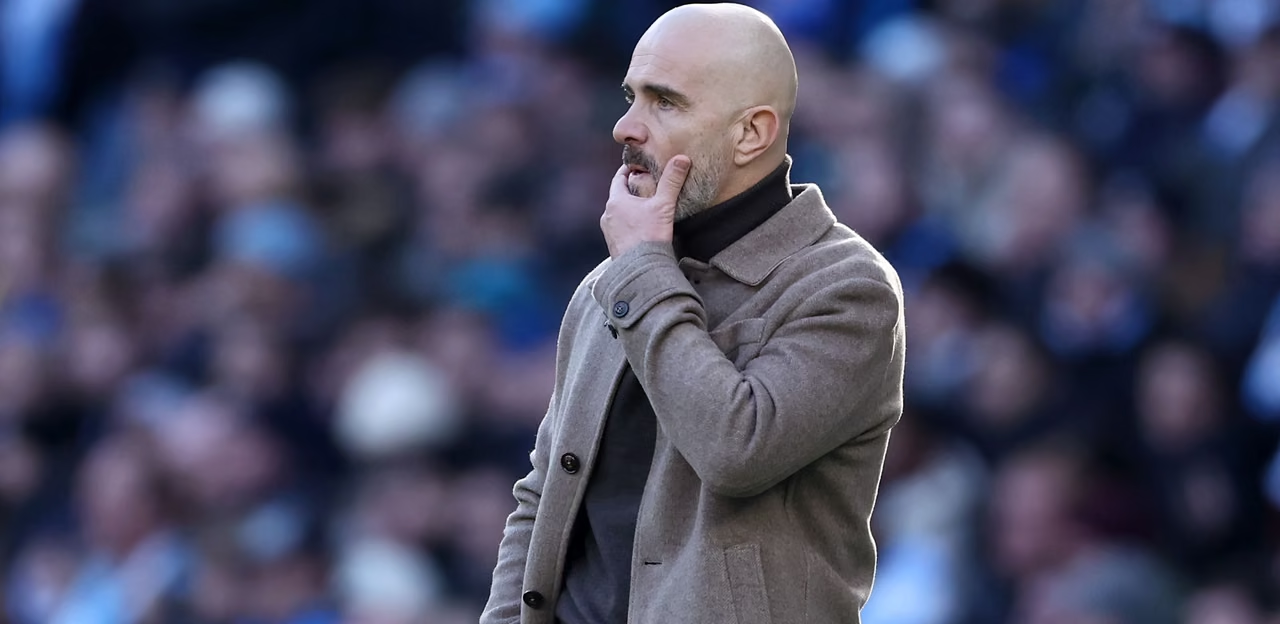
Manchester City manager Enzo Maresca has called for patience at the Etihad Stadium, suggesting that moving on from the Pep Guardiola era is as significant a challenge as the transitions seen at Arsenal and Manchester United. Following a frantic 2-2 draw with Napoli in the Champions League, the Italian tactician highlighted the historical difficulty of replacing legendary figures in the dugout.
Maresca calls for patience in post-Pep era
City’s transition under Maresca hit another speed bump on Tuesday evening as they were held to a 2-2 draw by Napoli in the Champions League. Despite twice falling behind to goals from Rasmus Hojlund and Noa Lang, the Premier League champions managed to earn a point thanks to strikes from Ayyoub Bouaddi and Rayan Cherki. However, the result leaves City with just one victory in their last seven competitive outings, a run of form that has sparked debate regarding the club's current direction under Guardiola's former assistant.
Addressing the growing pressure, Maresca invoked the names of coaching icons to illustrate the scale of his task. "It’s certainly not easy, because after 10 years with the same coach, it’s tough for us, it was tough for Arsenal after Arsene Wenger, it is tough for Manchester United who are still trying to find their way after Sir Alex Ferguson. I was told today that Arsenal won the Premier League after seven or eight years following Wenger, so it takes a little time," the Italian explained to Sky Sport Italia, as quoted by Football Italia.
Tactical surprises and selection headaches
Maresca raised eyebrows with his team selection for the clash against the Serie A side, opting to leave creative sparks Jeremy Doku and Iliman Ndiaye on the bench for the first sixty minutes. Furthermore, England international Phil Foden was rested entirely, a move that drew scrutiny as City struggled to break down a stubborn Italian defence. The manager defended these choices by explaining that his staff expected Napoli to deploy a 3-5-2 or 3-5-1-1 formation, which would have packed the middle of the pitch with eight players.
The strategy was designed to exploit the flanks, with Maresca stating: "I tried to think we could send Cherki out wide, and indeed he did find a lot of space there and we got the ball to him a lot in the first half, but we didn’t manage to create enough chances out of it. In the last half-hour, the game changed a bit, but this was the thought behind the choices."
Defensive frailties remain the primary concern
While the attack found a way to rescue a point, the defensive lapses that have plagued City’s season were once again evident. Maresca was frank in his assessment of the team's vulnerability at the back, admitting that the main problem is that they are conceding too many goals. He pointed out that while the team generally pressed well and limited Napoli to few clear-cut opportunities, they were punished ruthlessly for individual errors that led to both goals conceded on the night.
"I think our defensive issues are pretty obvious and we need to resolve those. As for the rest, I feel relatively calm, because it is fairly difficult to break down a low defensive block like the one Napoli used. The main problem is that we are conceding too many goals, and we need to do something about that,” the manager confessed.
Finding the right balance in midfield
A significant part of Maresca's tactical puzzle involves the integration of young talent like Ayyoub Bouaddi into a leadership role within the midfield. The manager chose to play Bouaddi as a deep-lying playmaker, a decision that also altered the responsibilities of Elliott Anderson. Maresca justified the selection by highlighting the need for balance both on and off the ball. He explained that the intention was to attack with a block of six players, keeping Bouaddi in a disciplined position just in front of the defensive four.
"I am seeking the right balance between attacking and defending. I am trying to keep things simple, as I did at the two clubs I worked with previously. We are looking for the right balance between those two phases," he admitted.