70 years later women are still fighting for freedom
Scrolla | 09.08.2026 16:52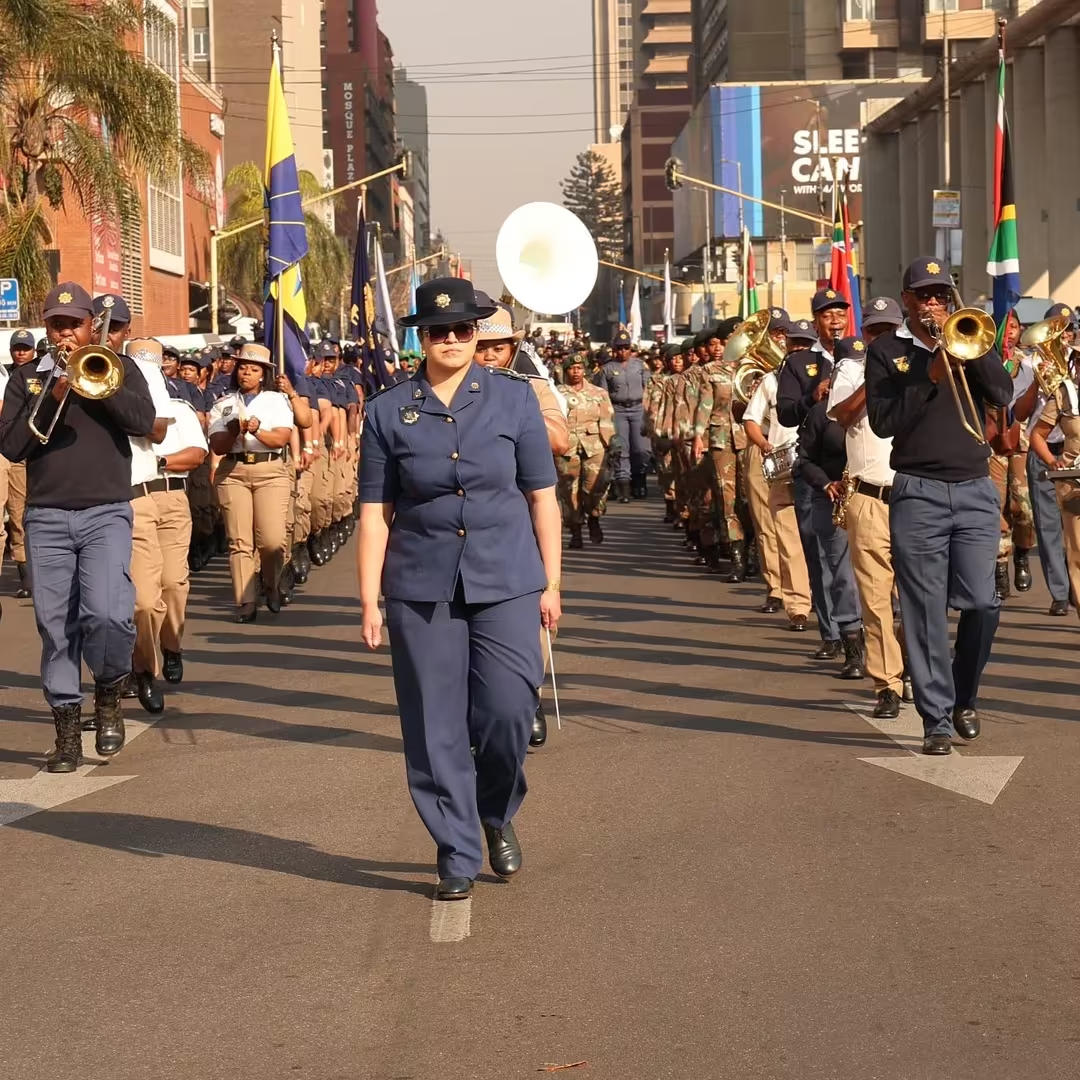
By Palesa Matlala
• More than 20,000 women marched against apartheid pass laws in 1956, but activists say violence now limits women’s freedom inside homes and communities.
• Gender based violence activists say unsafe streets, offenders escaping justice and gaps in protecting women show the historic fight for freedom continues today.
Seventy years ago, more than 20,000 women walked to the Union Buildings demanding freedom.
Today, women are still demanding it.
The enemy has changed.
In 1956, women were fighting apartheid pass laws that controlled where black South Africans could live, work and move.
Today, activists say violence against women has become one of the biggest barriers to their freedom.
The historic Women’s March took place on 9 August 1956.
Lillian Ngoyi, Helen Joseph, Rahima Moosa and Sophia Williams, now Sophia Williams de Bruyn, were among the leaders.
Thousands of women travelled from across South Africa to Pretoria to protest against pass laws for women.
They carried a petition to then prime minister Johannes Strijdom, who was not there to receive them.
Their protest gave South Africa one of its most powerful struggle slogans: “Wathint’ Abafazi, Wathint’ Imbokodo.”
The words became a symbol of women’s courage and resistance.
But 70 years later, four women working against gender based violence say parts of that fight for freedom remain unfinished.
Activist Linda Mtshali knows that pain personally.
She is still waiting for justice after her sister was murdered 18 years ago.
“Our biggest barrier today and, you know, as opposed to the women of 1956, is the violence that waits for us behind our front doors,” she said.
For Mtshali, being legally free to move around means little when women are not always safe in their own homes.
Greer Schoeman of the National Shelter Movement says women’s safety must also be considered when cities and public spaces are designed.
She pointed to something as simple as whether a bus stop has enough lighting for a woman travelling at night.
“If it is a young woman who is travelling perhaps later, where is the streetlight in relation to that bus stop? Because the reality is, in darkness, there is then a lack of safety,” Schoeman said.
Deepashini Naidoo of South African Women Fight Back raised another concern: what happens after violence has been reported.
“My biggest thing is that offenders go free. The second thing is that the sex offenders’ registry is not public yet,” she said.
The concerns come 70 years after women from different racial and social backgrounds united against apartheid laws.
Ngoyi was a leading figure in the struggle and was the woman who knocked on the prime minister’s door at the Union Buildings to deliver the women’s demands.
Williams de Bruyn was only 18 when she helped lead the march.
Her activism had started even earlier while working at a textile factory, where she became involved in fighting for workers’ rights.
She is the only surviving leader of the four women who led the historic march.
Moosa made the journey to Pretoria while heavily pregnant.
She had entered politics as a teenager and later faced surveillance and harassment from the apartheid government.
Joseph helped organise the huge protest through the Federation of South African Women.
Her activism came at a heavy personal price. She was arrested, banned and placed under restrictions by the apartheid government.
Their struggle helped establish women as leaders in the wider fight against apartheid.
But former minister and anti apartheid activist Geraldine Fraser Moleketi believes today’s women would take a different petition up the steps of the Union Buildings.
“If we climb those stairs, we won’t do it as mourners; we’ll do it as architects,” she said.
She said women would no longer ask for more promises but would demand that the state deliver what it has already promised.
The women of 1956 demanded the freedom to move without apartheid controlling their lives.
Today’s activists say women also need the freedom to walk home safely, use public transport without fear and live behind their own front doors without facing violence.
Seventy years later, the march remains a reminder of how much women changed South Africa.
But for those fighting gender based violence today, it is also a reminder that women’s fight for real freedom is not finished.
Pictured above: More than 20,000 women marched to the Union Buildings against apartheid pass laws in 1956, creating a legacy that continues in today’s fight against gender based violence.
Image source: File.