Uganda elections 2026: Yoweri Museveni and Bobi Wine battle for the votes of a young electorate
BBC | 13.01.2026 07:22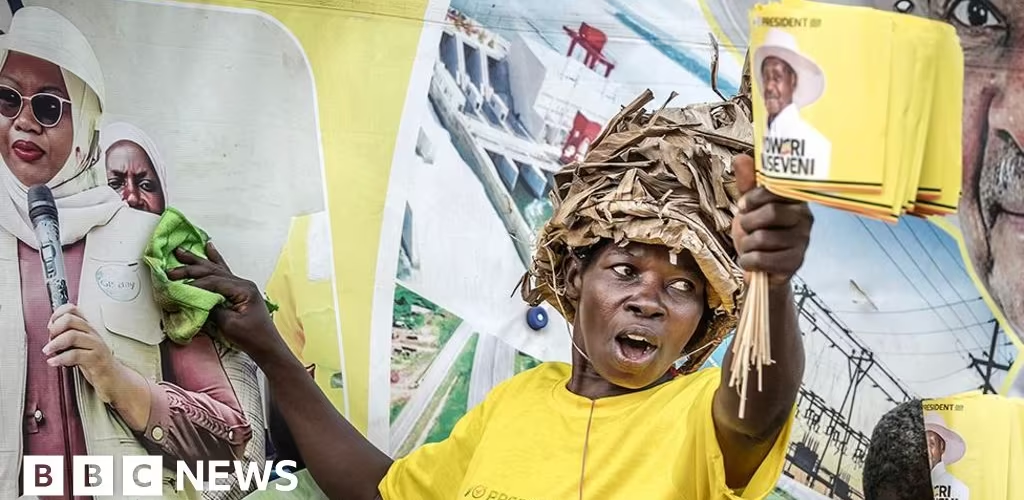
Most of Uganda's population is under 17 - will they give an 81-year-old another term?
Whether decked in the bright yellow of the ruling party or donning the revolutionary red of the main opposition, young people are dominant among the foot soldiers of Uganda's election campaign.
In crowded public grounds and roadside gatherings, young supporters belting out party songs and filming events on their phones outnumber all others.
Their opinions may be diametrically opposed but they are held with equivalent zeal.
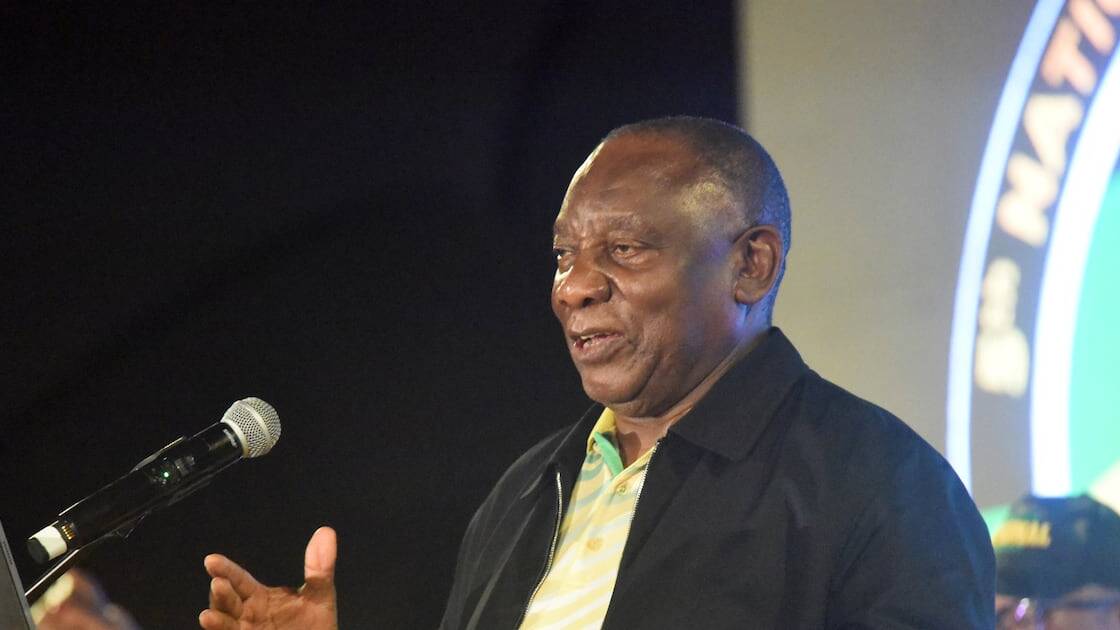
"Bobi Wine is a good guy. If he gets to power, I believe he will take the country to a certain point in terms of development. We just need to trust him and allow him to bring out his potential," Steven Bagasha Byaruhanga tells the BBC at a packed opposition rally in a village in south-western Uganda.
Although Ndyasima Patrick supports the status quo, he was also at the rally, presumably to hear what Bobi Wine has to say. But Patrick wasn't swayed.
"I support President Yoweri Museveni in this election because he has kept us alive all these years. He may have been in power for a long time but we haven't got the right one yet. Bobi Wine seems qualified but this is not his time yet, maybe 2031," he says.
Thursday's presidential election is a rematch of the 2021 contest with 81-year-old Museveni, in power for four decades, being challenged once again by the relatively youthful former pop star, 43-year-old Bobi Wine, whose real name is Robert Kyagulanyi.
The campaign's high energy is a reminder that in a country where the median age is just 17, politics is overwhelmingly fuelled by the young.
Forty years ago, Ronald Reagan and Margaret Thatcher were in their pomp, Diego Maradona lifted the World Cup for Argentina, Whitney Houston had a smash hit with The Greatest Love of All and rebel leader Yoweri Museveni seized power in Uganda.
For the vast majority of Ugandans, those other figures only live on in the memories of their parents but Museveni remains the only president they have known.
The ruling National Resistance Movement (NRM) is campaigning under the slogan "Protecting the Gains", urging continuity and stability.
"Look at Uganda - 40 years ago, we were among the biggest exporters of refugees in all neighbouring countries surrounding us. Right now, Uganda is the biggest host of refugees in Africa," NRM spokesperson Emmanuel Lumala Dombo tells the BBC, as he lists the gains his party is seeking to defend.
Bobi Wine's National Unity Platform (NUP), on the other hand, is mobilising the electorate with the slogan "Protest Vote", a message that emphasises urgency and generational change.
"This election is about liberation, it's about freedom, it's about people asserting their voices," says Bobi Wine, who has become the most prominent political conduit for youth frustration.
Both appeals are aimed at the same young audience, but they imagine Uganda's future in fundamentally different ways.
Museveni's search for a seventh successive election victory underscores the paradox.
Uganda is one of the youngest countries in the world, but its political system is dominated by leaders who came to power decades ago and have never left.
This tension is not unique to Uganda.
Across much of Africa, youthful societies remain governed by ageing elites who have successfully outmanoeuvred constitutional limits and political pressure to step aside.
Uganda's youth bulge is both its greatest asset and its most volatile risk.
Each year, hundreds of thousands of young people enter the labour market, but the economy struggles to absorb them.
Genuine opportunities to change things, meanwhile, remain tightly controlled.
Protest is often met with arrests, intimidation and violence - a response that has only deepened anger rather than suppressed it.
Across the region, young people are no longer waiting quietly.
In neighbouring Kenya, youth-led protests over governance and economic hardship have shaken the political establishment.
In Tanzania, long regarded as politically subdued, new forms of activism are emerging and protests over last year's elections left many dead.
Mozambique has experienced violent unrest fuelled by unemployment and inequality.
And in Madagascar, the military took over last year after youth-led protests caused the president to flee.
These developments are being closely watched in Uganda, both by young activists seeking inspiration, and by a government determined to prevent similar unrest.
Against this backdrop, many observers see Thursday's election less as a genuine search for public legitimacy and more as a managed security operation aimed at containing dissent.
Fergus Kell, research fellow with the London-based Chatham House think tank has written about a "heavily militarized" politics where the NRM has used "state machinery to protect its own authority by suppressing alternative centres of power".
Museveni is widely expected to win. Uganda's electoral history, with observers frequently criticising how free and fair the polls actually were, suggests that a different outcome is unlikely.
Last week, the UN's human rights office said the elections would "take place in an environment marked by widespread repression and intimidation against the political opposition, human rights defenders, journalists and those with dissenting views".
Netherlands-based academic Prof Kristof Titeca says the "rituals of democratic competition" are on show but the "outcome is predetermined".
Many contend that this year's vote has seen less electoral violence than the last one when at least 54 people died.
One reason may be that the 2021 election was held amid the Covid-19 pandemic, when the authorities here enforced restrictions more strictly.
Beyond the two leading camps, several smaller opposition parties are also contesting the election, though with far less visibility and organisational reach.
Long-established parties such as the Forum for Democratic Change (FDC) and the Democratic Party (DP) continue to field presidential candidates and parliamentary hopefuls, drawing on older support bases, particularly among urban professionals and sections of the middle class.
But years of internal divisions have left them struggling to compete, and though unlikely to alter the outcome of the presidential race, these parties continue to shape local contests and parliamentary dynamics.
For many younger voters, however, these traditional opposition parties are seen as part of an earlier political era, unable to channel the urgency and confrontational feeling that now defines youth-led activism.
Beyond the predictable result, the January election highlights a more fundamental question: What happens after Museveni?
The tension running through the campaign betrays a regime unsettled by the prospect of life after an octogenarian president.
"Only a fool or a snake-oil salesman would claim to have a single definitive answer. Many outcomes are possible," wrote one of Uganda's most seasoned journalists, Charles Onyango-Obbo, three years ago, when considering the post-Museveni era.
Speculation about Museveni's retirement plans has persisted for 25 years.
"Ever since 2001, we've been having transitional elections. But every hint of departure has been followed by constitutional amendments including the removal of presidential term limits and age limits - reforms that have enabled him to remain in office indefinitely," says political analyst Monday Akol Amazima.
More recently, the clearest indications of an impending shift have surfaced inside the centres of power themselves, particularly within the armed forces.
At the heart of this is Gen Muhoozi Kainerugaba, Museveni's son, whose growing prominence has recast long-standing questions about succession into more immediate and tangible ones.
His swift accumulation of authority, coupled with an increasingly public profile, has made the prospect of a hereditary transfer of power a central feature of political debate.
After taking command of the land forces in 2021, Gen Kainerugaba's rise accelerated rapidly.
By the middle of the decade, he was overseeing the entire military, even as he cultivated a national following beyond the barracks.
In 2022, he traversed the country with a series of highly choreographed "birthday" parties for himself that doubled as political rallies, before unveiling the Patriotic League of Uganda party, an organisation widely interpreted as a testing ground for his future political ambitions.
Despite speculation that he might run for the presidency, he later declared allegiance to his father's re-election bid. However, his messaging continues to position him as a leader-in-waiting.
The shift became more pronounced in March 2024, when Gen Kainerugaba initiated sweeping changes within the senior ranks of the military. Such decisions had historically been the preserve of the presidency, not an active service chief.
By moving to reorder the command structure and improving retirement benefits, he signalled both an expansion of his authority and an effort to secure it, neutralising potential resistance while embedding loyalists in strategic roles across the security apparatus.
Yet NRM spokesperson Dombo downplays suggestions that Museveni is grooming his son as an heir.
He insists the party has clear internal processes for leadership succession, adding that if Gen Kainerugaba were to express interest in a political position through the NRM, he would be required to follow those established channels.
"Whether Gen Muhoozi would want to exploit his advantage as a military leader, he should also know that there are other things he must still prove, so that the combination of them can portray him as a leader he may choose to be," Dombo says.
Bobi Wine, for his part, remains sceptical that Museveni is preparing to step aside.
He draws parallels with Zimbabwe's former President Robert Mugabe, who clung to power into his 90s before being removed by the military.
"Just like Mugabe, and all these other dictators. He will not step down, I can guarantee you. Because he believes this country belongs to him and his family," the opposition leader argues.
These days, the memory of Museveni's rise to power and challenge to dictator Idi Amin has little emotional pull.
Against that backdrop, the election has taken on a significance that extends well beyond individual candidates.
It has become a referendum on whether to preserve an established order rooted in historical achievement and or respond to a younger generation's insistence on inclusion, fairness and meaningful participation in public life.
What is unmistakable is that Uganda's youth are no longer passive observers.