Sri Lanka: Rights groups sound alarm over proposed anti-terror law
DW | 12.11.2026 17:40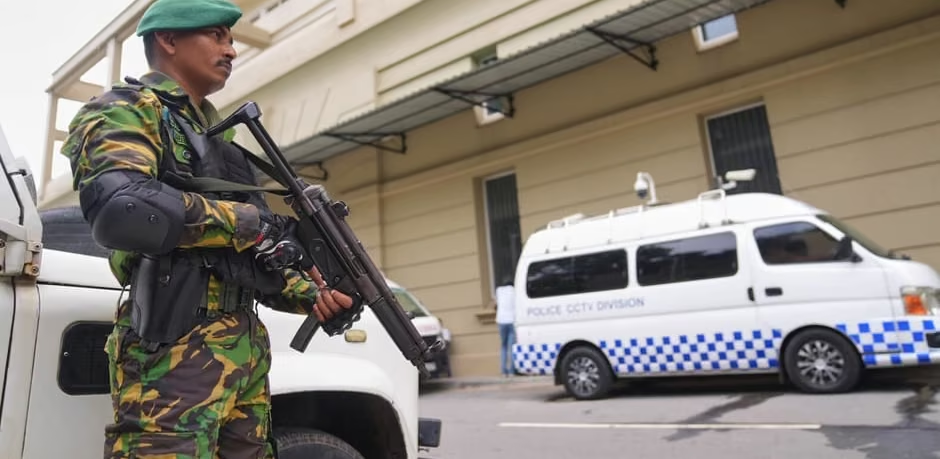
The Sri Lankan government is looking to replace a controversial anti-terror law but critics say the new one is just as bad.
For 46-year-old Ganesan (name changed) from Batticaloa in eastern Sri Lanka, any discussion of terrorism brings back memories of his two-year-old daughter, who was killed in the 2019 Easter Sunday attacks. She was one of 270 people who lost their lives in a series of coordinated bombings targeting three churches and three luxury hotels across the island nation.
The attacks were the deadliest in Sri Lanka since the end of its civil war in 2009. Over 500 people were injured.
Ganesan's daughter was killed in an attack on the Zion Church in Batticaloa.
But Ganesan remains skeptical when asked about the new counterterrorism bill pushed by the government in Sri Lanka.
"Laws against terrorism are necessary to prevent terrorist attacks, but they should not target the innocent or suppress human rights," he told DW.
The administration led by President Anura Kumara Dissanayake and his National People's Power faction
has proposed the Protection of the State from Terrorism Act (PSTA) as a replacement for the existing Prevention of Terrorism Act (PTA). The PTA has many critics who claim that the contentious law has enabled arbitrary detention and the torture of detainees for decades.
The government argues that a robust anti-terrorism law is needed to address the increasingly complex local and international activities of extremist groups.
What do rights groups say about the new bill?
But rights groups are now also sharply criticizing the new bill. Activist argue that the changes will not bring about any improvement, warning that the draft features an overly broad definition of terrorism, provides inadequate judicial oversight, and grants extensive powers to law enforcement authorities. Activists also warn that the proposed law has only limited safeguards against official abuse.
The bill, for instance, allows security forces to stop, search and question individuals on the basis of "reasonable suspicion," enter and search premises, and seize items on suspicion of them being linked to an offense under the terrorism act.
"The definition of the term 'terrorism' in the bill as presently drafted is highly problematic. The term is unclear, and its meaning has not been clearly defined," Visakesa Chandrasekaram, a film director and human rights lawyer, told DW.
"Such lack of clarity in the law may result in violations of the fundamental rights of the people," he added.
Chandrasekaram also pointed out that the bill would confer police powers on the military, which is neither trained to investigate criminal offenses nor equipped to protect the rights of people targeted in such investigations.
This, he warned, could lead to the "militarization" of the law enforcement process.
Is the new law just PTA all over again?
Dhanushka Silva, a lawyer, said the proposed law is not much different from the existing one.
"The present government pledged to repeal the PTA in their 2024 election manifesto. But now the government seems to replace it with a new act that is a replica of the PTA," he told DW.
Silva believes the new bill, PSTA, could be misused to suppress democratic freedoms and muzzle dissent and free speech.
Under Section 9 of the PSTA, even posts or statements made on social media could be subject to scrutiny due to the broad definition of terrorism-related offenses in the bill, he explained.
The section further suggests that individuals who share content deemed to be a terrorism offense could face up to 15 years of rigorous imprisonment, according to the the lawyer.
"This is a big blow to freedom of speech in a democratic society like ours," he said.
The Office of the United Nations High Commissioner for Human Rights (OHCHR) has also called on the government to ensure that the bill is consistent with international human rights law.
It noted that the PSTA, despite containing some additional safeguards and improvements on previous drafts, reproduces a number of shortcomings in the PTA and other, older counter-terrorism bills.
The legislation "should include robust safeguards against torture, ill-treatment, enforced disappearance and coercive interrogation," it said in a statement.
Government spokesperson Nalinda Jayatissa, however, rejected the allegations by rights activists and insisted that the new law would not compromise civil liberties and press freedom.
Calls for Colombo to uphold human rights commitments
Passing the new counterterrorism legislation could also have economic and foreign policy ramifications for Sri Lanka.
The United Nations, which has repeatedly urged Colombo to repeal the PTA, has called for further revisions to the proposed PSTA.
The European Union has likewise urged Sri Lanka to uphold its international human rights obligations if it wishes to continue benefiting from the bloc's Generalized Scheme of Preferences Plus (GSP+), which grants preferential access to the EU market to eligible developing countries.
Failure to meet these requirements could result in the suspension of GSP+ preferences, likely to trigger significant economic penalties for the country.
During a parliamentary debate on November 12, Speaker Jagath Wickramaratne said that some provisions of the proposed law were inconsistent with the constitution.
The legislation was also challenged before the Supreme Court, which outlined several amendments and said Parliament could pass the measure once the changes were made.
Parliament has yet to set a date for a vote.