Balsamic Braised Beef
The Kitchn | 17.12.2025 23:03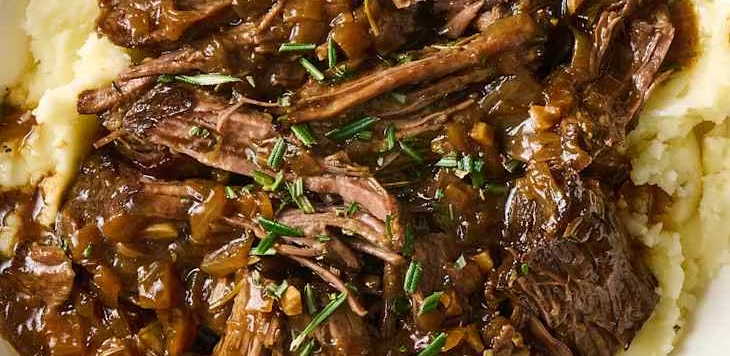
We independently select these products—if you buy from one of our links, we may earn a commission. All prices were accurate at the time of publishing.
Winter is the perfect season for braising. This simple cooking technique actually rewards you for (almost) ignoring food while it cooks, allowing the gentle heat of the oven and the slow simmer of sauce to tenderize a tough piece of meat. If you’ve ever made a pot roast, then you already know how to braise. My Italian twist on the classic, balsamic braised beef, slides a seared chuck roast into the oven for a few hours, and the result is almost magical. The once-tough cut is transformed into silky shreds of beef, and the balsamic vinegar reduces to a bold and tangy sauce.
- Balsamic vinegar isn’t just for salads. Every bite of tender braised beef is infused with sweet and tangy balsamic flavor. Serve the beef over mashed potatoes or with a piece of crusty bread to sop up every drop of the sauce.
- You’ll love the leftovers. Even if leftovers aren’t usually your favorite, make sure to stash extra servings in the fridge for later. The tender beef and tangy balsamic sauce are even more delicious the second time around.
- Beef chuck roast: Pick up a 3-pound boneless piece of chuck roast, which is sometimes labeled as pot roast. Braising transforms this tough cut into tender, melt-in-your-mouth pieces of beef.
- Balsamic vinegar: Use a budget-friendly bottle of balsamic vinegar to add sweet and tangy flavor to this recipe.
- All-purpose flour: The flour thickens the beef’s juices and the balsamic vinegar into a luxurious sauce.
- Herbs: Use fresh rosemary and thyme or substitute with dried herbs.
- 1 tablespoon
neutral oil, such as canola or grapeseed
- 1
medium yellow onion, diced (about 1 1/2 cups)
- 1 (32-ounce) carton
low-sodium beef broth (4 cups)
- 1 1/4 teaspoons
dried rosemary, or 1 teaspoon finely chopped fresh rosemary leaves (from 1 medium sprig), plus more for garnish
- 3/4 teaspoon
dried thyme, or 3 fresh thyme sprigs, plus more for garnish
Instructions
Arrange a rack in the lower third of the oven and heat the oven to 350°F.
Trim any excess surface fat from 1 (about 3-pound) boneless beef chuck roast, then pat dry with paper towels. Season all over with 2 teaspoons kosher salt and 1/2 teaspoon black pepper.
Heat 1 tablespoon neutral oil in a 5-quart or larger Dutch oven over medium heat until shimmering. Add the roast and sear until well-browned on 2 sides, about 7 minutes per side. Transfer to a plate.
Add 1 diced medium yellow onion to the pot. Cook, stirring occasionally and scraping up the browned bits from the bottom of the pot, until the onions are softened, about 5 minutes. Sprinkle with 3 tablespoons all-purpose flour. Stir to coat and cook for 1 minute to cook the floury taste out.
Stir in 1 (32-ounce) carton low-sodium beef broth and scrape up any browned bits from the bottom of the pot. Stir in 1/2 cup balsamic vinegar, 2 tablespoons maple syrup, 3 minced garlic cloves, 1 1/4 teaspoons dried rosemary, and 3/4 teaspoon dried thyme. Return the roast and any accumulated juices to the pot.
Cover and transfer the pot to the oven. Cook for 2 hours. Uncover and flip the roast. Return to the oven and cook uncovered for 30 minutes. Flip the roast once more and cook in the oven until the roast is very tender and a knife slides easily into the center of the roast, 15 to 30 minutes more.
Remove and discard the thyme stems if using fresh thyme. Shred the roast right in the pot into bite-size pieces with tongs, or transfer the roast to a cutting board and cut across the grain into thick slices (it will be easier to cut if cooled slightly first). Serve with the sauce, garnished with chopped fresh thyme and rosemary leaves if desired.
Make ahead: The beef can be made up to 1 day in advance. Let cool completely, then cover and refrigerate. Reheat covered over medium heat on the stovetop or in a 325°F oven, flipping the roast occasionally, until warmed through.
Storage: Leftovers can be refrigerated in an airtight container for up to 4 days, or frozen for up to 3 months.