“I Wanted to Work, Not Be Coached Like a Son” – Andile Jali Opens Up on Rift with Rulani Mokwena
iReport South Africa | 04.04.2026 16:13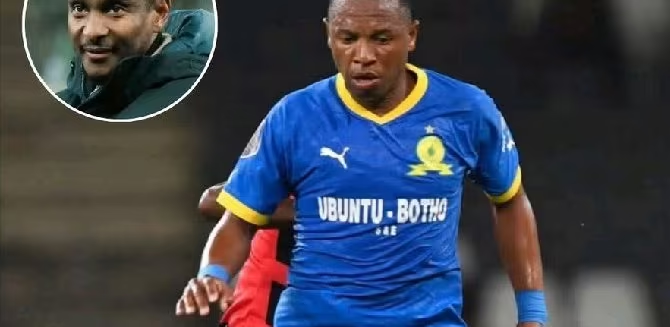
Andile Jali, a veteran midfielder, has addressed issues that have been widely publicised about his relationship with coach Rulani Mokwena. In doing so, he has provided a unique glimpse into the factors that led to difficulties between the two individuals.
Jali did not shy away from providing specifics about the dynamic that finally caused their work relationship to become strained while she was speaking freely on the Arena Sport Show. While he did acknowledge that there were some wonderful moments during their time together, he made it quite obvious that the contrasts in approach caused a rift between them.
In the end, Jali said, “We had fun, but we didn’t end up having fun.” When it came to me, he want to be a parent. I’m getting on in years, I have my own family, and all I wanted to do was work.
The comments imply that the conflict is not between personalities alone but perhaps between expectations. It seemed as if Jali, a seasoned player who had years of experience playing at the highest level, would want a relationship that was totally professional and focused on performance and overall outcomes. On the other hand, Mokwena’s mentoring approach, which is often lauded for its ability to develop younger players, would not have been compatible with Jali’s current stage of career and her personal viewpoint.
Jali’s statements are the first time he has explicitly addressed the subject in such plain terms, despite the fact that sources close to the situation have long hinted at the existence of underlying conflict. The comment he made highlights a more general topic in contemporary football, which is the delicate balance that must be maintained between mentoring and autonomy, particularly when dealing with senior professionals.
Over the course of his career, Mokwena has established a reputation for having good interpersonal ties with players, which has earned him widespread recognition as one of the most brilliant coaches in South African football. The viewpoint of Jali, on the other hand, demonstrates how such an approach could not connect with each and every member of a team in the same significant way.
The midfielder’s focus on professionalism, which he expressed by saying, “I just wanted to work,” is indicative of a need for clarity in responsibilities and limits, especially for players who no longer saw themselves as being in need of direction beyond tactical teaching.
Jali’s statements are sure to ignite discussion among fans and pundits alike concerning coaching techniques and player management at the highest level. While it is yet unknown if Mokwena will publicly reply to your comments, it is probable that Jali’s comments will spark controversy.
For the time being, Jali’s revelation does not only add a new dimension to an already compelling storyline, but it also serves as a reminder that success in football often rests on relationships off the field as much as it does on performances on the game.