Bhutan's long-secluded 'hidden paradise'
BBC | 30.11.2025 21:00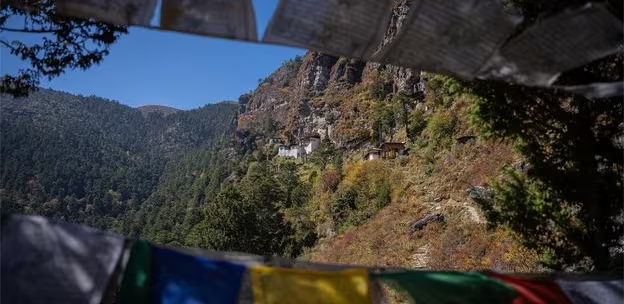
Bhutan only opened to the outside world in 1974. Yet, one region remained closed for decades afterwards, and is one of the Himalayas' best-kept secrets.
It's 05:00 and 100 people have gathered in the courtyard of Lhakhang Karpo, a 7th-Century monastery at the base of three sacred mountains in Bhutan's secluded Haa Valley.
Incense plumes swirl in the mist. Pink rice porridge with Sichuan pepper steams in vats. Low, thrumming chants hum through me. Then: drums. A blast of dungchen trumpets. Crackling, cawing victory calls and – pow!
I jump.
A gunshot.
"It's only a blank," Rinchen Khandu, the town mayor, assures me.
This isn't your typical Buddhist festival. I'm at the Ap Chundu Lhapsoel, a 10km procession held every 1 November in honour of the valley's warrior deity who helped locals defeat invading Tibetans in the 17th Century. It's the nation's longest chipdrel (ceremonial procession) – and the only one where tourists are welcomed – yet few visitors have ever heard of it. In a way, the festival is a metaphor for Haa itself.
Located along Bhutan's rugged western frontier near the Tibetan border, Haa is one of the smallest and most secluded districts in the world's last Buddhist kingdom – and one of the Himalayas' best-kept secrets.
Bhutan famously cut itself off from the outside world for centuries to protect its culture, only allowing foreign tourists in 1974. But Haa – because of its sensitive position along the Tibetan border and its use as a military training ground for the Royal Bhutan Army until the mid-1990s – remained closed for decades longer, opening only in 2002. For years, it was a hermit region within a hermit kingdom.
Today, the diminuitive district is one of Bhutan's most biodiverse corners, home to rolling emerald mountains where pine forests spill down the slopes. Blue sheep drink from glacial lakes, red pandas hide in bamboo undergrowth, snow leopards roam the ridgelines and blue poppies (Bhutan's national flower) bloom in the higher elevations come summer.
Haa is Bhutan without the rush, the 'old' within the new Bhutan, and that is something to be quietly proud of and we hope will be appreciated by those who visit – Fin Norbu
Because of its long isolation, Haa is also where Bhutan's Indigenous Bon traditions remain strongest and its culture is still shaped by guardian deities. Unlike other parts of the country that now have Western hotel brands, Haa has just a handful of homestays, heritage inns and local eateries. As a result, the valley is a veritable time capsule, offering a glimpse of Bhutan before it opened up.
How to visit Haa Valley
Visa: All tourists are required to have a visa (£30/$40) and pay a daily Sustainable Development Fee (£75/$100) to help the government fund free healthcare and education.
When to visit: Spring for the Haa Spring Festival, summer for the warm weather, autumn for festivals (Haa Tshechu, Ap Chundu Lhapsoel) and winter for Haa's New Year, typically in December.
How to get there: Fly to Paro and drive to Haa via the Chelela Pass or from Thimphu via the recently upgraded Chuzzom-Haa highway.
How to visit: You'll need a car and driver and should hire local guides for day hikes.
Where to stay? Experience village life at Ugyen's (Haa's oldest homestay), set in a 200-year-old farmhouse with hot stone baths, or opt for added comforts at Soednam Zhingkha Lodge, Lechuna Lodge Haa Heritage in Haa town. Newer options include Haa Valley Camp, Katsho Eco Camp (opening in spring 2026) and Sangwa Camp.
Etiquette: Dress modestly and wear a kira or gho (Bhutan's national dress) if attending a festival or visiting a temple/dzong.
Helpful websites: https://bhutan.travel is the authority on all things tourism, while Druk Air or Bhutan Airlines are good resources for flights.
Off the beaten path
Most visitors to Bhutan fly into the nation's lone international airport in Paro and beeline to the world-famous Taktsang temple, the cliff-side monastery perched at 3,120m (10,236ft). They may then head east to the capital city Thimphu; the town of Punakha, home to the country's most beautiful fortress; and the alpine Phobjikha Valley, where elegant black-necked cranes overwinter before returning to Tibet.
Yet, despite Haa being located just 67km (42 miles) west of Paro, only 2% of tourists ever make the two-hour drive to reach it, according to the Department of Tourism. That's largely because the route crosses the Chelela Pass (3,988m, 13,084ft), the country's highest drivable road, which – on a clear day – offers sweeping mountain views across to the Indian state of Sikkim and the Tibetan plateau.
Yet, those who make the zigzagging journey will find Juneydrak hermitage, a gravity-defying temple rivalling the tourist-thronged Taktsang that hovers some 2,930m (9,612ft) above the valley. There is also a collection of world-class hikes, such as the five-day Nub-Tshonapata trek, which traces an ancient trade route through glacial lakes and high passes; and the three-day Sagala Trek that follows a historic route used by rice planters connecting Haa and Paro. For those on a tighter timeline, the 27km (16 mile) Meri Puensum trail, which overlooks yak-studded valleys, has recently been widened to accommodate mountain bikers as well as hikers.
 Kelzang Dorjee
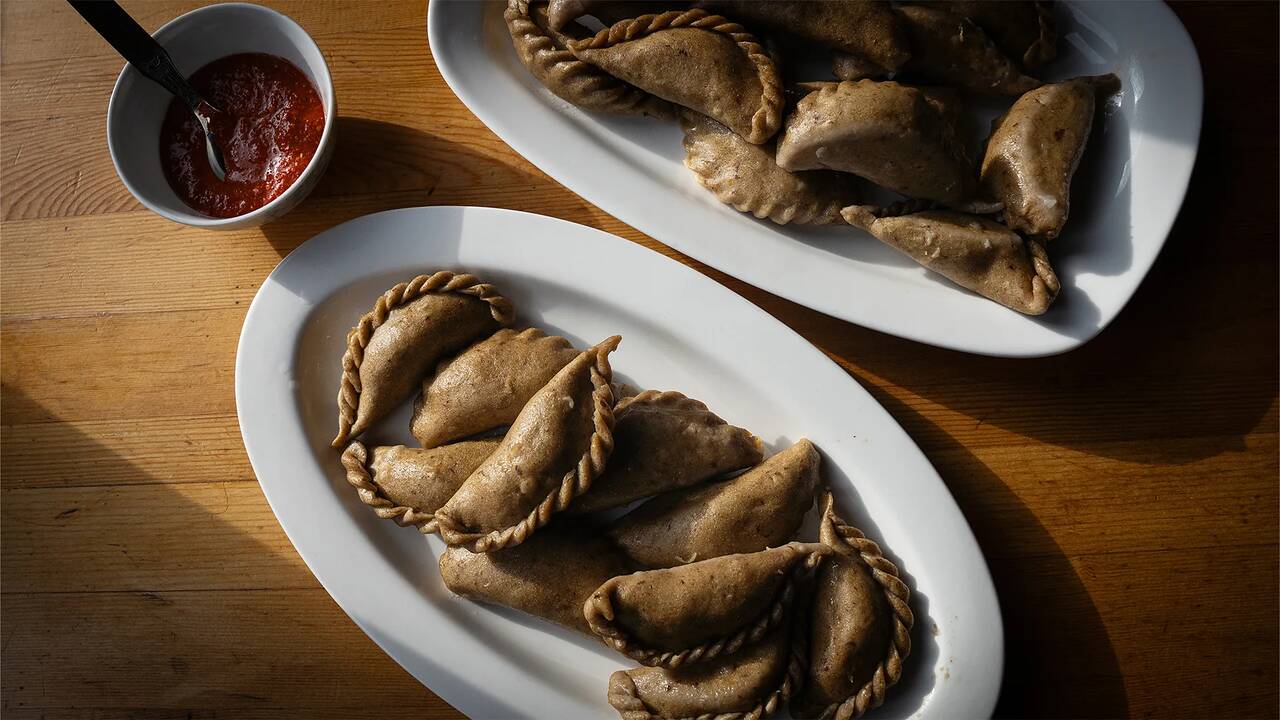
Over the last decade, a homestay network has also formed, allowing travellers to stay with local Haa families and experience village life – from tasting the region's decadent fondue-like philu cheese to learning to make hoentey (29-ingredient buckwheat dumplings).
"[Haa] has its own charm due to its remoteness and thin population [just 13,600 people across 2,000 sq km]," says Phintso Ongdi, who owns Lechuna Heritage Lodge, a 100-year-old home he converted into a seven-room lodge. Thanks to limited development, Ongdi says, "Haa's traditions and way of life will remain suspended in time for some years to come, and that's what many visitors, and people like myself, value and want to experience."
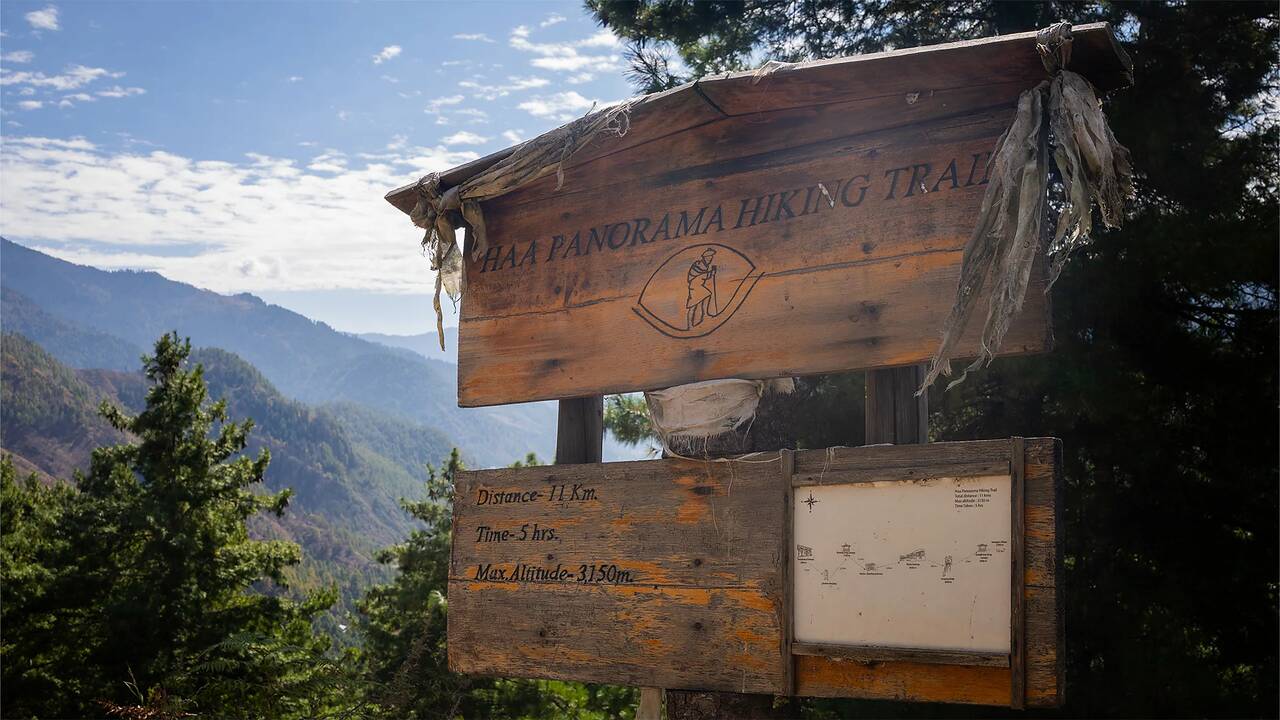
The day after the Ap Chundu procession, I set out on the 11km (7 mile) Haa Panorama Trail, a pandemic initiative that connects four monasteries and reveals wide views of the valley and nearby Meri Puenseum mountains, whose three peaks tower over the Lhakhang Kharpo below. The trail also intersects with the start of the 400km (248 mile) Trans Bhutan Trail near Juneydrak Hermitage, where nuns undertake three-year silent meditation retreats.
That evening, I soaked my tired legs in a traditional hot-stone bath at Soednam Zingkha Heritage's serene bathhouse. Freshly picked artemisa, rose petals and dried calamus floated in the medicinal herb-infused water, and latticed doors provided an onsen-like atmosophere, beckoning me slip into the river below to cool off.
"Haa is a hidden paradise within another hidden paradise – Bhutan – where myths, legends and nature are all intertwined," the nation's Prime Minister, Tshering Tobgay, who hails from southern Haa, later told me.
Haa Governor Melam Zangpo has also announced plans for a 5km (3 miles) Tergola Red Panda Trail through old-growth rhodhodendron forest in southern Haa, which will take visitors deep into the heart of the elusive animals' habitat when it opens in 2027. (Haa has the most red pandas in Bhutan: 42.)
 Kelzang Dorjee
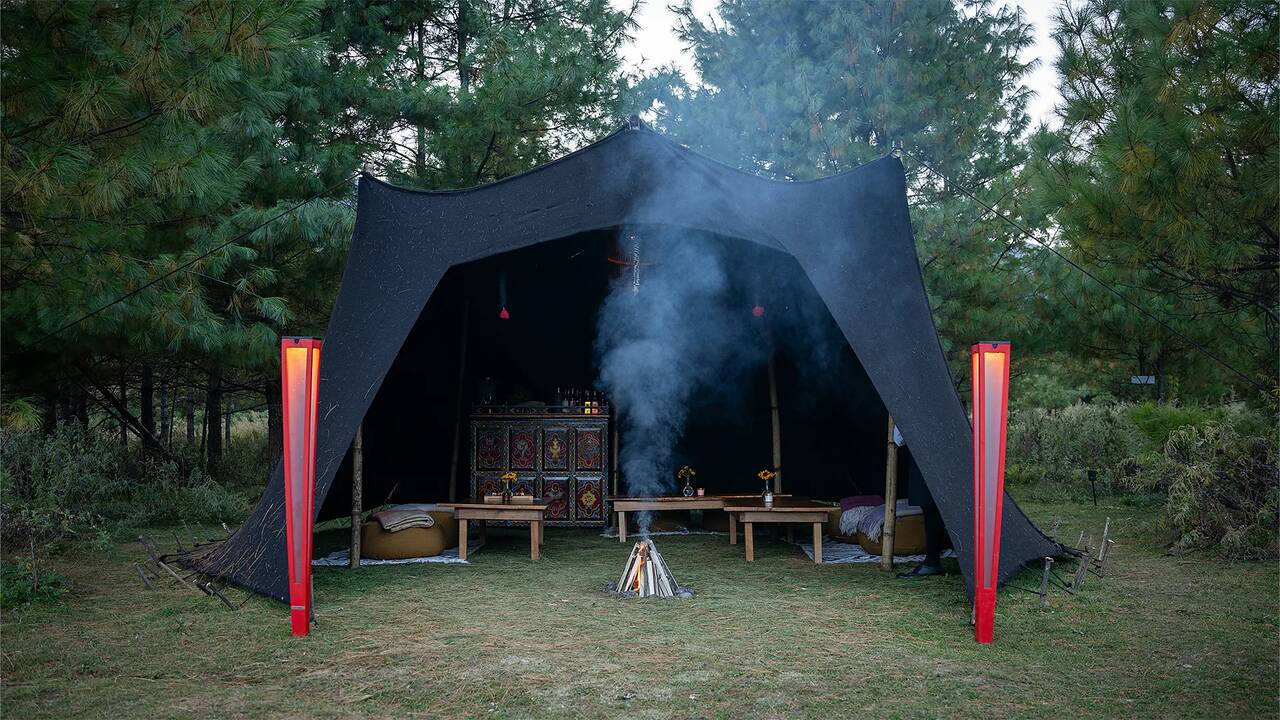
The evening after joining the Ap Chundu procession, I found myself outside Haa's Jigme Khesar Strict Nature Reserve. I was guest at the Sangwa Camp, a roving luxury camp that moves through Bhutan's lesser-visited valleys, helping rural communities keep their fragile traditions alive. After settling into my cosy yak-wool tent (handcrafted by Bhutan's semi-nomadic Layap people), I ventured out into a clearing in the forest where five dancers wearing rig-na headdresses were singing a haunting, ancient song in honour of the valley's guardian deity, Ap Chundu, around a bonfire.
More like this:
When the dancers departed, their melodies dissolving into the cooling air, I stayed beside the bonfire. The Moon rose above the silouhette of the mountains. I was alone, but Ap Chundu felt ever-present, standing guard over Bhutan's most secluded region, just as he always has.
If you liked this story, sign up for The Essential List newsletter – a handpicked selection of features, videos and can't-miss news, delivered to your inbox twice a week.