Facial recognition technology use to be increased by Home Office
BBC | 04.12.2025 11:45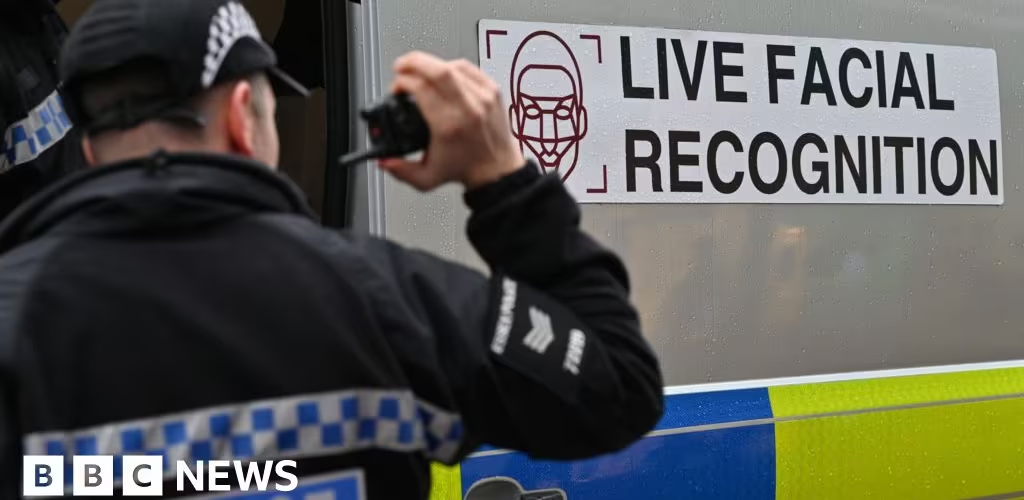
New plans to expand police facial recognition
Facial recognition technology could be used more often by UK police forces, according to new plans announced by the Home Office.
Policing and crime minister Sarah Jones said a widespread rollout of the equipment could mark "the biggest breakthrough" in catching criminals since DNA matching.
People have been asked for their views on its use in a 10-week consultation launched on Thursday, possibly paving the way for new laws.
Jones credited the technology for helping to arrest "thousands" of criminals, but campaign group Big Brother Watch said increased use would make George Orwell "roll in his grave".
Facial recognition is used to locate wanted suspects and find vulnerable people.
According to the Home Office, the Metropolitan Police has made 1,300 arrests using the technology since 2023, including rapists and violent offenders.
The government proposed to create a regulator overseeing police use of biometrics and facial recognition.
It believed those tools could also help to identify and arrest prisoners released by mistake, and would only be used in time-limited, focused deployments.
"Facial recognition is the biggest breakthrough for catching criminals since DNA matching," Jones said.
"We will expand its use so that forces can put more criminals behind bars and tackle crime in their communities."
The Home Office invested £12.6m in facial recognition in 2024, of which £2.8m was spent on live recognition.
A new fleet of mobile vans was rolled out by several forces in November, expanding a pilot programme already led by the Met, South Wales Police and Essex Police.
Any new laws informed by the consultation would take about two years to be passed by Parliament.
They would primarily affect policing in England and Wales, but would also be relevant to certain powers in Scotland and Northern Ireland, the Home Office said.
What young people think about police using facial recognition vans?
Big Brother Watch's Silkie Carlo said she feared the country would be "turned into an open prison".
"We are hurtling towards an authoritarian surveillance state that would make Orwell roll in his grave," she said.
Ms Carlo said the consultation was overdue and called for a pause in using facial recognition while it was ongoing.
There are three different types of facial recognition technology available to police:
- Retrospective: Used to search images from crime scenes against pictures taken of people on arrest
- Live: Using live video footage of people passing cameras and comparing their faces to wanted lists
- Operator-initiated: A mobile application that allows officers to check someone's identity without having to arrest them
National Police Chiefs' Council lead for facial recognition, Lindsey Chiswick, said live facial recognition was already subject to strong safeguards, but stressed "public trust is vital".
"We want to build on that by listening to people's views," she said.