A local's guide to visiting Paris
BBC | 26.12.2025 21:00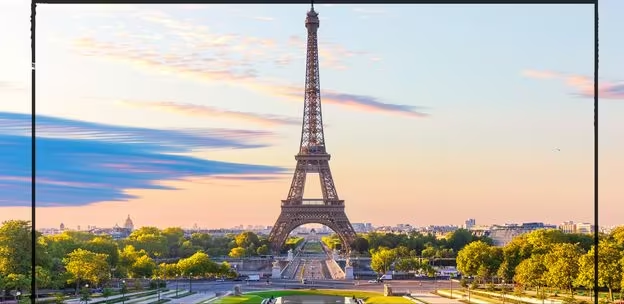
Although known for its rich traditions, Paris keeps evolving – albeit much more gradually than other big metropoles like London or New York. It is a pleasure to watch it broaden its references, yet remain stubborn and proud of the Parisian lifestyle.
Whatever you think you know about France, some of it is true and some of it isn't. The bread is that good. The waiters are brisk. The bike lanes are improving. The food markets, with their seasonal produce, are unparalleled. Many businesses are closed on Sundays. French people are serious about vacation time. Picnicking is an art here. Smokers are everywhere, and their cigarette butts are, too. People do not pick up after their dogs. Several hours for a meal is common at dinner and sometimes even at lunch. The wine bar is the French drinking staple.
Parlez-vous français?
Always say "bonjour" upon entering a store, hotel, or interacting with anyone in hospitality. A deferential "merci" when someone has helped you is always a good idea. If you bump into someone by accident, say "désolé" (apologies). The city is increasingly anglophone-friendly, but asking "parlez-vous anglais?" instead of launching right into English is a worthwhile gesture.
The classic images of Paris remain despite its modern transformations; people visiting still seem to want to pretend that they're in a Nouvelle Vague film.
Originally a New Yorker, I have lived in Paris for nearly 17 years, mostly in the city's northeastern quadrant. I have been working as a journalist and translator for the bulk of that time, writing about the vibrant art, food and cultural scenes. Paris is deemed "different" than the rest of France, but in many ways is the ultimate expression of French culture: lively and full of history.
Here's what to do in Paris.
Everyone knows the Louvre, but new museums have opened in the recent past, notably the Frank Gehry-designed Fondation Louis Vuitton in 2014 and the Tadao Ando-designed Bourse de Commerce in 2021. The Fondation Cartier has just relocated from the 6th arrondissement to the 1st arrondissement's historic Place du Palais-Royal.
Paris has many known historical landmarks, museums and galleries. Many of them are in concentrated areas.
In the Marais, don't miss the delightful oddity that is the Musée de la Chasse et la Nature, full of taxidermy and cabinets of curiosities. The recently renovated mid-16th-Century-built Musée Carnavalet-Histoire de Paris is a free museum about the annals of the city. The Musée National Picasso-Paris focuses on an artist who needs no introduction. For photography enthusiasts, there's the MEP (Maison Européenne de la Photographie) and the Fondation Henri Cartier-Bresson. Many galleries are located in the Marais, including some of the bigger global names, like Marian Goodman, David Zwirner and Perrotin, all housed in former mansions. The Centre Pompidou is closed for renovations until 2030.
 Gedeon
Near the Tuileries, there's the iconic train-station-turned-art-institution Musée d'Orsay to the south and the Musée des Arts Décoratifs, featuring fashion and design exhibitions, to the east. In the Tuileries themselves, towards Place de la Concorde, is the photography museum Jeu de Paume and its neighbour Musée de l'Orangerie – known for a 360-degree view of Monet's waterlilies in eight exquisite compositions.
In the 16th arrondissement, the cluster includes the Musée d'Art Moderne de Paris, which has a free collection to browse, the contemporary art museum the Palais de Tokyo and the elegant fashion museum Palais Galliera.
 William Beaucardet
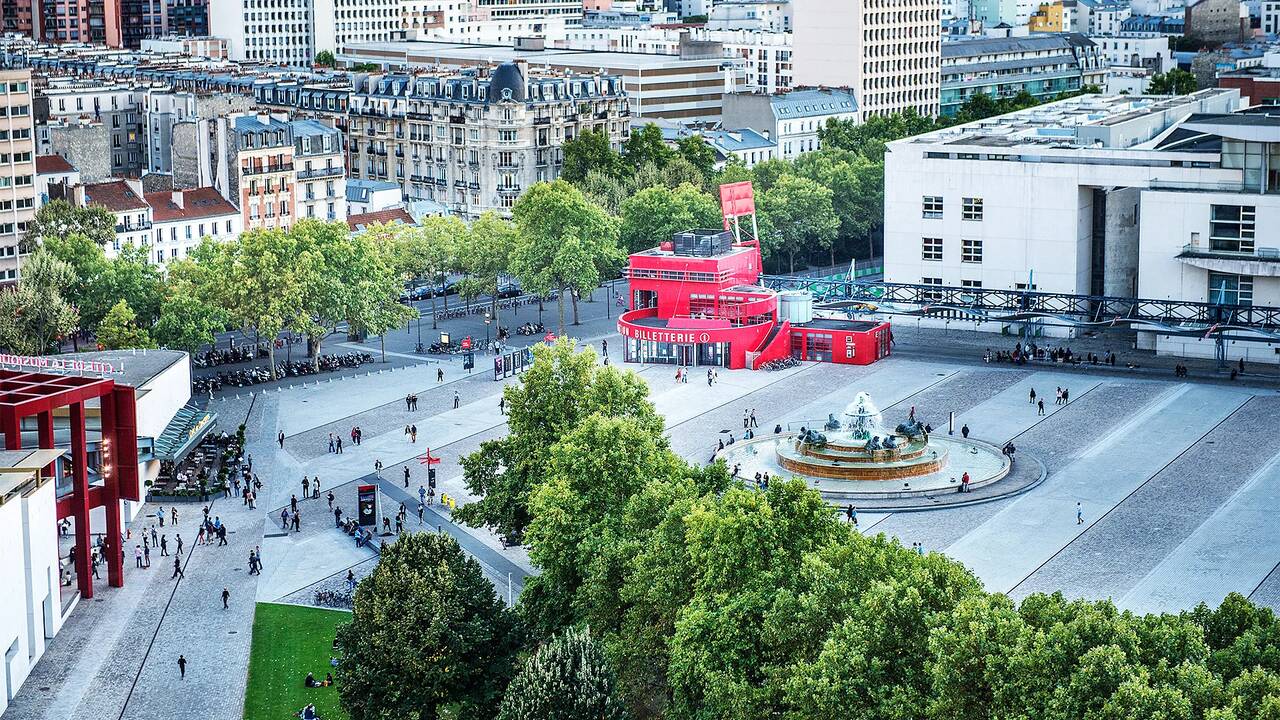
The Buttes Chaumont is a man-made park from a former quarry with steep hills, a lake and lots of joggers. By contrast, Parc de la Villette is a flat expanse dotted with red "folies" (by architect Bernard Tschumi) and a science museum – don't miss its discreet seasonal wild garden and small farm with chickens and donkeys across from the Grande Halle.
On the left bank, the Jardin des Plantes' gardens cover an area of 24 hectares, host to the Muséum National d'Histoire Naturelle and Art Deco greenhouses, as well as a small menagerie (the second-oldest public zoo in the world still in operation).
The Canal Saint Martin has become a major artery along which cafés and boutiques have sprung up. Further, it morphs into the Bassin de la Villette, which is flanked by two MK2 cinemas and lots of people playing boules. Boats can be rented for sailing all the way up Canal de l'Ourcq and beyond.
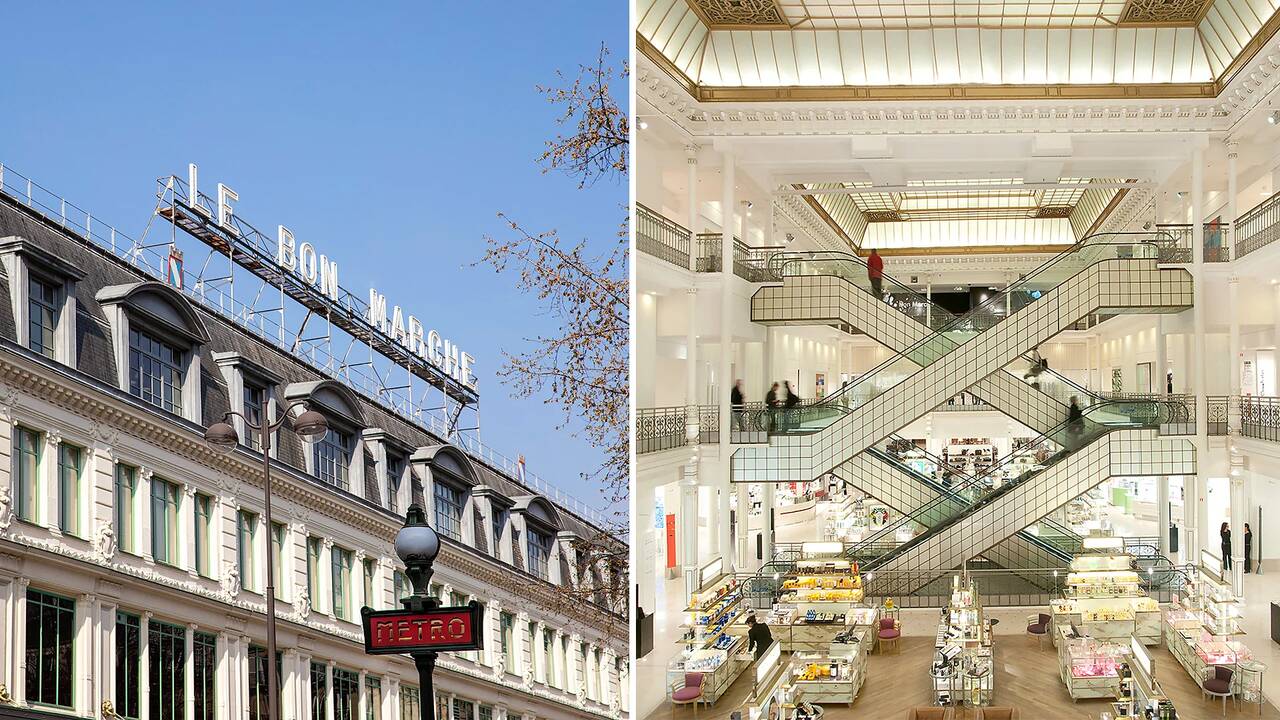
The grand magasins are department stores with a global selection of brands housed in gorgeous buildings – Printemps was created in 1865, Le Bon Marché in 1852, Galeries Lafayette in 1912 and La Samaritaine in 1870 (it closed and then reopened in 2021). You won't lack for anything in these wide-ranging stores that sell clothes, accessories, housewares and comestibles. The boutique Merci, now with two locations, is the contemporary go-to. Dover Street Market and its experimental high fashion landed in Paris in 2024 following London, New York and Tokyo locations.

On the food scene, French classics like roasted chicken or saucisse lentilles are still readily available (Les Arlots and Le Cadoret are contemporary examples doing the classics impeccably), but a younger generation of chefs are reinventing French cuisine with global references and new takes on old staples (try L'Orillon, Paloma or Ake). Some places take reservations, and some don't. At that, it depends on lunch versus dinner service.

Specialty coffee shops and restaurants are increasingly asking customers if they want to add a small tip directly to their credit card payments. Feel free to if you were well-tended to, or leave a few coins on the table at the end of a meal. It is not obligatory. Service workers are paid a fair wage and not dependent on tips for their livelihood.
The appeal of drinking on a terrasse is undimmed, almost regardless of the weather, but even moreso whenever there's sun and Parisians eagerly turn their faces up to the sky to feel the warmth. Circa-2020 annex pop-up terrasses have made outdoor drinking and eating a much-desired option – they are coveted even if they are often small and close to traffic.
Specialty coffee shops and restaurants are increasingly asking customers if they want to add a small tip directly to their credit card payments. Feel free to if you were well-tended to, or leave a few coins on the table at the end of a meal. It is not obligatory. Service workers are paid a fair wage and not dependent on tips for their livelihood.
To become better acquainted with French cuisine, try an expert food tour. Paris by Mouth food and wine tours have been running for more than a decade, showcasing local delicacies spanning charcuterie, breads, pastries and chocolate around the Marais and the Latin Quarter.
"The tours are wonderfully dense with information and insight to help our guests understand why these delicious things are so very special," explains founder Meg Zimbeck. They also offer specialized deep dives into cheese and wine. "They also make for a good rainy-day activity," Zimbeck adds. "We spend most of our time inside of shops and there's limited walking between."
By contrast, OK Coffee's Paris Discovery Tour is an outdoor-only walk spanning six tastings in as many locations around Sentier and Canal St Martin. The tours break down how to assess specialty coffee's aroma, acidity, body and flavour, as well as different brewing methods.
 La Mutinerie
Alcoholic beverage-wise, the bar à vin is a classic Parisian staple: try Pur Vin for its quiet location, Déviant for its bustling bar opening right onto the street, Aux Deux Amis where locals scrunch into the narrow bar. Aaron Ayscough, a writer who drafts an insightful wine Substack and published The World of Natural Wine: What It Is, Who Makes It and Why It Matters, acknowledges the viniculture rich with organically-farmed wine produced without additives or transformative technology in the cellar. Paris, he adds, "is home to the most devoted and developed natural wine market on Earth. Conveniently, the city's constellation of natural wine bistrots, restaurants and bars constitutes a convenient roadmap for finding sincere, well-sourced cuisine".
For those drawn to other alcoholic beverages, cocktail bars – like Combat, Cravan or Le Sydicat – as well as craft beer bars, notably BBP Canal, Mikkeller and Paname Brewing Company will slake your thirst.
Gay bars tend to be concentrated in Le Marais: La Mutinerie is a feminist lesbian staple and Les Souffleuses is an inclusive queer space.
 JP Salle
Paris was the global star for the 2024 Olympic Games and the city made many improvements in preparation for visiting fans. The density of residents and visitors has consequences on air quality, mobility and noise, but the city has green ambitions, aiming to adapt its infrastructure towards managing energy resources. The Metro lines are expanding further and further out to keep residents in the wider Île-de-France area connected. One extension does affect tourists: since June 2024, Metro line 14 goes right to Orly airport.
The Metro network, RATP, comprises 16 lines, each identified by a different colour. There are more than 300 stations in the capital and the inner suburbs, identified by a yellow M above the entrance. On weekdays, you can take the Metro from around 05:00 to around 01:00. On Fridays and Saturdays, the Metro stays open until about 02:00. There is also a network of buses, including dedicated night buses.
The Batobus river service – intended for tourists – stops at token attractions by way of the Seine: Eiffel Tower, Champs-Elysées, Musée d'Orsay, Louvre, St-Germain-des-Prés, Notre-Dame, Hôtel de Ville, Jardin des Plantes and Beaugrenelle. The service operates year-round, from 10:00 to 19:00 on average, seven days a week.
Paris is an incredibly walkable city: it is made for pedestrians, although the narrow pavements will be crowded. The urban planning was gradual over centuries, so the streets were not plotted with any cohesive logic, but making a wrong turn and getting lost in Paris is mostly a pleasure.
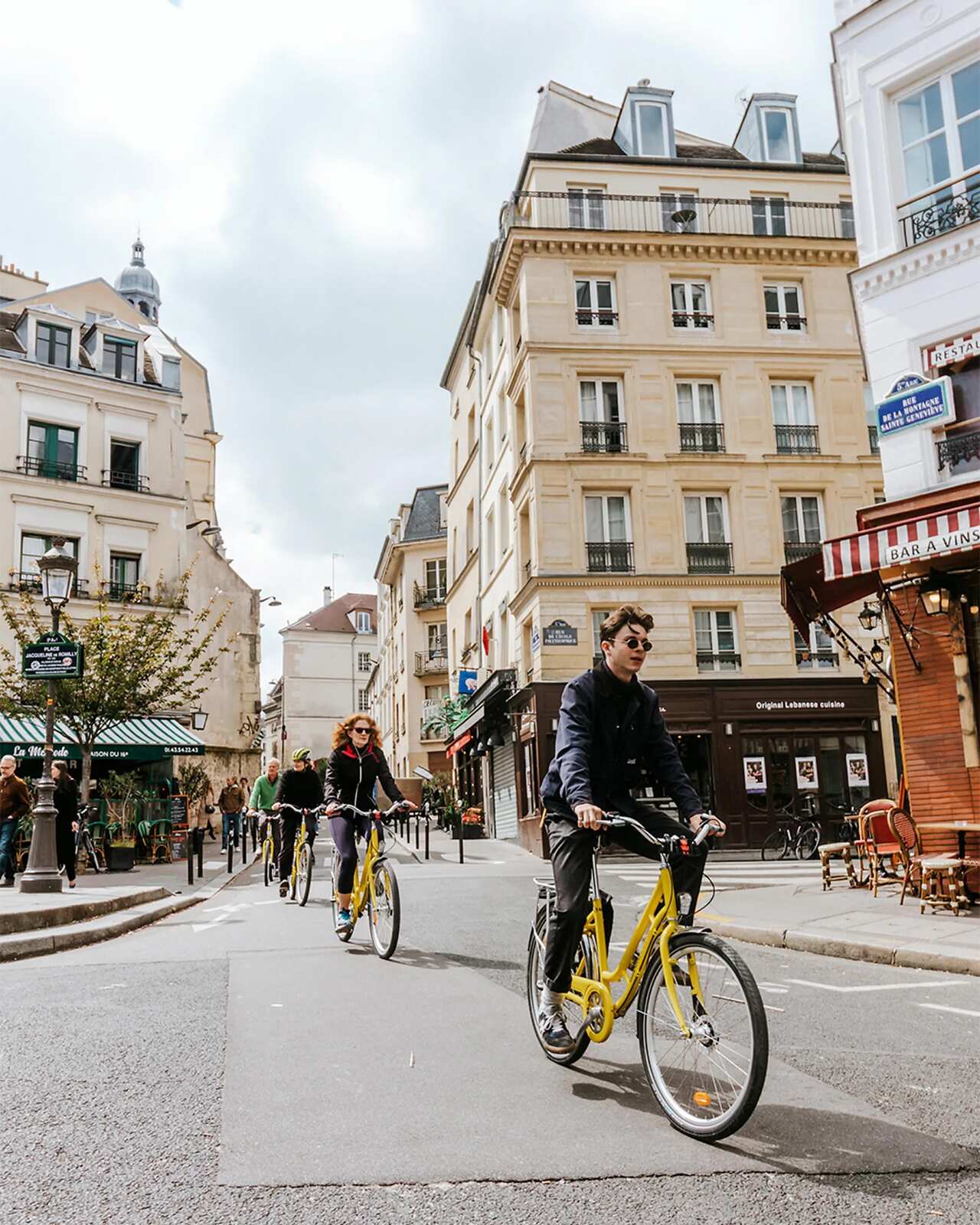
Recently, Paris has expanded its bike lanes: There are more than 620 miles (1,000km) of cycle paths in the centre (and around 3,728 miles or 6,000km in the wider Paris region). Renting a Vélib' has become a staple way to explore the city. There are more than 1,400 bike stations with 20,000 bicycles and e-bikes available in the greater metropolitan area and you won't wander far without finding a station.
"Paris has dramatically changed in the past five years to make cycling the preferred way to get around," says Christian Osburn, who founded Bike About Tours here in 2006. "My best advice for getting around would be to take the Seine riversides to ride east and west through town, and the paths along the Canal Saint Martin to head north. The hardest areas to navigate by bike – even though there are bike lanes – are around Grands Boulevards, Gare du Nord and Gare St Lazare."
If you're not comfortable making your way alone through the frenzy of bike lanes, Bike About Tours offers various options, including Hidden Paris (focusing on charming back streets), Paris Monuments (highlighting legendary sites) and a Versailles bike tour. There are also weekly group "road rides" 31-62 miles (50-100km outside the city, designed for experienced cyclists.
If you prefer to travel by car, G7 has the largest taxi fleet in Paris. Lyft, Bolt and Uber are all in service in the city.
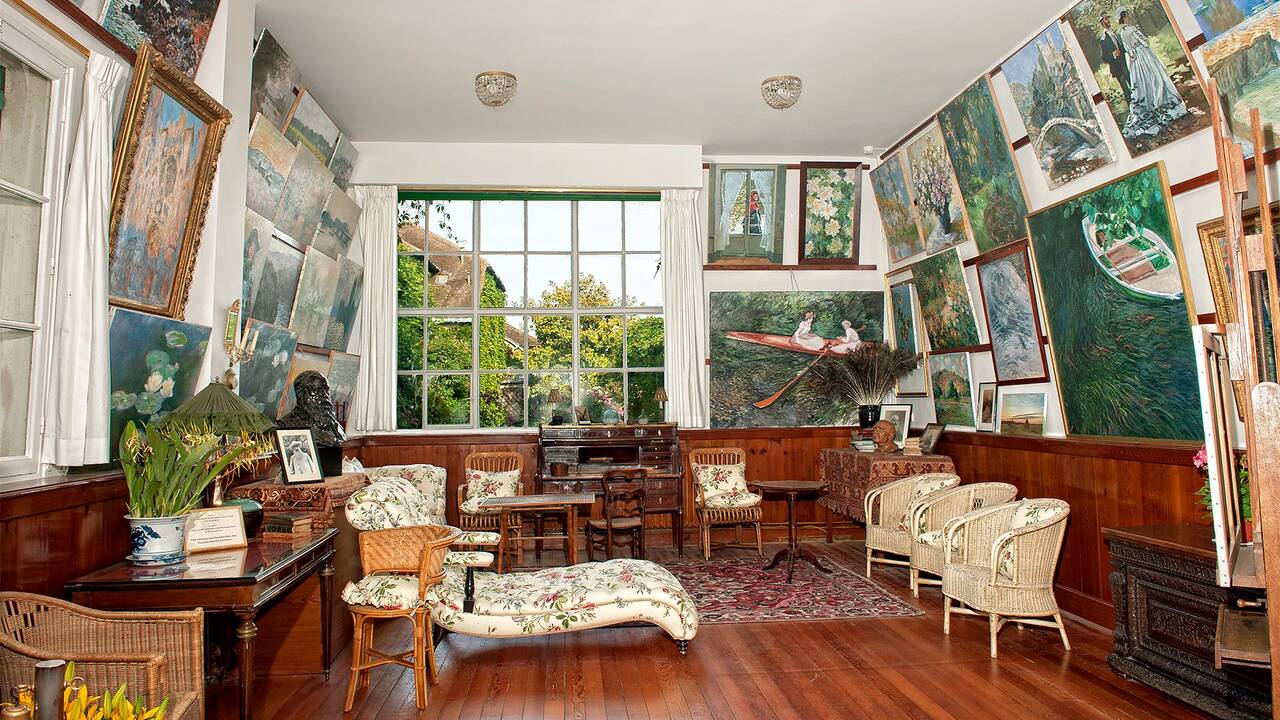 The House and Gardens of Claude Monet
Located 35 miles (57km) south of Paris, Fontainebleau – known for its chateau, gardens and park on an 130 hectare estate – is also particularly famous for its surrounding bouldering areas.
The restored Giverny estate (50 miles or 80km from Paris), which was painter Claude Monet's private sanctuary from 1883 to 1926, has breathtaking gardens, though they close for winter so save this trip for spring. If you want to extend your stay nearby, the Domaine de Primard is an 18th-Century residence once owned by Catherine Deneuve that now serves as a beautiful, calm hotel with gardens, a spa, an outdoor pool and tennis courts.
Take yourself for a superlative meal at Le Doyenné: in the village of Saint-Vrain, 25 miles (41km) south of central Paris, it encompasses a restaurant, guesthouse, potager and farm, spearheaded by chefs James Henry and Shaun Kelly.

There truly isn't a bad time to be here, and each season offers its highlights.
In December and January, the Grand Palais – a recently-renovated building built at the turn of the 20th Century – hosts the largest indoor ice rink in France (3,000 square metres) under its large glass dome with morning, afternoon and evening sessions.
Phone grabbing or pickpocketing in the Metro are your most notable day-to-day risks. In the centre, ignore anyone asking you to sign petitions (they're fake) or play a game with cards or plastic cups – these are distraction ploys.
European emergency number: 112
SOS Médecins (Doctor): +33 147077777
Spring is arguably Paris's best time. The enormous Parc de Sceaux, south of the city, has its own bursting of cerisiers (cherry blossoms) in April. As soon as it gets warm, the Buttes Chaumont and the Quais de la Seine are crawling with picnickers. Buy a bottle from a cave (wine cellar) and squeeze between groups.
The first day of summer, 21 June, is World Music Day, and the city becomes a cacophony of bands, musicians, singers and parties. Bastille Day is 14 July, which means fireworks. August is a dormant month in Paris – French people take les vacances seriously and take several weeks off. During this month, every restaurant and bar opening hours should be checked. For those in town, there's Paris Plage (on the right bank of the Seine, the Canal Saint-Martin and the Bassin de la Villette): river- and canal-side deckchairs and sun umbrellas, sporting activities, games and pop-up outdoor swimming.
Autumn brings back-to-school energy in September – dubbed "la rentrée", meaning lots of new exhibition openings and good energy post summer relaxation.
Paris is steeped in its history, and that carefully maintained relationship to its past is a special one – especially as modern cities see relentless turnover and developmental change. Paris's prominent past and bountiful traditions are worth savouring, but those who are making Paris a dynamic, delicious and creative contemporary place today are not to be overlooked. Paris attracts an international crowd, and the art, cuisine and tourism services reflect this, showcasing ever-expanding ways to reinvent French culture.
--
If you liked this story, sign up for The Essential List newsletter – a handpicked selection of features, videos and can't-miss news, delivered to your inbox twice a week.