Morocco respond to reports of a switch to the European Championship after Senegal's triumph
Goal | 27.11.2026 16:46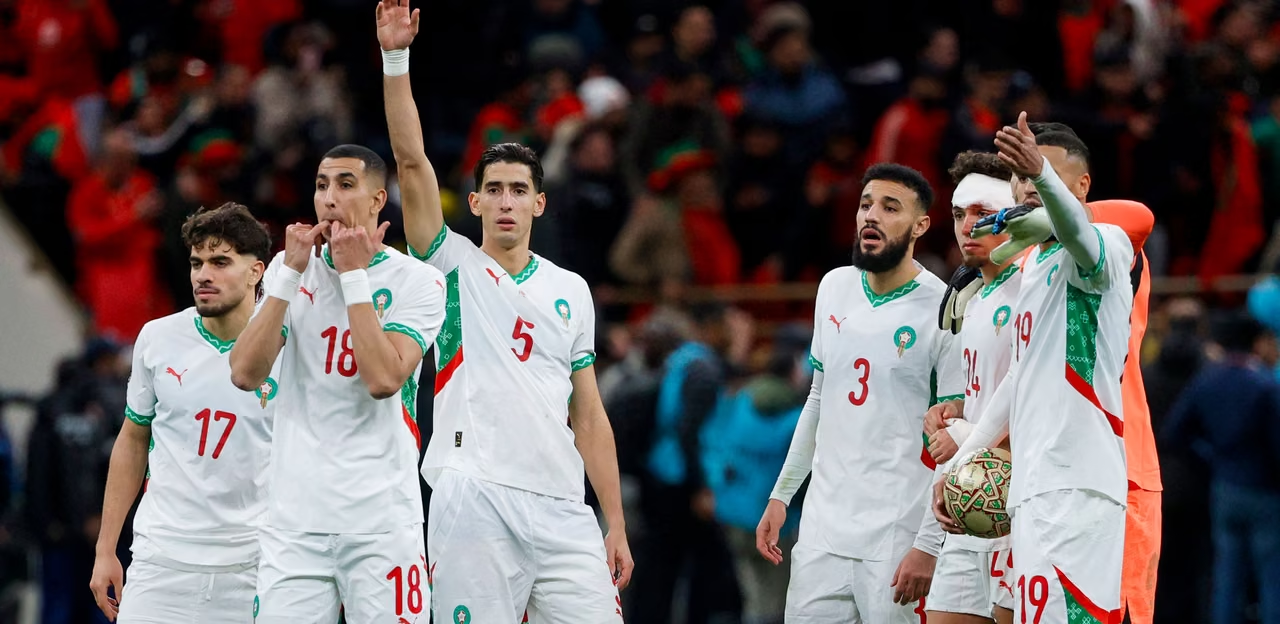
A controversial rumour about Morocco's future in continental football resurfaced just two days after the Court of Arbitration for Sport (CAS) ruled on the 2025 Africa Cup of Nations final, before the Royal Moroccan Football Federation stepped in to settle the matter with a categorical denial.
Social media accounts have spent the past few hours circulating claims that Morocco had applied to leave the Confederation of African Football (CAF) so they could join UEFA and compete in the European Championship. Posts framed the move as a forceful response to the decision to award the Africa Cup of Nations to Senegal.
The rumour didn't stop there. Some posts claimed UEFA had turned down the Royal Moroccan Football Federation's request because the kingdom is geographically located on the African continent.
The story was quickly shot down. Nigerian journalist Osasu Obayiuwana, a correspondent for the Guardian, revealed on X that an official at the Royal Moroccan Football Federation had given him a categorical denial, telling him the information doing the rounds was "completely false".
An old rumour resurfaces
Talk of Morocco moving to UEFA is nothing new. The idea has surfaced on social media several times before, without any known official step from Morocco or UEFA to back it up.
There's no evidence of any Moroccan move in that direction. But the latest rumour coincided with the anger and frustration a number of Moroccan fans voiced on social media after the Court of Arbitration for Sport's ruling in the 2025 Africa Cup of Nations final case.
That discontent appears to have breathed new life into an old story, though nothing suggests Morocco have actually submitted an official request to leave CAF.
A true story dating back to 1987
A genuine historical episode may have helped the rumour spread again, but it has nothing to do with football or UEFA.
In 1987, under the late King Hassan II, Morocco really did apply to join the European Economic Community, the forerunner of the European Union.
The EEC rejected the application on the grounds that Morocco is not a European country.
No evidence links that episode to the current rumour about Morocco moving from CAF to UEFA, particularly as the two belong to entirely different contexts.
Can a country change its continental confederation?
Membership of a continental confederation isn't always strictly tied to geography, and a few exceptional cases in world football make such a switch possible in principle.
Israel, for example, is geographically in Asia but has been a UEFA member since 1994, amid political circumstances that made its participation in Asian competitions complicated.
Australia, meanwhile, left the Oceania Football Confederation for the Asian Football Confederation in 2006, a move likewise linked to their desire to play in stronger competitions.
Morocco's situation is different from both. The kingdom is an active and stable member of the African football system and holds a prominent position within CAF, in both sporting and institutional terms.
Nothing in the information currently available suggests Morocco are considering a change of confederation, and the Royal Moroccan Football Federation has explicitly denied the reports.
The focus is on the 2027 Africa Cup of Nations
Away from the rumours, the national team's sporting goal is clear: keep competing on the continent and try to win the Africa Cup of Nations for the second time in their history.
Morocco last lifted the trophy in 1976. Now the focus is on the next edition, where the Atlas Lions want to settle the title on the pitch, away from the controversy stirred up by the fallout from the CAS ruling and the rumours that followed it.
I am the Head of shifts and oversee content. I have over 15 years of experience in sports journalism. I studied media and have worked for a number of Arabic print newspapers and websites, but the most significant milestone in my career was joining Kooora, the leading Arabic sports website, in 2016.
I always strive to provide reliable content, backed by numbers and statistics, free from exaggeration. I love the language of numbers because it knows no flattery. I have covered major soccer events, with a special focus on highlighting Arab soccer stars and their impact on the global stage.
Throughout my career, my work has focused on covering soccer—whether Egyptian, Arab, or international—and my interest has now shifted to Saudi soccer, following the massive boom the Kingdom has experienced over the past few years.
I’ve been connected to soccer since childhood. My first memory of the sport dates back to the 1998 World Cup. Although I was only 8 years old at the time, the excitement of the matches drew me in deeply, and I can’t forget Zinedine Zidane’s brilliance in the final and how he led the French national team to its first title in the tournament.
Brazilian Ronaldo was one of the legends who contributed to my passion for soccer at the start of this century; his goal-scoring style was amazing—he never missed in front of the goal. Then Cristiano Ronaldo emerged, and to this day I consider him my favorite player, because he inspired me with a sense of challenge and an unwavering desire to win, and this has been reflected in my writing style.
My articles focus on coverage of the Saudi Pro League, as well as other leagues such as the English Premier League, La Liga, and the UEFA Champions League. I also follow the transfer market closely and try to analyze the deals.
If you asked me what my fondest soccer memory is, I couldn’t think of anything better than the moment Egypt qualified for the 2018 World Cup—especially since it was our first qualification in 28 years, and the first time I’d ever seen my national team compete in the world’s biggest soccer tournament.
As for my all-time favorite lineup, it is as follows: Iker Casillas in goal. Paolo Maldini, Sergio Ramos, Cafu, and Roberto Carlos on defense. Andrés Iniesta, Zinedine Zidane, and Ronaldinho in midfield. Cristiano Ronaldo, Lionel Messi, and Ronaldo Nazário up front.
Throughout my career, I’ve published a number of my favorite analyses and articles on Kooora, including:
A massive budget and a disappointing elimination... Why did Al Ahly fail at the Club World Cup?
Concerns over Salah’s rest and the opening of the black file... Will Liverpool regret the Firts deal?
The Benzema Law rules Al-Nassr... Ronaldo charts his future the French way
Alonso solves Klopp’s puzzle… Arnold: from defensive liability to offensive weapon
You can follow me on my social media platforms via the following links: