Jub Jub’s nine lives: Who keeps letting him come back?
Explain | 17.06.2026 23:09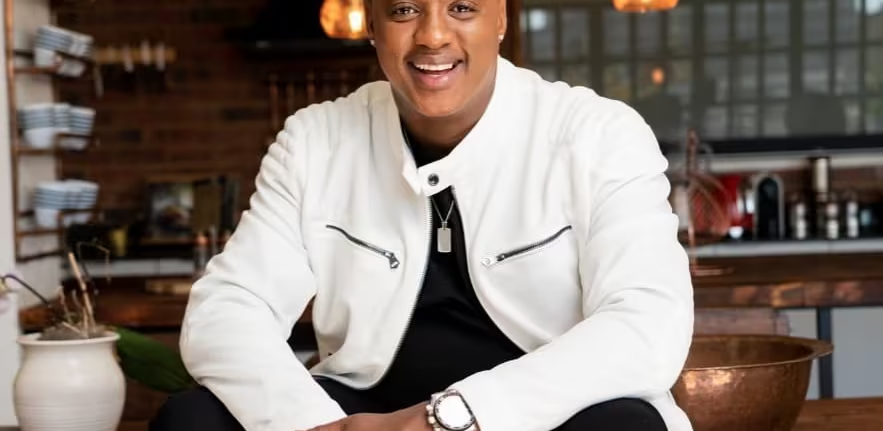
From child star to prisoner, reality-TV host and accused celebrity, Jub Jub’s career shows how scandal can become part of the brand.
Molemo “Jub Jub” Maarohanye is back in the headlines. Again.
The rapper and Uyajola 9/9 host was arrested on 14 June 2026 after an alleged incident involving an e-hailing driver in Edenvale, east of Johannesburg.
Police said the driver had dropped off a woman at a residence when Maarohanye allegedly confronted him, accusing him of having a romantic relationship with his girlfriend. He allegedly forced him into a vehicle, prevented him from leaving, and discharged a firearm in his direction.
The driver escaped unharmed and reported the matter to the police. Maarohanye faces charges including kidnapping, defeating the ends of justice, and unlawful discharge of a firearm. He was later granted R5 000 bail, with the matter postponed to 22 June for further investigation.
Jub Jub’s career is a case study in how South African fame works: early celebrity, public sympathy, criminal punishment, religious redemption, reality-TV outrage and, somehow, another comeback. Here are Jub Jub’s nine lives and what they say about SA’s celebrity-forgiveness machine.
Before the court cases, tabloid drama, and reality TV confrontations, Jub Jub was a child performer with serious star power. His first public attention came when he was about 10 years old, appearing in an Inkomazi advert. He later appeared on youth platforms such as Jam Alley and Channel O, before moving fully into music.
His debut album, The Rare Breed, came out in 2006, but it was “Ndikhokhele”, his gospel-rap collaboration with the Jaziel Brothers, that is the song many South Africans still associate with him. It had church, chorus, repentance, and radio dominance, a classic Mzansi formula. We do love a sinner with a choir behind him.
Jub Jub’s fame was also tied to another public figure: his mother, Jacqueline “Mama Jackie” Maarohanye.
Mama Jackie was once celebrated as the “Angel of Soweto” for her work with vulnerable children through the Ithuteng Trust School. Her work attracted international attention, including from Oprah Winfrey, Bill Clinton and Nelson Mandela-linked circles.
But in 2006, Carte Blanche aired an investigation alleging that children had been coached to tell false stories of hardship to attract funding and that donations meant for children had gone astray.
This background means Jub Jub grew up around fame, performance, sympathy, and scandal. The spotlight was never far away: it was part of his family.
Jub Jub’s relationship with singer Kelly Khumalo was also part of his public image. Their romance became tabloid material, especially after the 2010 crash that changed everything. Khumalo wrote about the relationship in her biography, describing how deeply in love she was with him at the time.
In 2016, Khumalo described the relationship as allegedly abusive, saying she had been dealing with a partner who was facing a serious criminal case and was “very abusive, emotionally and physically”. Jub Jub has denied allegations of abuse.
Researcher Linda Mshweshwe argues that domestic violence in South Africa is linked to a complex mix of patriarchy, culture, and harmful ideas of masculinity, particularly when dominance over women is normalised. That doesn’t mean every allegation should be treated as a proven fact. It does mean we should not flatten allegations of abuse into “messy celebrity romance”.
On 8 March 2010, Maarohanye and his friend Themba Tshabalala crashed their Mini Coopers into a group of schoolboys in Protea North, Soweto. Four boys – Prince Mohube, Mlungisi Cwayi, Andile Mthombeni, and Phomello Masemola – were killed. Two others, Frank Mlambo and Fumani Mushwana, were left permanently brain-damaged.
In 2012, the Protea Magistrate’s Court found Maarohanye and Tshabalala guilty of murder, attempted murder, driving under the influence of drugs, and racing on a public road. In 2014, the high court overturned the murder convictions and replaced them with culpable homicide, finding the state had not proved the required intention for murder. Their sentences were reduced from 20 years to 10 years, with two years suspended.
Jub Jub went to prison as one of South Africa’s most recognisable entertainers. That made his incarceration a media event. His time behind bars became part of the public story: the fall from fame, the punishment, the waiting period before the comeback.
South Africans love a redemption arc. Put a famous person in prison, let time pass, add an apology song, and the comeback machine starts warming up like an old Toyota in winter.
When Jub Jub later tried to rebuild his public image, he was not starting from scratch. He already had a musical identity linked to faith, forgiveness, and being guided back to the right path. In a country where religious language carries real cultural power, that gave his comeback a ready-made emotional script.
After his release on parole in 2017, Jub Jub returned to music with “Ke Kopa Tshwarelo”, which means “I am asking for forgiveness”. He also returned to “Ndikhokhele” and later released a remake with other artists.
The message was clear: I have sinned, I have served time, I am asking for mercy. For many fans, that was enough. But forgiveness is complicated. The law can run its course. The public can forgive. Fans can stream. But that does not erase the harm.
Then came Uyajola 9/9, Moja Love’s local version of the cheating-exposure format made famous by Cheaters. Jub Jub became the face of confrontation TV: dramatic reveals, angry partners, public humiliation, and chaos, all in HD.
In a strange way, it was perfect casting. His public image already carried danger, drama and redemption. The show turned those qualities into content.
Moxii Africa, formerly Media Monitoring Africa, has researched how masculinity is communicated in South African media, arguing that media can either challenge existing versions of masculinity or help to reinforce them. Uyajola 9/9 often packaged confrontation, suspicion, and public shaming as entertainment. Jub Jub was not just hosting the drama: he became part of its appeal.
In 2023, Maarohanye faced charges of rape, attempted murder, and assault after allegations by former partners and public figures, including Amanda du-Pont and Masechaba Khumalo. In July 2024, the National Prosecuting Authority withdrew the charges, saying there were no reasonable prospects of a successful prosecution after assessing the docket, prosecutor’s report, recommendations, and defence representations.
In November 2025, South Africa officially classified gender-based violence and femicide as a national disaster. This underlined that allegations involving violence against women are not just “Twitter drama” or entertainment news: they sit inside a national crisis that the government itself says requires urgent, coordinated action.
An article in the African Journal of Gender and Religion uses Uyajola 9/9 and uTatakho to discuss how black masculinities are represented and debated in South African popular culture. That does not mean the show “causes” harmful behaviour. But it does show why a show built on suspicion, confrontation, and public shaming should be treated as more than just juicy TV drama.
Moxii Africa has also warned that the media does not just reflect masculinity: it can help to shape how audiences understand male roles, power, and behaviour. That’s significant when a show turns confrontation into entertainment and makes a controversial male celebrity the one guiding it.
The latest arrest brings the story back to the same question: How many times can a public figure return before the comeback itself becomes the brand?
Maarohanye is presumed innocent in the Edenvale matter until proven guilty. But the arrest revives the debate about his long record of controversy, his continued employment in entertainment, and why audiences keep watching.
This is not only about Jub Jub. It is about the machine around him: broadcasters, fans, advertisers, producers, and viewers. Everyone acts shocked when the next scandal lands, but the same public attention keeps making the scandal profitable.
Jub Jub’s career shows how easily South African celebrity culture can turn even harm into a storyline, punishment into a comeback, and outrage into ratings.
So yes, Jub Jub has had nine lives.
The bigger question is: Why do we keep allowing his reincarnation?