Herman Mashaba open to DA coalition to fix Johannesburg
Explain | 29.05.2026 19:01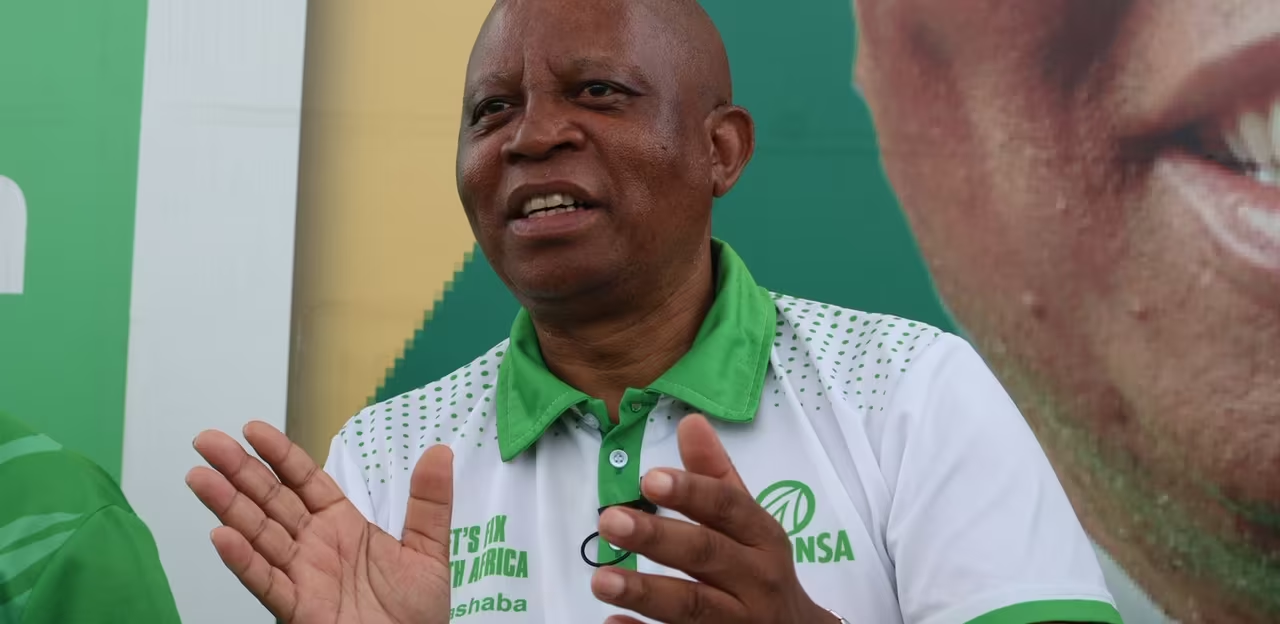
ActionSA leader Herman Mashaba discusses Johannesburg’s infrastructure crisis, coalition politics, immigration, corruption allegations and why he believes he can fix the city.
Prahsalan Govender: Joburg is facing myriad service-delivery issues, including water and electricity outages, delayed refuse collection, and crumbling roads. What are your plans to address these challenges?
Herman Mashaba: I think one needs to take the context into account. After Nelson Mandela’s electoral victory in 1994, a celebration was held at the Carlton Hotel, then the country’s best hotel; a few years later, it closed down.
So, Johannesburg is not just facing service-delivery problems like water and electricity; we are facing major structural issues that must be addressed, resulting from the local government’s failure to upgrade infrastructure to meet the demands of a growing population.
I also think that all of our service delivery issues must be addressed concurrently, as you cannot resolve one without addressing the others. And these issues can be addressed: it just takes political will and time. Unfortunately, Joburg cannot be turned around quickly, but the foundation can be laid.
PG: Municipal services can be rendered efficiently only if the right manager is appointed. How will you ensure proper appointments should you attain the mayoral role?
HM: I agree with you, the right Members of the Mayoral Committee (MMCs) have to be appointed to combat the issues facing the city. I will do that by appointing people, well before the elections, so citizens can see their experience and qualifications make them the right fit for relevant portfolios and that I am not surrounding myself with those close to me.
PG: In the lead-up to this interview, many people told me of their love for you, but you also have undecided voters and stiff competition. So, why should Joburgers vote for you?
HM: I am running a community-based campaign and plan to address concerns in communities across the city. I am not just looking at where my support base is located. ActionSA also has numerous active branches across the city, which means that I will be very accessible to people if I get into office.
PG: You’ve often said that what makes you a cut above your competition is your previous experience in running the city. What would you say is your biggest success and biggest failure during your tenure?
HM: My biggest success was an inner-city rejuvenation policy that I passed through council, which allowed the city to expropriate abandoned, hijacked, and derelict buildings and give the private sector a long lease on them. This meant they would rehabilitate the buildings and then return them to the city for public use.
My biggest failure is undoubtedly not finishing my term. Resigning was one of the most difficult decisions I have had to make, but I had no choice, as I had been informed of behind-the-scenes negotiations to oust me. I am not a pushover: I was not going to wait for someone to take me out. However, it was still hard as so many people, including city officials, begged me to stay. Some even cried.
PG: In a recent interview with News24, you said you were willing to work with any party on the condition that they agree on a few non-negotiables. However, the relationship between you and former colleague, Helen Zille, who is also running for mayor, is acrimonious. Considering such a strained relationship, how do you see you and her potentially working together to improve the city?
HM: As long as Helen can distinguish right from wrong and truth from lies, we can work together. She is a very difficult person, though, and I doubt she will ever change as she survives on deceit and misinformation. However, as a party, we have committed to working with all parties who agree that corruption must be rooted out, service-delivery must be prioritised to residents across the city, and undocumented immigrants must be unwelcome in Johannesburg.
On that last point, I want to clarify that my concern is specifically with illegal immigration. I have no issue with immigrants entering the country legally, provided they can support themselves financially without relying on public resources and do not intend to operate in township economies.
PG: You have maintained that you are against only illegal immigration, but many people have accused you of stoking the flames of xenophobia to gain political brownie points by backing March and March. What is your response to this criticism?
HM: I encourage people to call me names and criticise me because it helps to bring this issue to the forefront of the public discourse. I am also used to being criticised for speaking about immigration, as I have been doing it for years, and I am happy that South Africans are starting to discuss it.
I should add that when you call people names, it does not change the lived realities of people from Soweto and Alexandra, who have seen their communities experience an influx of undocumented foreign nationals.
I acknowledge that South Africa has a dark history when it comes to xenophobia, but we cannot be so sensitive that we ignore that coming into the country illegally is a crime and a criminal is a criminal, whether they are South African or not.
South Africans need to suspend the spirit of ubuntu and prioritise the rule of law, as xenophobia will only grow if we ignore the issue of undocumented immigrants coming into the country in droves.
PG: During your time as mayor, your office was plagued with rumours that the EFF was given patronage over lucrative city tenders as a quid pro quo for working with your administration. This culminated in an amaBhungane investigation showing that before winning a mega-deal from the city, a fleet company made payments to a company whose account was used to benefit Julius Malema and his party. What is your response to those accusations of acquiescing to demands for political expediency and the Amabhungane investigation?
HM: This matter reminds me of the claim that there is white genocide happening in South Africa, as there is no evidence that I have done anything wrong. At the time, my then party, the DA, negotiated for me to work with the EFF, so I don’t have any relationship with the party or its leaders.
During my tenure, the EFF also never approached me about a tender. This issue keeps resurfacing because of amaBhungane and its so-called exposés, but I had no knowledge of it and only learned about it when the article came out. I welcome everyone to keep asking me about it, though, as I have nothing to hide. On the contrary, I have a record of firing those found to be corrupt, some of whom were even in my party.
Editor’s note: This interview has been edited for clarity and brevity. There is currently no evidence that undocumented immigrants are placing undue pressure on South Africa’s public services or taking jobs away from locals.
Local government elections will take place on 4 November. In the lead-up,/explain/ will interview as many mayoral candidates as possible to help South Africans gain a better sense of the people vying to become the city of gold’s first resident. Next up: part two of our interview with Herman Mashaba.