Start Where You Stand: Lessons From a Lifetime of Feminist Firestarting
Medium | 19.12.2025 16:56
Start Where You Stand: Lessons From a Lifetime of Feminist Firestarting
6 min read
·
Just now
--
People often ask me where I’ve seen the worst of humanity.
They expect a single place. A single war zone. A single catastrophe so unbearable it eclipses all others.
But the truth is more complicated — and more hopeful — than that.
In every place I was told was “hopeless,” it wasn’t. Not really. Even in countries most people can’t find on a map. Even as armed men marched into cities, even as institutions collapsed, even as violence became routine. There were always people — almost always women — finding ways to stand up, to resist, to rebuild. I left those places not shattered, but humbled. Inspired. Changed.
What I learned over three decades of working on women’s rights across more than 20 countries is this: human resilience is astonishing — but it should not be constantly tested. Survival should not be a prerequisite for dignity. And yet, here we are.
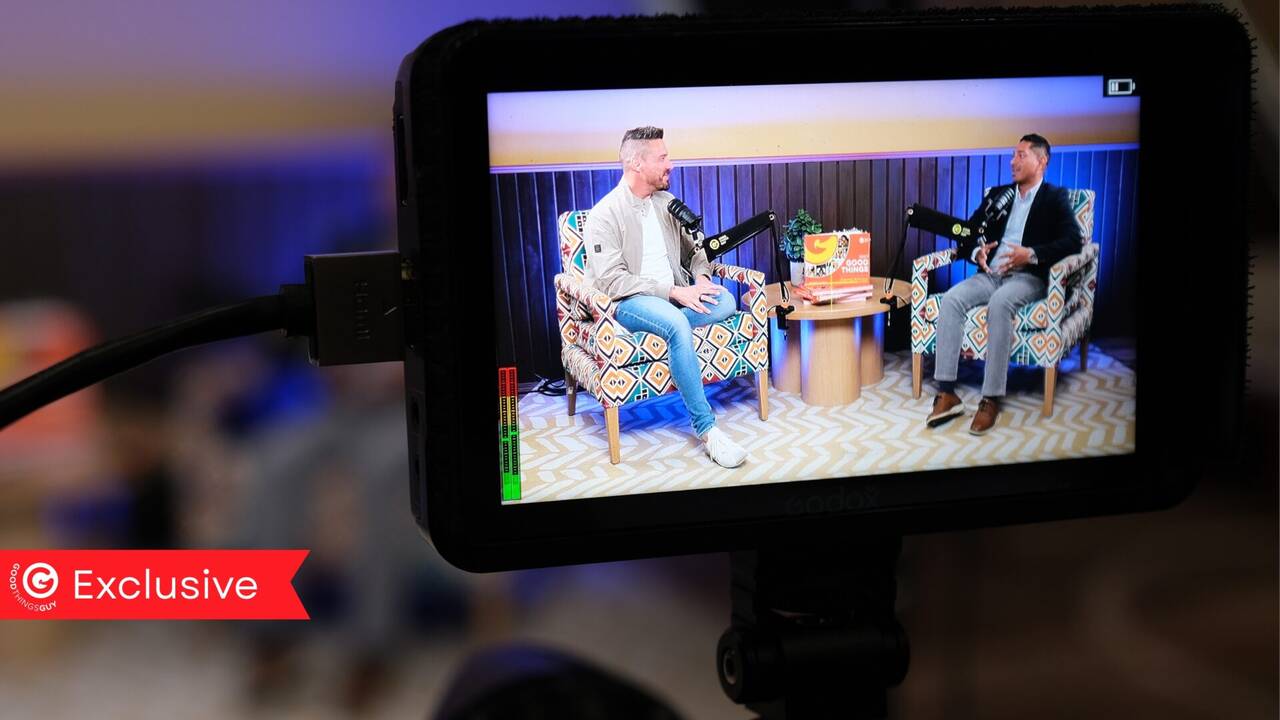
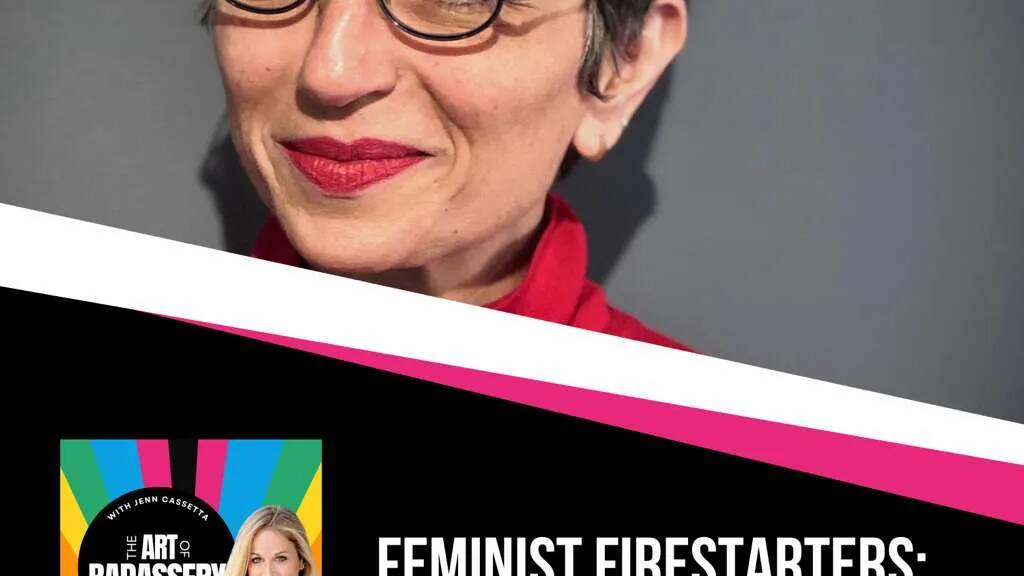
All of this emerged from a recent powerful conversation I had with Jennifer Cassetta on her podcast, The Art of Badassery. It reminded me why I do this work — and why it still matters so deeply.
Becoming a Feminist Before I Had the Language…
People sometimes ask me when I “became” a feminist.
Before I knew the word.
Being born into a female body anywhere in the world comes with conditions. Constraints. Restrictions. They vary across cultures and contexts, but they exist everywhere. I realized this early. I didn’t have the vocabulary for it, but I had the feeling — a sharp sense of injustice and a lot of anger.
By the time I was 14, I was reading, questioning, paying attention. I began to understand that what I was experiencing wasn’t a personal problem — it was structural. It was global. A “we” problem, not a “me” problem. That realization was overwhelming, but it was also galvanizing. I didn’t know what to do yet, but I knew I couldn’t do nothing.
I’m Lebanese and Palestinian. Crisis is baked into my DNA. So is questioning. So is refusing to take things at face value. Those identities taught me early that nothing — safety, rights, belonging — should ever be taken for granted.
The Moment the World Changes for Girls…
For many women, feminism begins not with theory, but with a bodily realization: I am not as safe as I thought I was.Those experiences are painfully ordinary — and too often dismissed or buried. For me, that moment happened when I was seven.
I had completely forgotten it until my thirties, when a friend and I were talking about how she teaches her daughter about bodily autonomy. She asked me, casually, “Do you remember the first time someone touched you and you knew it was wrong?”
And suddenly, the memory came flooding back.
I was sitting in a hairdresser’s chair, getting a haircut — the most ordinary, benign childhood activity. The man cutting my hair pressed himself against my hand repeatedly, deliberately. I tried to move. I froze. I was told to sit still. I said nothing.
I knew it was wrong. I felt violated. And then I buried it.
What stayed with me wasn’t the memory — it was the adaptation. For years afterward, I crossed my arms tightly under the salon cape, creating a protective barrier with my body. I didn’t know why I did it. My body remembered even when my mind didn’t.
This is how girls learn. This is how women survive.
These stories are not rare. The unbearable ordinary, I call it. Almost every woman I know has one — often more than one. And what compounds the harm is what comes next: the second-guessing. Maybe it wasn’t that bad. Maybe I misread it. Maybe I’m overreacting.
That internal erosion is its own form of violence.
Choosing a Life of Resistance…
At 14, I took a class called Comparative Women’s History. It wasn’t a celebration of women’s achievements. It was a brutal accounting of violence against women across time and place. It shattered my illusions — and gave me language.
From that point on, everything I studied went through a feminist lens. Every paper. Every research question. Every volunteer role. I showed up at Planned Parenthood clinics as a teenager, helping protect women accessing healthcare, convinced — naively — that this was a fight we’d surely win quickly.
I truly believed bodily autonomy was common sense.
Little did I know.
As I got older, I watched rights stall, erode, reverse. I watched women decades older than me still holding protest signs, still fighting battles they thought were settled. That grief — and that anger — stays with you.
Eventually, I took my work global. I wanted to focus on violence against women in conflict settings. I volunteered. I took risks. I accepted fellowships. I learned the hard way that no one hands you a career in humanitarian work — you have to step into uncertainty and prove you can stay.
Bangladesh. Morocco. Afghanistan. Haiti. The Central African Republic. Emergency after emergency.
My job description could be summarized as: end sexual violence against women and girls.
An impossible job.
If success were measured by eradication, I failed everywhere. But that’s the wrong metric. Over time, I learned to recalibrate: Was something slightly better because I was there? Did a woman gain an option she didn’t have before?
Hope, I learned, lives in the margins.
Over three decades working on women’s rights across more than 20 countries, I’ve learned that the places and situations we label “hopeless” rarely are. Even in war zones, even amid catastrophe, women are organizing, rebuilding, resisting. I’ve never left a crisis without feeling humbled by human resilience — though I wish resilience weren’t constantly demanded of us just to survive.
What Hope Actually Looks Like…
One of the stories that has never left me happened in Afghanistan.
A woman came into my office desperate. Her husband was dead. She was starving. She needed money — immediately. We offered her a small cash stipend alongside training and basic education. She rejected everything but the money. Literacy, she told me bluntly, was a luxury she couldn’t afford.
Six months later, she returned.
She had started a tiny business making jam. There was food in the house. A cushion. For the first time, she wasn’t thinking day to day — she was thinking week to week.
Then she said, quietly, “I’ve never written my own name. I think I want to learn.”
I watched her trace the letters of her name on a whiteboard, surrounded by applause. I cried in the corner. That moment — that ownership — is what hope looks like. It doesn’t photograph well. It doesn’t fit neatly into donor reports. But it’s everything.
Feminist Firestarting…
This is why I wrote Feminist Firestarter — my next book, coming out in 2026 — because the backlash against women’s rights is real, global, and overwhelming.
The book is organized around the five phases of emergency response: prevent, prepare, respond, recover, rebuild. Because that’s how life works — at home and globally.
The first step is always awareness. Listening. Learning. Once you see injustice, you can’t unsee it. From there, action doesn’t have to be grand. In fact, it shouldn’t be.
I saw those words spray-painted on a wall in Nepal after the earthquake. They became a personal manifesto. That’s because change happens locally. In our homes. Our workplaces. Our communities. In the small spaces where we have influence. Use the skills you have. Change the space you occupy.
Because feminism doesn’t get days off. It’s not a label — it’s a practice. It’s not an identity reserved for the loudest or most radical among us. A feminist is anyone who cares about equality and understands that the freedoms many of us enjoy were fought for — and can be taken away.
I’m not free until we’re all free.
And if there’s one thing I know for sure, it’s this: when women have safety, agency, and economic power, the world is better. Not perfect — but seriously better. And that’s worth fighting for, every single day.
That means amplifying voices. Donating time or skills. Setting boundaries. Raising children who understand consent and respect. Our greatest enemy is actually not opposition — it’s apathy. The belief that nothing we do matters. And the antidote isn’t grand gestures. It’s action. However small, usually microscopic.
Everything we do, every choice we make, matters.
And every fire starts small.
***
For more fire, head to www.Better4Women.com and sign up for your free Firestarter!
And get to know Jenn Cassetta — speaker, author, self-defense expert, coach, host of The Art of Badassery podcast, and author of the book The Art of Badassery: Unleash Your Mojo with Wisdom of the Dojo, using martial arts belts to guide us to feel strong, safe, and powerful!