When a Building Burned, So Did Our Silence
Medium | 22.01.2026 15:03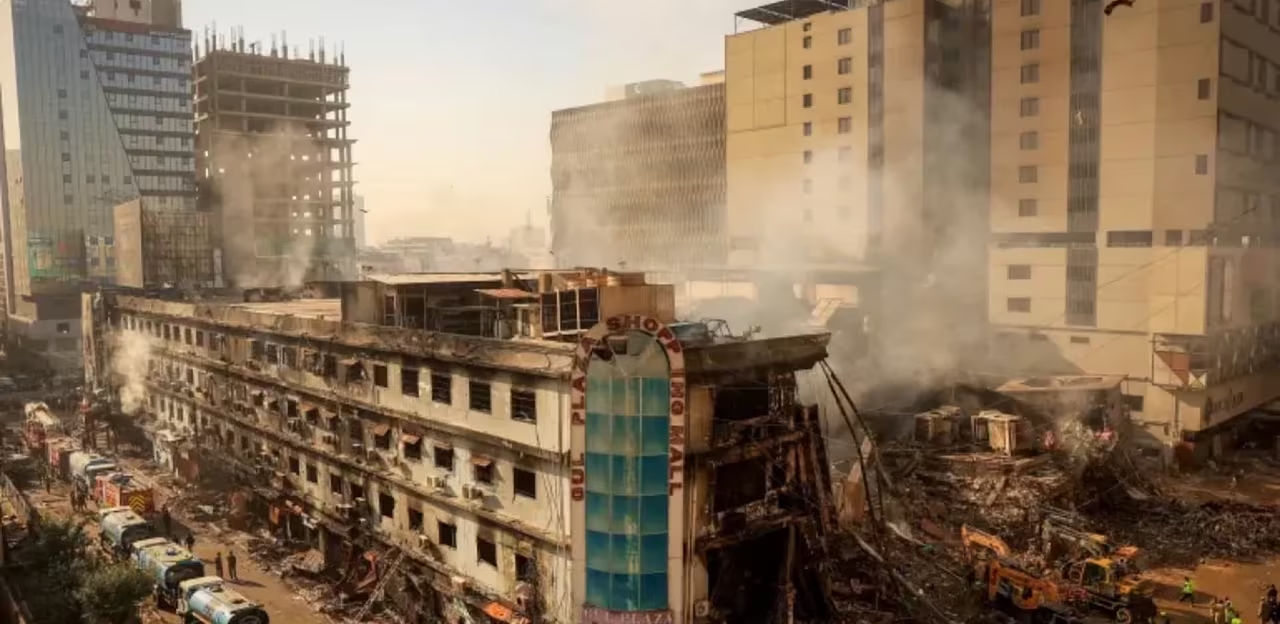
When a Building Burned, So Did Our Silence
3 min read
·
Just now
--
Listen
Share
The news didn’t feel real at first.
Another headline. Another tragedy. Another name added to a list we never wanted to grow. But this time, it wasn’t just a headline. It was Gul Plaza a place full of routine, movement, and ordinary lives trying to earn an honest living.
People went to work that day expecting nothing more than another long shift. Shopkeepers opened shutters. Workers climbed stairs they had climbed a thousand times before. No one imagined that those same walls would turn into a trap.
What hurts the most about incidents like Gul Plaza is not just the loss it’s the familiarity of it. We’ve seen this before. Fires. Collapsed buildings. Locked exits. Missing safety measures. Promises made after lives are lost, never before.
In moments like these, we often ask, “Who is responsible?”
But responsibility doesn’t live in one place. It lives in ignored warnings, unchecked buildings, silent approvals, and a system that reacts only when it’s too late.
Behind every victim was a story. Someone who was a provider. Someone who was waiting to go home. Someone who was loved. These weren’t numbers. They were people with unfinished conversations and plans that will never be completed.
And then there are the families waiting. Hoping. Searching. Grieving in a way that words cannot soften.
We scroll past the news quickly, but for them, time has stopped.
The Gul Plaza incident is not just a tragedy; it is a question we keep avoiding:
How many lives will it take for safety to matter more than profit?
I didn’t know anyone there.
And yet, I feel like I did.
Since the Gul Plaza incident, something feels heavy. Not loud grief, not dramatic sadness just a quiet weight that sits with you while you scroll, while you eat, while you lie awake at night.
People went to work that day the way we all do. With small worries. With tired bodies. With plans to return home. Some probably thought about dinner. Some about bills. Some about messages they hadn’t replied to yet.
None of them knew that the place they trusted the building they walked into every day would fail them.
That’s what hurts the most.
Not just the fire, but the betrayal.
The idea that safety was optional. That warnings were ignored. That lives were placed second.
We talk about numbers in tragedies like this, but numbers don’t tell the truth. The truth is in the empty chairs at home. The unanswered phone calls. The families who are now learning how to live with a before and an after.
And the rest of us?
We feel sad for a moment. We share a post. We move on.
But maybe we shouldn’t move on so quickly.
Because Gul Plaza wasn’t an accident in isolation. It was the result of silence, neglect, and the belief that “it won’t happen today.” Until one day, it does.
I keep thinking about how fragile routine is. How easily an ordinary day can turn into a permanent loss. How unsafe “normal” can be when systems fail.
This isn’t just about mourning the dead.
It’s about caring while we still can.
About asking questions before tragedy forces them out of us.
The people lost in Gul Plaza deserved better.
And remembering them – really remembering them means refusing to be silent the next time safety is treated as an inconvenience.
Remembering is important. Talking about it is important. Writing about it is important. Because silence is what allows history to repeat itself.
May those who lost their lives be remembered with dignity.
And may we learn – truly learn – before another building turns into another headline.