Mandla Ncikazi Reflects on Orlando Pirates Transformation Since 2021 Arrival
Diski 365 | 29.05.2026 16:08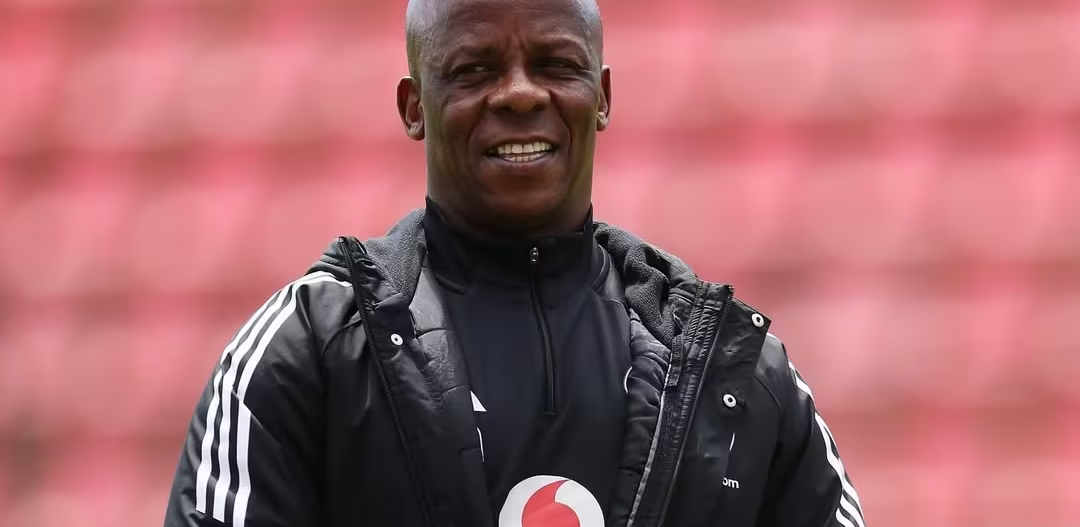
Orlando Pirates assistant coach Mandla Ncikazi says he is satisfied with the progress the club has made since he joined in June 2021 from Lamontville Golden Arrows. His arrival marked the start of a period of sustained development at the Soweto giants, where he has played a central role in both coaching stability and squad growth. Ncikazi has contributed across different roles, including co-coach, interim head coach and assistant coach, during a time of constant tactical evolution. Over this period, Pirates have collected seven major trophies, a return that reflects consistency at the highest level of South African football. The club has also undergone significant structural and technical changes aimed at long-term competitiveness. Ncikazi believes these improvements show that the club has moved in the right direction since his first day.
One of the strongest points highlighted by Ncikazi is the transformation in player development and national team representation. He noted that when he first arrived at Orlando Pirates, the club had no players featuring in national team setups. That situation has changed significantly, with eight players now regularly involved in international duty. He also pointed to the role of the DStv Diski Challenge system in producing first-team talent that is now competing at elite level. This progression, according to him, reflects a deliberate shift in how the club identifies and develops young players. The emphasis on youth development has become a defining feature of Pirates’ modern identity. Ncikazi believes this achievement is just as important as winning trophies.
Speaking during the club’s trophy parade, Ncikazi expressed pride in the broader impact of his work beyond match results. He described the emotional reward of seeing players grow from development structures into national team contributors. His comments highlighted the importance of building a pipeline between youth systems and the senior squad. He explained that the club’s mandate includes not only winning titles but also producing players capable of competing at international level. The increase in national team representation has strengthened the club’s reputation as a talent hub. It has also improved the competitive depth within the squad, giving coaches more tactical options. For Ncikazi, this balance between development and success defines the current Pirates project.
Ncikazi’s journey at the club has also been marked by multiple coaching transitions and leadership changes. He initially stepped into a more prominent coaching role following the departure of Jozef Zinnbauer, where he helped stabilise the team during a period of uncertainty. He later returned to an assistant role under José Riveiro, supporting a system that delivered consistent results and strong performances across competitions. At different stages, he also served as interim head coach, demonstrating the club’s trust in his tactical understanding and leadership. His ability to adapt to different coaching structures has been a key factor in maintaining continuity at the club. More recently, he has worked under Abdeslam Ouaddou, contributing to a historic treble-winning campaign in the 2025/2026 season. These experiences have shaped his reputation as a flexible and reliable figure within the technical team.
Beyond trophies and tactical work, Ncikazi has built a reputation as a strong developer of young talent. His coaching philosophy places emphasis on discipline, structure and gradual progression for emerging players. This approach has helped several young footballers transition from academy football into senior competition with confidence. The club’s recent success is closely linked to this development pathway, which has become more structured since his arrival. He believes that consistency in coaching methods has helped players adapt faster to first-team demands. The integration of academy graduates into the senior squad has also created a more sustainable squad model. This has reduced reliance on external recruitment in some positions.
Ncikazi’s contribution has been particularly visible during moments of transition when the club needed stability. His presence in different coaching capacities has allowed Pirates to maintain tactical continuity even when leadership changes occurred. This stability has played a role in the club’s ability to remain competitive in domestic and continental competitions. Supporters have also observed a more structured and disciplined playing style in recent seasons. The coaching team’s ability to maintain performance levels across multiple competitions has been a key achievement. Pirates’ trophy haul during this period reflects both technical planning and squad consistency. Ncikazi’s influence has been part of that broader system of success.
Orlando Pirates are expected to continue building on the foundation established over the past few seasons. The combination of youth development and experienced leadership within the coaching structure remains central to the club’s strategy. Ncikazi’s comments suggest satisfaction with the direction of the project, especially in terms of player growth and competitive results. The challenge now is to maintain that momentum while continuing to evolve tactically in a demanding football environment. With strong squad depth and a proven development pipeline, Pirates are positioned to remain competitive across all competitions. Ncikazi’s role in that structure highlights the importance of continuity in modern football success.