Government warns against escalating anti-immigration protests
Explain | 27.05.2026 17:18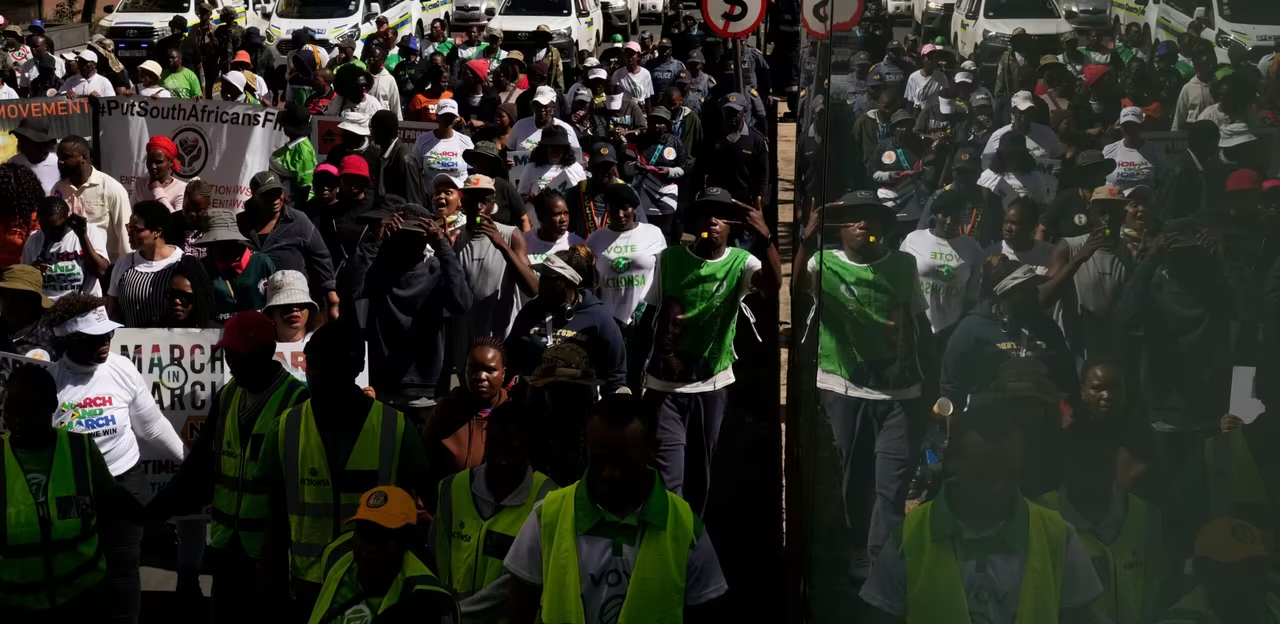
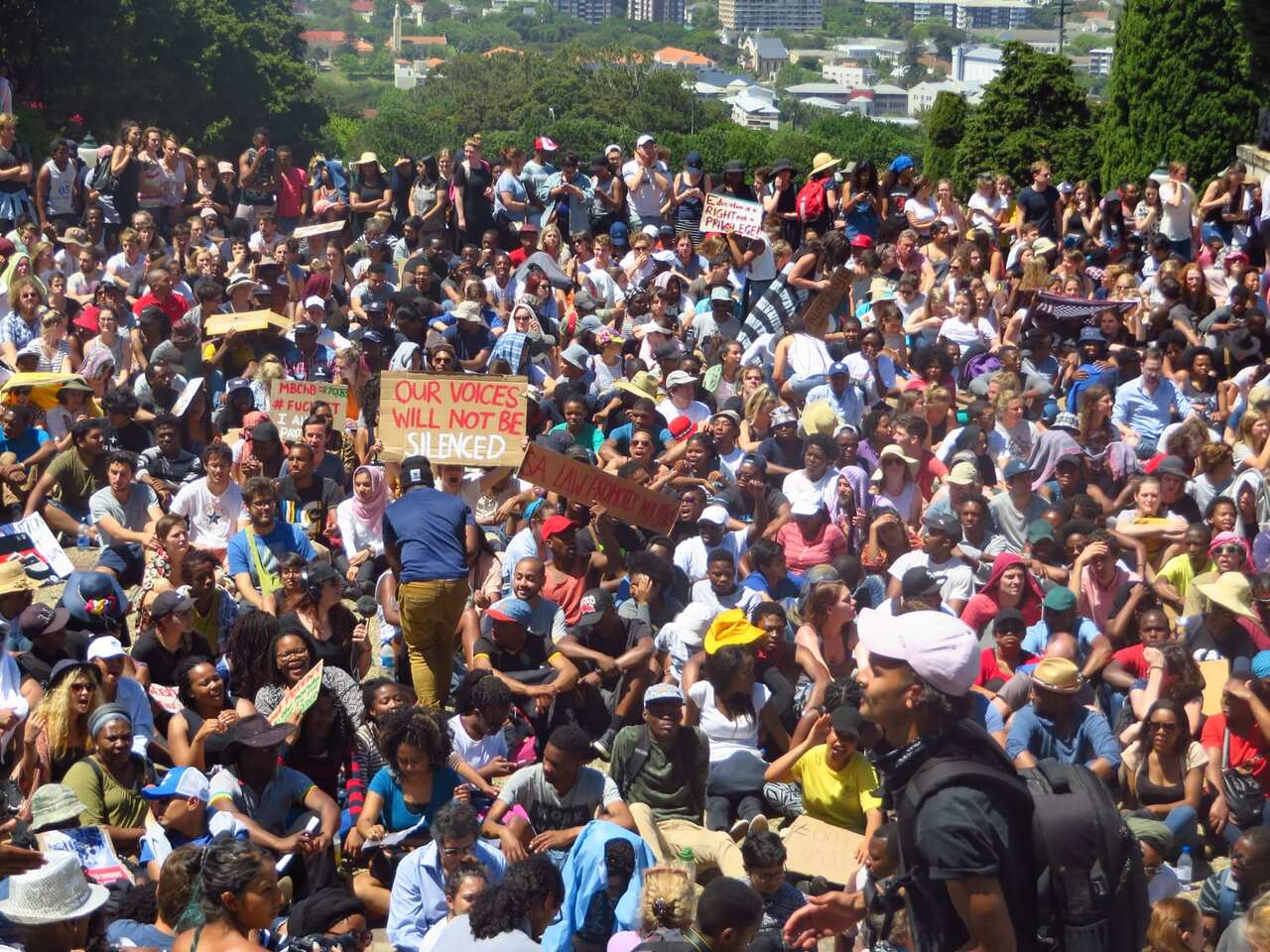
The government has urged anti-immigration groups to protest peacefully as tensions rise and concerns mount over xenophobia in South Africa.
The government’s Justice, Crime Prevention and Security (JCPS) cluster ministers held an urgent meeting on Monday with political parties and organisations involved in anti-immigration protests.
Some groups, including March and March, dismissed the meeting as a “talk shop” and walked out. Despite this, the meeting resolved that deputy ministers in the cluster would oversee law-enforcement efforts relating to illegal immigration, with a detailed progress report expected by 11 June.
Co-chairperson of the JCPS cluster and Minister of Justice and Constitutional Development, Mmamoloko Kubayi, said the discussions made it clear that many participants felt the government was not doing enough to address immigration concerns.
She said the ministers outlined what the government is doing to address issues about both legal and illegal immigration, walking the attendees through existing and pending legislation, as well as statistics from the Border Management Authority, Home Affairs, and Correctional Services.
“As government, we are not saying that everything is sorted; we are saying there are gaps and that we have plans to address those gaps,” she said.
Kubayi reiterated that people who wish to protest can do so, as it is their constitutional right, but that some of their actions have been gravely concerning.
Kubayi said ministers have seen a video of one incident in which a South African spray-painted a foreign national and are aware of other instances of protesters demanding a foreign nationals show them their documentation.
Only law-enforcement officials have the authority to ask people to produce their documentation, Kubayi said, adding that people who are involved in protests that turn violent can find themselves on the wrong side of the law.
She said the meeting was prompted by the escalating protests, not because of concerns about South Africa’s declining international standing. Kubayi added that the protests were initially localised but have since become national, necessitating a response from the JCPS.
Kubayi said that, to her knowledge, South Africa remains in good standing with Southern African Development Community countries, although International Relations Minister Ronald Lamola indicated that some countries had urged South Africa to enforce the law more effectively so citizens would not take matters into their own hands.
Kubayi and fellow ministers in the cluster – Defence Minister Angie Motshekga and Deputy Home Affairs Minister Njabulo Nzuza – emphasised that concerns over immigration were valid.
Motshekga said protesters were justified in feeling frustrated and angry, and that the government should have communicated better. “We have been dealing with this issue … these marches have told us that it is time to find each other,” she said.
Nzuza also acknowledged that illegal immigration was a challenge, but warned against any extreme actions. “It does not mean that if there is a problem, we must throw the country into chaos,” he said.
Across the country, growing marches and protests against illegal immigration have left citizens from African and Asian countries feeling unsafe living and working in South Africa. Protesters have gone into foreign nationals’ places of work or businesses and harassed them, demanding that they provide documents proving they are in the country legally.
In many cases, shops have had to close for foreign nationals to protect themselves, their property, and their staff from violence and intimidation.
The protests have drawn sharp criticism from human-rights groups and warnings from neighbouring African countries, such as Kenya, Malawi, Lesotho, Mozambique, and Zimbabwe , urging their citizens to be cautious and remain indoors.
Most recently, the protests led Ghana to initiate a process of repatriating hundreds of its citizens. In addition, many African ambassadors skipped the South Africa’s Africa Day event in the North West on Monday.
Since the protests moved from a spark to a dangerous blaze, the government has condemned the incidents of intimidation, maintaining that xenophobia has no place in the country and that the rule of law was being upheld.
But many people, as noted by political analyst Dr Ntsikelelo Breakfast, found this response insufficient in addressing protests that brought major cities to a standstill. However, added that such a subdued response was to be expected and was likely a coordinated effort to avoid the issue gaining more attention.
Breakfast told /explain/ the government is keenly aware of the contradiction: a country that has consistently spoken out against human-rights abuses abroad is now seeing people’s dignity undermined at home through exclusionary language and demands that foreign nationals prove they are legally in South Africa.
Breakfast said it was misguided to assume that if foreign nationals are removed, socioeconomic issues like high unemployment would be eliminated. “Our problems are far bigger than foreign nationals: they are structural issues,” he said.
In Breakfast’s view, the government must provide a tougher response to the wave of protests, especially considering the country’s image will take time to rehabilitate, not least in the rest of Africa.
Breakfast also had some advice for how to proceed: South Africa must make an effort to integrate immigrants into our communities, better educate the public, and resolutely condemn any assault on foreign nationals, documented or not.
In an interview with /explain/, Professor Zwelethu Jolobe, head of Political Studies at the University of Cape Town, said the government must move from being responsive to being proactive.
Jolobe said the government appears to be treating the protests as isolated events rather than as a broader problem of poorer communities turning on each other during times of hardship. He noted that xenophobia and anti-immigration sentiment manifest in poor communities due to tense competition for limited opportunities.
Like Breakfast, Jolobe said the country’s image would take time to be restored. “South Africa has spent years carefully crafting an image of itself as a shining star of the continent, a champion of unity, and voice for the voiceless. Now, on the ground, we are seeing a stark contradiction to that narrative,” he said.
Jolobe said the government must start speaking out and develop plans to respond to xenophobia more effectively.
Shortly after the JCPS media briefing, March and March leader Jacinta Ngobese-Zuma held a media briefing of her own, during which she called on the government to enforce existing laws and amend the constitution to initiate an immediate mass deportation of undocumented foreign nationals.
Some of Ngobese-Zuma’s other demands included passing a budget to build a secure fence on the country’s borders, declaring a state of emergency over illegal immigration, and passing legislation to prohibit foreign nationals from participating in the township economy.
She also requested that President Cyril Ramaphosa address her group’s demands in a national address before 30 June.
Ngobese-Zuma said the country was being “invaded” by undocumented foreign nationals, whom she accused of selling drugs, running cartels, and “hijacking” the township economy.
She said that March and March supporters would take to the streets across the country on 30 June, adding that the government’s failure to meet the organisation’s demands would be going against the will of the people. “If our demands are not met, we’ll see [what will happen],” she said.