Historian Reacts: What McCarthyism Teaches Us About Cancel Culture Today
Medium | 28.01.2026 06:04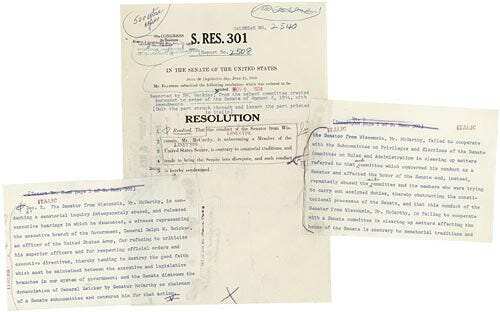
Historian Reacts: What McCarthyism Teaches Us About Cancel Culture Today
Follow
3 min read
·
1 hour ago
Listen
Share
In the 1950s, Senator Joseph McCarthy rose to fame by turning apprehension into power by turning citizens into enemies of the state. The accusation of teachers, government workers, writers, and actors of communist sympathies, often with no proof, became a national spectacle. These hearings became a national spectacle and an eventual warning. American citizens questioning authority or daring to think differently began to risk their lives in doing so.Fear of being labeled “un-American” silenced countless people who had done nothing wrong.Seventy years later, that same fear has morphed and become more sinister. The ramifications of speaking out have become multilayered and span far beyond congressional hearings. The blacklists have become hashtags, and the congressional hearings have morphed into tweets. Americans are deciding who is allowed to belong- and who should be cast out.
Get Madison Zada’s stories in your inbox
Join Medium for free to get updates from this writer.
Subscribe
Subscribe
Capitol Hill is now parallel to the internet public square.Cancel culture becomes the new voting system that holds powerful people accountable but has transformed outrage into a reflex. One clip, a private post, or a meme can destroy a person’s career or put their lives at risk.In the McCarthy era, a rumor was enough to end a life’s work. Today, virality can do the same. When a celebrity faces backlash for misconduct, that can mean accountability. However, when a student, teacher, or employee loses jobs or opportunities over a dissenting opinion or a decade old post, it is intimidation masquerading as justice. The question is whether we can correct someone to build understanding or is erasure truly the answer to these woes?
In a manner akin to the McCarthy era, fear is now dressed as a virtue gilded in gold. Senator McCarthy claimed to protect democracy while outwardly undermining it. Online, those who loftily claim to fight injustice silence the voices of those affected in the name of moral purity. However, neither show true courage, context, and complexity needed to illustrate the most important quality: forgiveness. Today’s digital age repeats McCarthy’s performance of shame and suspicion that aids a form of separatism disguised as moral purity and lack of discourse.
For marginalized voices, these struggles become more apparent, more amplified, and more difficult to conjure a true solution. Those who choose to speak are often silenced. Instead of McCarthy accusing you of being un-American, it becomes an algorithm silencing you in the name of popularity. As a historian, I see this not as a new problem but a recurring one. History does not repeat itself but it always rhymes. From Puritan banishments to the Red Scare to today’s online pile-ons, fear disguises itself as righteousness. Each time, we have to choose whether to protect comfort or choose conscience.
The challenge is to cancel those we do not agree with or cower to those in power but to converse and spark nuance, humility, and fairness. Healthy societies do not fear dissent, it learns from its past and present to build a better tomorrow. Once done, we will find something much stronger than outrage. As a historian, I write not to excuse wrongdoing but to remind us that fear never leads to freedom. Whether in 1954 or 2025, a society that punishes curiosity only breeds conformity. The cure for ignorance has never been silence — it’s a conversation.