“Duduzile And Duduzane Who Are born In Mozambique Want To come Here To Rule Us” Nomvalo Hit Out
iReport South Africa | 05.04.2026 15:57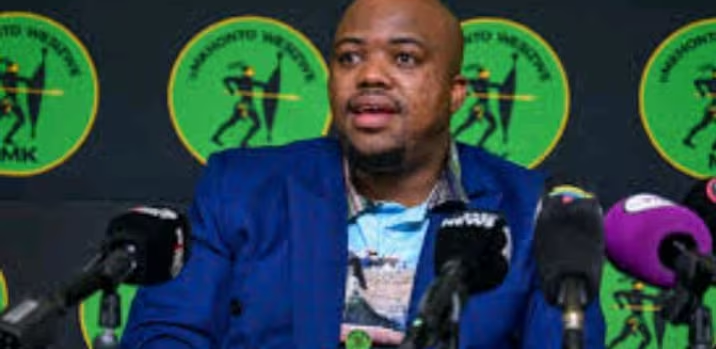
Sibinelo Nomvalo, Secretary General of the uMkhonto weSizwe Party (MKP), has ignited widespread public discussion after making contentious statements about leadership qualifications and national identity in South Africa.
Speaking at a recent event for party supporters, Nomvalo raised concerns about what he sees as growing foreign influence in the nation’s political leadership. “One day, South Africans may wake up to find a Nigerian president,” he said, urging vigilance about the future of the country’s governance. He extended this argument to Duduzile Zuma-Sambudla and Duduzane Zuma, pointing out their Mozambican birthplace and questioning their eligibility to lead. “The same applies to Duduzile and Duduzane—they were born in Mozambique and now want to rule us. That idea must be rejected,” Nomvalo asserted.
His remarks have drawn varied responses from political actors and civil society. Some have criticized the comments as polarizing, warning they could fuel xenophobia in a nation with a history of tensions over nationality and migration. Human rights organizations have emphasized the need for political speech that upholds unity and aligns with constitutional values.
Legal analysts have also responded, highlighting that South Africa’s Constitution outlines clear criteria for holding office—centered on citizenship, not birthplace. They maintain that anyone meeting these legal standards has the right to engage in democratic processes without discrimination.
Meanwhile, Nomvalo’s supporters argue that his statements reflect legitimate concerns shared by many citizens regarding national sovereignty and fair representation. They view such debates as part of an ongoing national conversation about identity and governance in a multicultural society.
The MKP, increasingly visible in the political landscape, frames itself as a defender of national interests. Nomvalo’s comments align with this positioning, though they have prompted closer examination of how inclusive the party’s vision truly is.
Political observers caution that discussions involving identity and nationality require sensitivity, especially in a post-apartheid society still building social cohesion. They emphasize that leaders have a duty to encourage dialogue that unites rather than divides.
As the debate unfolds, Nomvalo’s words have once again spotlighted the intricate interplay between politics, identity, and constitutional rights in South Africa’s developing democracy.