Who is Yusuf Cassim, and why has his appointment sparked an online wave of Islamophobic misinformation?
Explain | 04.07.2026 22:28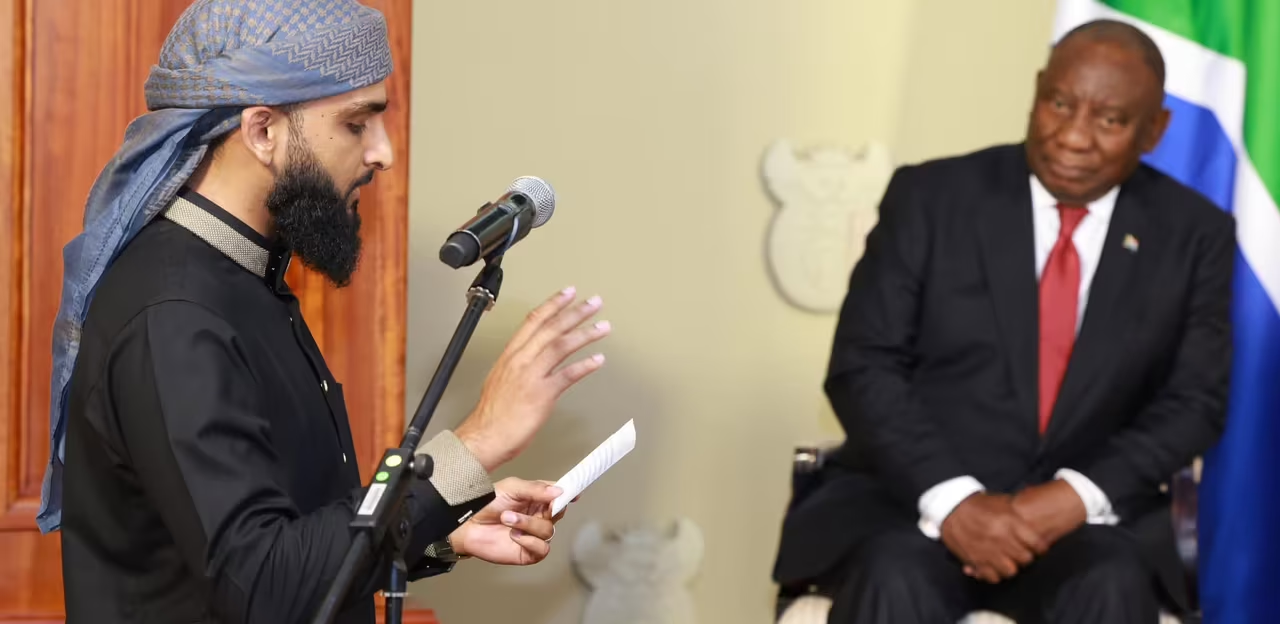
Since President Cyril Ramaphosa announced that Yusuf Cassim had been appointed as Deputy Minister of Higher Education this week in a mini cabinet reshuffle, sparked by DA leader Geordin Hill-Lewis formally requesting changes to the party’s representatives in the national executive, there has been an onslaught of hatred and misinformation, with many attacking his Islamic faith and questioning his citizenship.
What’s particularly curious about this matter is that South Africa is no stranger to having an executive that reflects the country’s incredibly diverse population. In fact, the cabinet has included Muslim ministers in the past, with previous ministers including Ebrahim Patel as Minister of Trade, Industry, and Competition, and a cabinet before that including Yunus Carrim as Minister of Communications.
While both, like all public representatives, faced their fair share of criticism, it very rarely veered into Islamophobic territory or any other kind of otherism. Cassim, on the other hand, has been mercilessly and vitriolically attacked since his announcement was made, primarily on the basis of his faith.
Tweet
Cassim’s appointment may have placed him in the spotlight, but he was never hiding in the shadows. Cassim is the DA’s Eastern Cape provincial chairperson and previously served as the party’s deputy provincial chairperson in the province.
According to his Facebook profile, he has also been a member of parliament and, until being sworn in as a Deputy Minister, was a member of the Eastern Cape’s provincial legislature. Before that, he made a name for himself as one of the party’s longest-serving higher-education campaigners, starting advocacy work way back during his days at Nelson Mandela University.
In his People’s Assembly blog, Cassim said he was a member of the Muslim Student Association when he was approached by the DA, who sought to establish a student structure at the university. “At the time I was not even a DA supporter; I grew up in an ANC family, and I was an ANC supporter all my life. Some of my family members were prominent members of the ANC during the apartheid era,” he said.
Seeing that the ANC-aligned student structure was using resources that could be better utilised elsewhere, he formed an opposing structure at his university. He was later elected SRC president and then elected as the party’s Federal Youth Chairperson. So while he may be new to some, he is no spring chicken.
Back to these attacks, what do they look like?
Most of the attacks on Cassim emanated on social media, particularly Twitter, where several of the accounts which purport to belong to concerned South Africans are based in other countries. Many leaned hard into Christian fundamentalism and asked why a Muslim could become a Minister in SA, but a Christian could not become a Minister in Pakistan — Pakistan is an Islamic Republic while South Africa is a secular state.
Of course, this wouldn’t be uncharted territory in South Africa. During the Zuma presidency, reputation management firm Bell Pottinger showed how weaponised communication could sow seeds of chaos in young democracies like South Africa. A reminder: Bell Pottinger was a London-based communications company that sought to distract people from Zuma-Gupta corruption by exploiting the country’s already fragmented race relations.
The firm is suspected to have popularised terms like “economic apartheid” and came up with the term #WhiteMonopolyCapital. The goal was to prop up the Guptas as both victims and conquerors of an unjust system. The firm had also used bots to smear and threaten anyone critical of Former President Jacob Zuma and the Guptas.
This all came crashing down when the Gupta Leaks happened. The leaks revealed email correspondence between the Guptas and Bell Pottinger. South Africans launched their own social media campaign, #BellPottingerMustFall, which shook the firm to the point that it issued an apology, but it was too little, too late.
After the leaks, a complaint lodged with the Public Relations and Communications Agency (PRCA) in London prompted an investigation that produced damning findings, and, mere months later, Bell Pottinger collapsed.
But as former MP, misinformation expert and communications strategist Phumzile van Damme pointed out in an interview with Daily Maverick, Bell Pottinger’s legacy of spreading misinformation online through the use of bots will live on. “We know that there are companies specialising in ‘bot farms’ who are knocking on the doors of political parties and other groups,” she said.
Some of those who are ringing the alarm bells are director of analysis at Signal Risk consultancy Ryan Cummings, who wrote on X: “Am I the only person noticing that there is a coordinated campaign to expand hateful and prejudicial attitudes to South Africa’s Muslim community?”
Journalist Redi Tlhabi retweeted his comment and wrote, “No. You are not the only one. It is not organic. And our @GovernmentZA, through a minister, is talking about “We will not tolerate…” without realising that our very nationhood is at stake. We are in the middle of an unprecedented information war. It requires gravitas and modern tools of communication and engagement. Who stands to benefit from this is the first question. What opportunities does a weakened and fragmented nation offer to South Africa’s adversaries is the second question.”
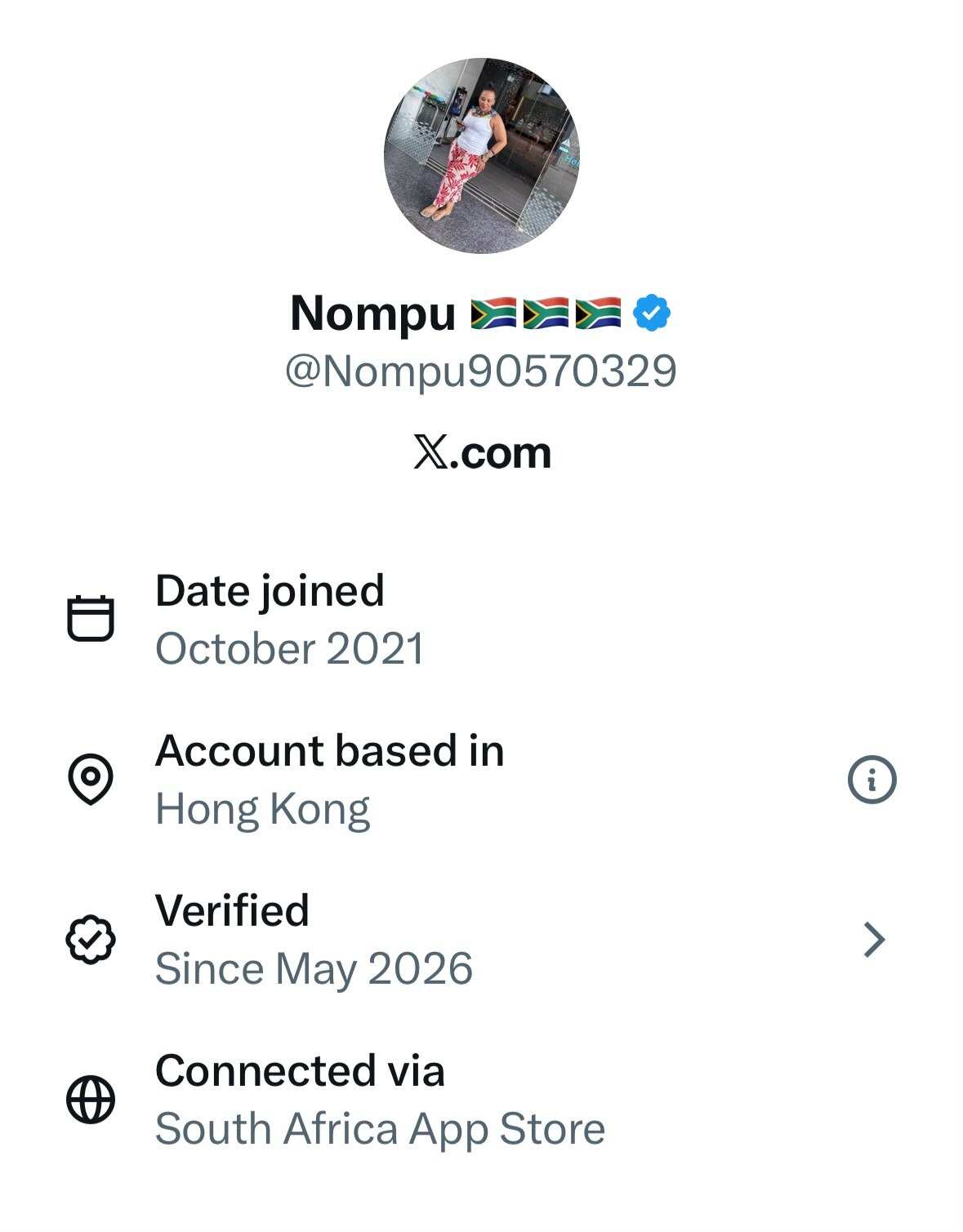
Validating their concerns is the keen eye of many social media users, who have pointed out that many of the accounts spewing Islamophobic language are based outside the country and across the world. Some are based in Ethiopia, France, Hong Kong, and Israel.
Cassim responds
Cassim has since come on to address the hate in a Facebook post on Thursday, writing, in part, that not only was he born in South Africa, but his parents and grandparents were born in SA too. “I have dedicated my entire adult life to fighting for all South Africans and will continue to do so,” he wrote.
Adding that the struggle against apartheid was a struggle that saw people from all races mobilise and push back. He also acknowledged the support he had received during this time. Thanking people for all their prayers and messages of support.
“I have read every message and comment and will be reacting to each of them,” he wrote. Giving a special shout-out to the individuals who had sought to highlight his background of fighting for justice, particularly his work in trying to get all students access to quality education.
South Africans rally around Cassim
Indeed, there have been a great many people who have come to his defence. van Damme called the attacks on his religion “vile”. “Yusuf is a credit to that department and will represent student interests like no other. Yusuf knows ball. He was the Students’ Org leader for years and knows student issues. They now have a seat at the table and that’s pretty cool, I reckon. He’s worth giving a chance,” she wrote on X.
Tweet
Journalist Qaanitah Hunter slammed the hate as a “silly manufactured social media campaign that has no roots in real life for South Africans”. Even people from different political parties, such as Rise Mzansi leader Songezo Zibi, have come out to defend him.
“Yusuf is a South African with a long history of political involvement, first in student politics at my alma mater, Nelson Mandela University and then in wider politics. The vile attacks on him for being a Muslim are part of an orchestrated online campaign to sow divisions in SA,” Zibi wrote on X.
Whether this instance is resolved or not, it is likely that the wave of Islamophobia and where it comes from will be discussed for weeks, if not months, to come.
Prashalan Govender is a journalist who was shortlisted for the Vodacom Young Journalist of the Year Award twice. He is focused on reporting the stories that shape everyday life in South Africa, with a particular interest in politics, economics, and social issues.