Umzulu Phaqa Announces Temporary Exit from Music Amid Industry Struggles
SA Music Magazine | 02.04.2026 16:52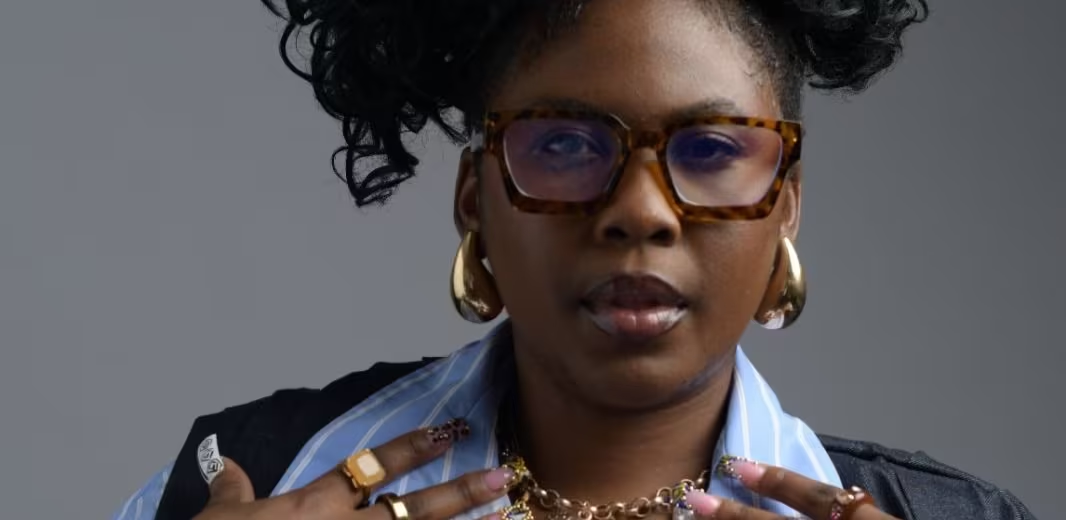
Umzulu Phaqa, born Sphiwe Moya and raised in KwaZulu-Natal, has announced that she is stepping away from her music career, revealing the challenges that have shaped her journey. Known for her Afro-fusion sound and isiZulu storytelling, Phaqa built a reputation as a promising emerging artist with a distinct voice and cultural grounding. Over the years, she released several singles and collaborated on the album “And The Grammy Goes To” alongside fellow artist Msfit, a project that received acclaim from peers such as Nasty C and Zolani Mahola. International artists, including American rapper Rapsody and singer Mereba, also reacted positively to one of her singles, highlighting her growing global recognition. Despite these milestones, Phaqa has shared that the realities of the music industry have taken a heavy toll on her, prompting her decision to step back.
Phaqa’s announcement came via social media, where she shared an emotional message acknowledging her limits and expressing gratitude to her supporters. She wrote, “The End. And just like that, senganele (I’m enough). This music thing isn’t for me and it isn’t working out. For now, I’m parking it. Thank you for the continued support. When I gather the strength again, I’ll be back. One day.” The message followed a series of posts in which she candidly exposed the financial and emotional strain of pursuing a career as an independent artist. Despite years of consistent effort, she described living without savings or assets, frequently performing for exposure, low pay, or free gigs, and constantly undervaluing her work. These realities have left her feeling exhausted and under-supported, despite outward appearances of success.
The 25-year-old artist elaborated on the pressures of carrying multiple roles alone, including being her own manager, strategist, and problem solver. She highlighted the weight of these responsibilities, noting how carrying everything herself has affected her energy and passion for music. Phaqa also reflected on the limitations of industry collaborations, explaining that working with well-known artists like Sjava and Sun-El Musician did not translate into measurable career growth. She wrote, “All that strategy of working with ‘big names’ did nothing for my career. I’m exactly where I was when I started. Just cooler with bragging rights, I guess.” This sentiment underscores the gap between recognition and sustainable success in the competitive music landscape.
Beyond professional struggles, Phaqa revealed the personal toll her career has taken on her family relationships. She described feeling like an outcast and being perceived as a failure by many family members, with some even framing her choices as negative or “demonic.” Despite these hardships, she has received moments of validation and recognition, including being selected for Apple Music’s Up Next programme, which highlights emerging artists considered to have significant potential. These experiences highlight the contrast between public acknowledgment and the personal and financial difficulties that often accompany independent music careers.
Umzulu Phaqa’s decision to step away from music is a reflection of the demanding realities of building a career in the industry without sufficient support. While she pauses to regroup and focus on her well-being, her contributions to Afro-fusion and South African music remain significant. Her honesty about financial struggles, creative burnout, and familial pressures sheds light on the challenges faced by many independent artists. Fans and industry observers alike recognize that her talent and voice have already left an impact, and her message hints at a possible return once she has restored her strength. For now, Phaqa’s openness offers a candid perspective on the sacrifices and resilience required to pursue music at a professional level.