Real politics: Ramaphosa’s uneasy alliance with flawed provincial power
Scrolla | 29.03.2026 13:22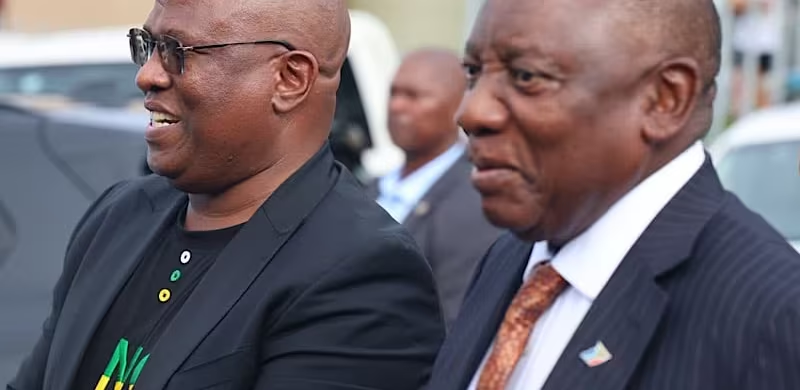
President Cyril Ramaphosa’s political survival is tied to a difficult truth: he depends on leaders he may not fully trust to keep his reform agenda alive and to steady the fragile government of national unity, writes Zukile Majova in Real Politics.
This is not a story about admiration or endorsement. It is about power, numbers and timing.
Across the ANC, provincial structures remain the real engines of influence. They decide conference outcomes, shape leadership contests and ultimately determine who leads the party. For Ramaphosa, holding these structures is not optional. It is essential.
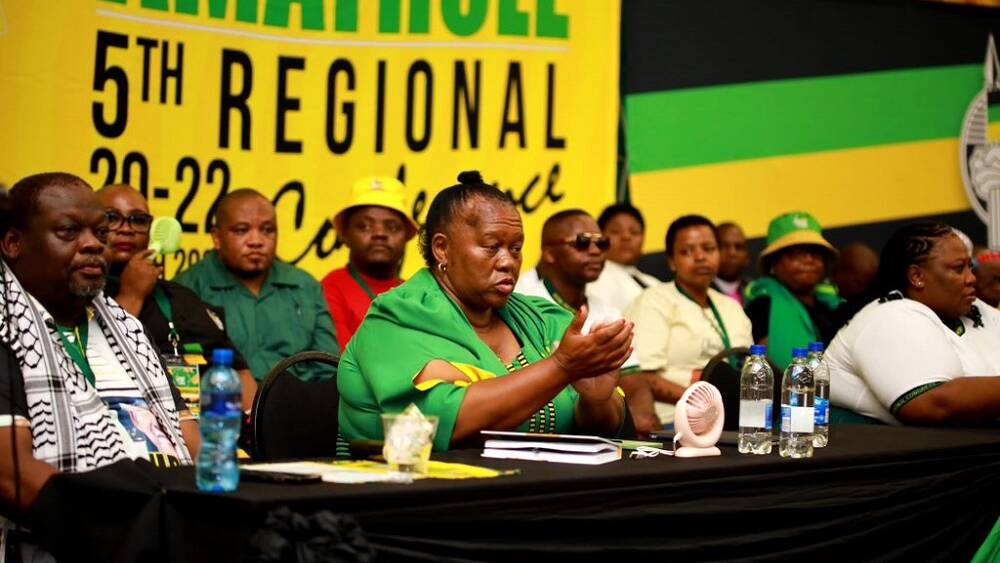
Nowhere is this clearer than in the Eastern Cape. The province is one of the most influential voting blocs inside the party. It carries weight at national conferences and often tips the balance in leadership races. That is why Oscar Mabuyane matters.
Mabuyane is not widely seen as a standout leader. His rise reflects the reality of slate politics, where loyalty to a faction can matter more than individual merit. His political career has also been shadowed by controversy, including allegations linked to the University of Fort Hare and questions around public funds.
These issues have raised serious concerns about integrity and governance. Yet, despite this, Mabuyane remains central to Ramaphosa’s support base.
The reason is simple. Control of the Eastern Cape strengthens Ramaphosa’s hand inside the party. Without it, his faction weakens significantly. With it, he stays competitive in the ongoing battle over the ANC’s direction.
A similar pattern is playing out in KwaZulu-Natal, but under even greater pressure.
The province has become a political battleground. Former president Jacob Zuma’s Umkhonto Wesizwe party has made strong gains there, reshaping voter loyalties and challenging the ANC’s dominance. In this environment, unity within Ramaphosa’s camp is fragile and highly strategic.
Senzo Mchunu sits at the centre of this tension.
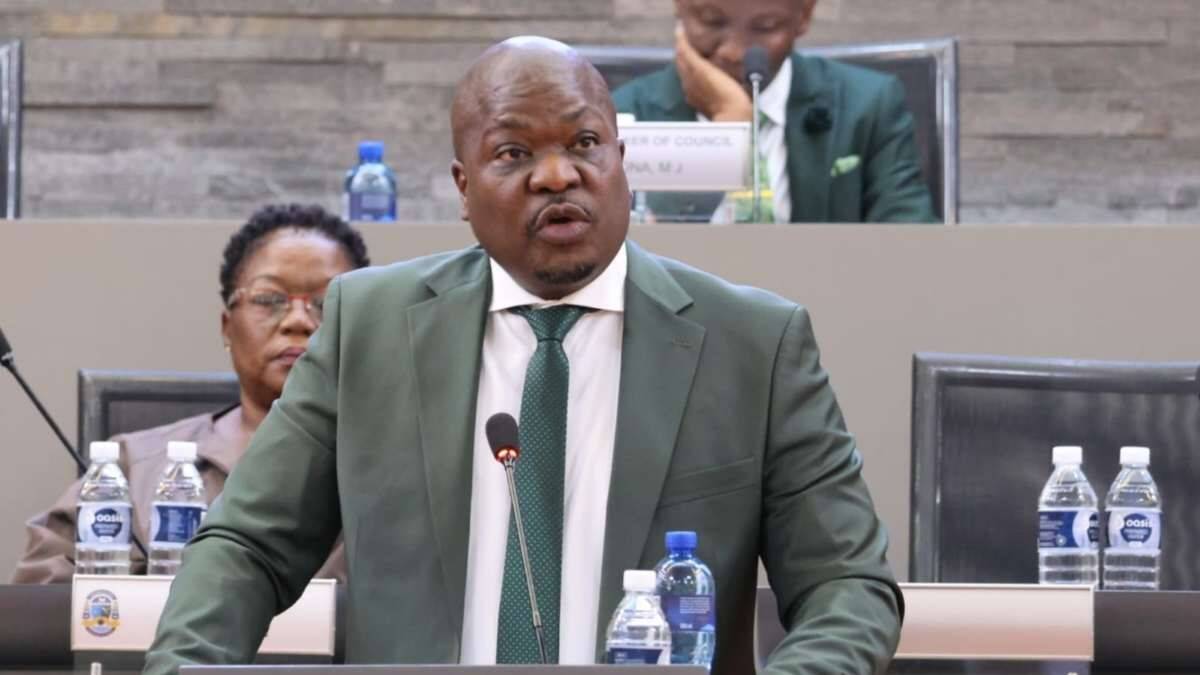
Despite being placed on special leave as police minister following serious allegations, Mchunu continues to hold some political influence in the province. He has denied wrongdoing, but the damage to his reputation has been significant.
Even so, Ramaphosa has chosen not to remove him outright.
This decision has drawn criticism. It has raised questions about consistency and accountability. But politically, it reflects a calculated risk.
Mchunu represents one of the last strong links between Ramaphosa and KwaZulu-Natal’s leadership structures. Removing him could deepen divisions and push more support towards rival factions. Keeping him, however uncomfortable, helps maintain a foothold in a province that is slipping away.
This is the balancing act Ramaphosa faces.
On one side is the need to uphold clean governance and restore public trust. On the other is the reality that political reform requires power, and power in the ANC is built through provincial alliances, not moral positioning alone.
It is easy to frame this as contradiction. In truth, it is closer to survival politics.
Ramaphosa’s broader project has always been about stabilising the state after years of decline. His administration has taken steps to rebuild institutions, address energy challenges and limit the damage of state capture. These efforts are slow and often contested.
They also depend on continuity.
If his faction loses control of key provinces, that continuity is at risk. Leadership contests could shift the party in a different direction. Policy priorities could change. The fragile cooperation underpinning the government of national unity could weaken.
This is where the role of provincial leaders becomes decisive.
They are not just local figures. They are vote brokers, organisers and gatekeepers. They influence who rises, who falls and which policies survive internal battles. In many cases, they operate within imperfect systems shaped by patronage and long standing factional deals.
Ramaphosa’s reliance on figures like Mabuyane and Mchunu must be understood in this context.
It does not necessarily signal approval of their records. Rather, it reflects an acceptance that political reform in South Africa is not happening in a clean or controlled environment. It is unfolding inside a contested party where influence is uneven and often tied to individuals with complicated histories.
Looking ahead to the ANC’s 2027 elective conference, these dynamics become even more important.
Ramaphosa will not stand for another term as party president. His legacy will depend on who succeeds him. That outcome will be shaped long before delegates gather at the conference. It will be decided through alliances built now, in provinces like the Eastern Cape and KwaZulu-Natal.
Names like Patrice Motsepe have already entered the conversation as possible successors aligned with Ramaphosa’s vision. But even a strong candidate cannot win without provincial backing.
That backing depends on the very leaders who raise concerns about credibility.
This is the contradiction at the heart of Ramaphosa’s strategy.
He is trying to push reform through a system that still rewards loyalty over accountability. He is working with allies who strengthen his political position but complicate his ethical standing.
The question is whether this trade-off can deliver results.
If it does, South Africa could see continued progress in rebuilding institutions, stabilising energy supply and maintaining a functional coalition government. If it fails, the country risks sliding back into deeper factional conflict and policy uncertainty.
For now, Ramaphosa appears willing to take that risk.
His approach remains cautious and incremental. He avoids open confrontation and prefers to manage tensions quietly. This has helped him stay in control of a divided party, but it has also forced him into uneasy partnerships.
In the end, this is not just about internal ANC politics.
The choices Ramaphosa makes today will shape the country’s direction for years to come. His dependence on flawed provincial leaders may be uncomfortable, even troubling. But it may also be the very mechanism keeping his reform agenda alive.
That is the reality of power in South Africa right now.
Pictured above: President Cyril Ramaphosa with Eastern Cape Premier Oscar Mabuyane.
Image source: Eastern Cape of the Premier